

What Is Lead? How It Harms Health, and Where Lead in Water Comes From
What is lead? Lead is a metal found naturally in the Earth's crust, and one of the heavy metals that must be monitored in drinking water. The World Health Organization states that no level of lead exposure is known to be without harmful effects. The most vulnerable groups are young children and unborn babies. Lead in tap water mostly does not come from the water source. It dissolves from pipes, fittings and solder joints on the way to the tap. This article explains what lead is, how it enters the body, how it affects health, what Thailand's limit for lead in water is, and how to reduce the risk.
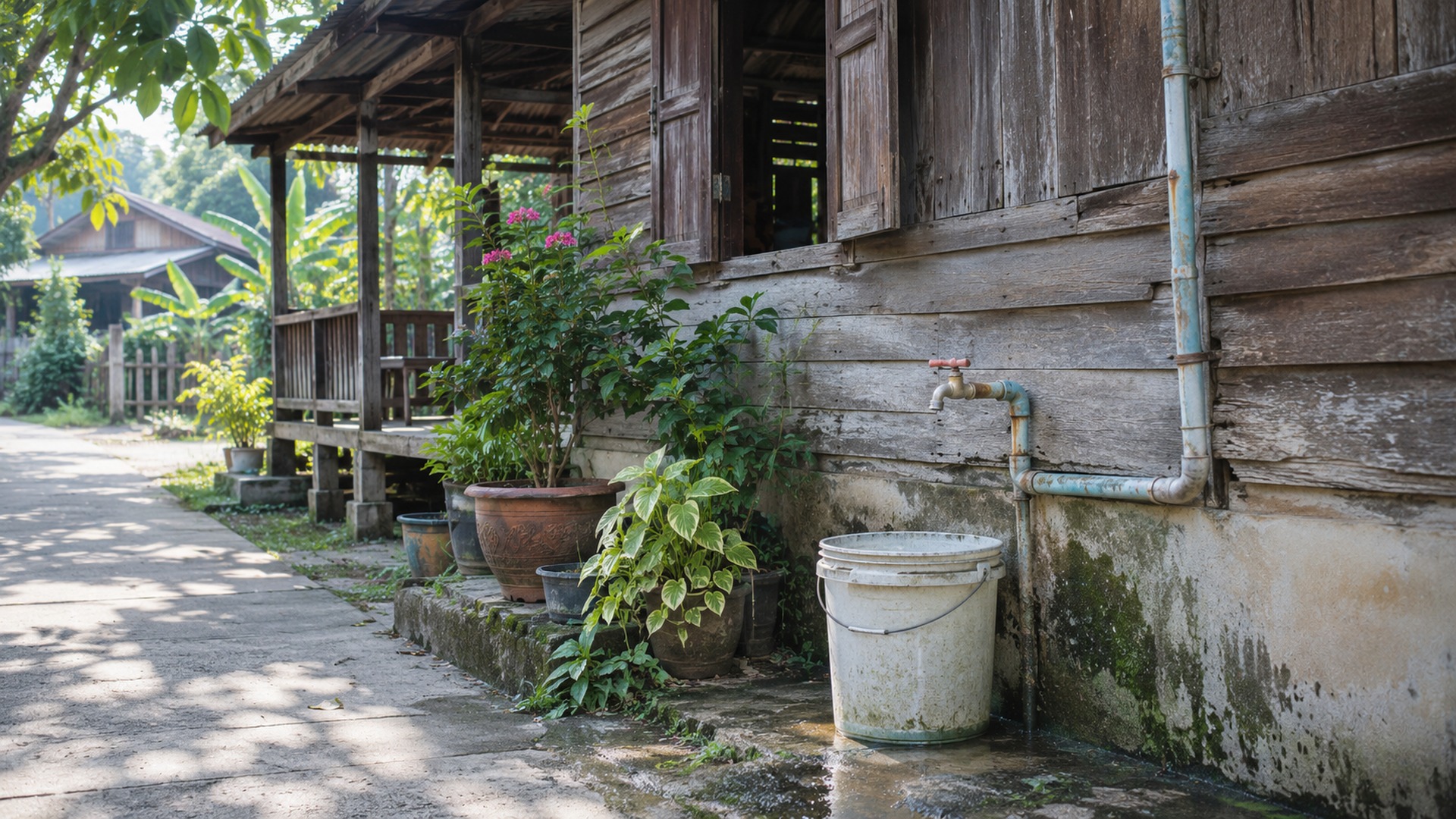
What is lead?
Lead is a bluish-gray metal. People have used it for a long time, which has caused widespread contamination of the environment. The World Health Organization states that most of the lead used worldwide goes into lead-acid batteries for motor vehicles. It is also used in:
- Paints and pigments
- Solder used to join pipes and metal parts
- Stained glass, crystal glassware and ceramic glazes
- Ammunition, jewelry and toys
- Some cosmetics and traditional medicines
The World Health Organization lists lead as one of 10 chemicals of major public health concern.
What are heavy metals?
"Heavy metals" is a common term for a group of metals with high density, many of which are toxic to living things even in small amounts. In science, however, the term has no single definition that all agencies agree on. The International Union of Pure and Applied Chemistry (IUPAC) once published a technical report pointing out that different texts give it different meanings.
In Thai water quality work, the practical approach is to follow the criteria. Thailand's Department of Health criteria for drinkable tap water (2020) place lead in the group of toxic heavy metals, together with total chromium, cadmium, arsenic and mercury. For an overview of the 4 metals most often tested in the field, read Heavy metals in water: 4 to monitor
How lead enters the body
Lead enters the body in 2 main ways:
- Swallowing lead in dust, soil, water or food. Young children who put things in their mouths, or eat things that are not food, such as soil or paint chips, are at higher risk.
- Breathing in lead particles from burning lead-containing materials, for example during smelting, recycling, scraping old paint or burning cables.
Once inside the body, lead travels to the brain, kidneys, liver and bones, and gradually builds up in teeth and bones over time. Blood lead levels are therefore used to assess how much lead a person has been exposed to.
Young children are affected more than adults, because they can absorb 4–5 times as much lead from what they swallow as adults do, and children who lack calcium or iron absorb even more.
In pregnant women, lead stored in the bones may be released back into the blood and reach the unborn baby.
Lead poisoning: how lead harms health
Before reading the table, one principle matters most: exposure to lead does not mean everyone will get sick. Health effects depend on the amount, the length of exposure, age and nutrition. But for lead, the World Health Organization states that no blood lead level is known to be safe, so exposure should be kept as low as possible.
| Group | Effects stated by the World Health Organization |
|---|---|
| Children | Lower intelligence, attention and school performance; behavior changes; anemia; high blood pressure; kidney problems; effects on the immune system and reproductive organs; some brain effects are permanent |
| Children with very high exposure | May lose consciousness, have seizures or die; survivors may have long-term intellectual disability |
| Adults with long-term exposure | Higher risk of high blood pressure, cardiovascular disease and kidney damage |
| Pregnant women | Slower growth of the baby in the womb, and preterm birth |
The World Health Organization states that blood lead levels as low as 3.5 µg/dL may be linked to lower intelligence, behavior problems and learning problems in children. It also estimates that in 2023, more than 3.5 million deaths worldwide were linked to lead exposure, mostly from cardiovascular effects (an estimate by the Institute for Health Metrics and Evaluation, cited by the World Health Organization).
On cancer, the International Agency for Research on Cancer (IARC) classifies inorganic lead compounds in Group 2A, "probably carcinogenic to humans". This classification describes the strength of the evidence; it does not say how much exposure is harmful.
The good news is that the World Health Organization states that harm from lead is entirely preventable if the source of exposure is found and stopped.
Where does lead in water come from?
Lead in tap water almost never comes from natural water sources. Water leaving the treatment plant may contain very little lead, but on its way through pipes and fittings to the tap, lead from materials in contact with the water can dissolve into it.
Lead in pipes, fittings and solder
The World Health Organization explains that most lead in drinking water dissolves from:
- Lead pipes in old buildings, or service pipes connecting to homes
- Lead-containing solder at pipe joints
- Fittings, valves and taps made of lead-containing alloys
More lead dissolves when:
- Water stands in pipes for a long time, such as overnight or after a home has been closed for several days
- Water is soft and acidic, meaning it has few dissolved minerals and is acidic
- Water is warm or hot
The World Health Organization states that typical drinking water contains less than 5 µg/L of lead, but in buildings with lead pipes or fittings, levels above 100 µg/L have been measured.
Lead in tap water: passing at the plant does not cover pipes at home
Certification of drinkable tap water applies to the provider's production and distribution systems. It does not cover storage tanks and pipes inside homes. Thailand's Department of Health therefore advises homeowners to look after their storage tanks and household plumbing too. Read more in Is tap water safe to drink?
Drinking water dispensers and water coolers
Drinking water dispensers have pipes, fittings and internal parts that touch water, like a small plumbing system. A study published in an academic journal in 2023 tested water from dispensers at 86 elementary schools abroad. It found that some schools had water samples with lead above 10 µg/L, more often in samples taken over weekends and in summer, and even in schools with newer buildings. The researchers concluded that dispenser water is not always safe and should be monitored regularly.
Water dispensers in schools and childcare centers should therefore be included in water quality testing plans.
Other sources of lead besides water
Water is only one route. Other lead sources listed by the World Health Organization include mining, battery smelting and recycling, lead-based house paint, contaminated dust and soil, glazed pottery, toys, and some cosmetics or traditional medicines. If a child's blood test shows high lead, public health staff will help find the source, which may not be water.
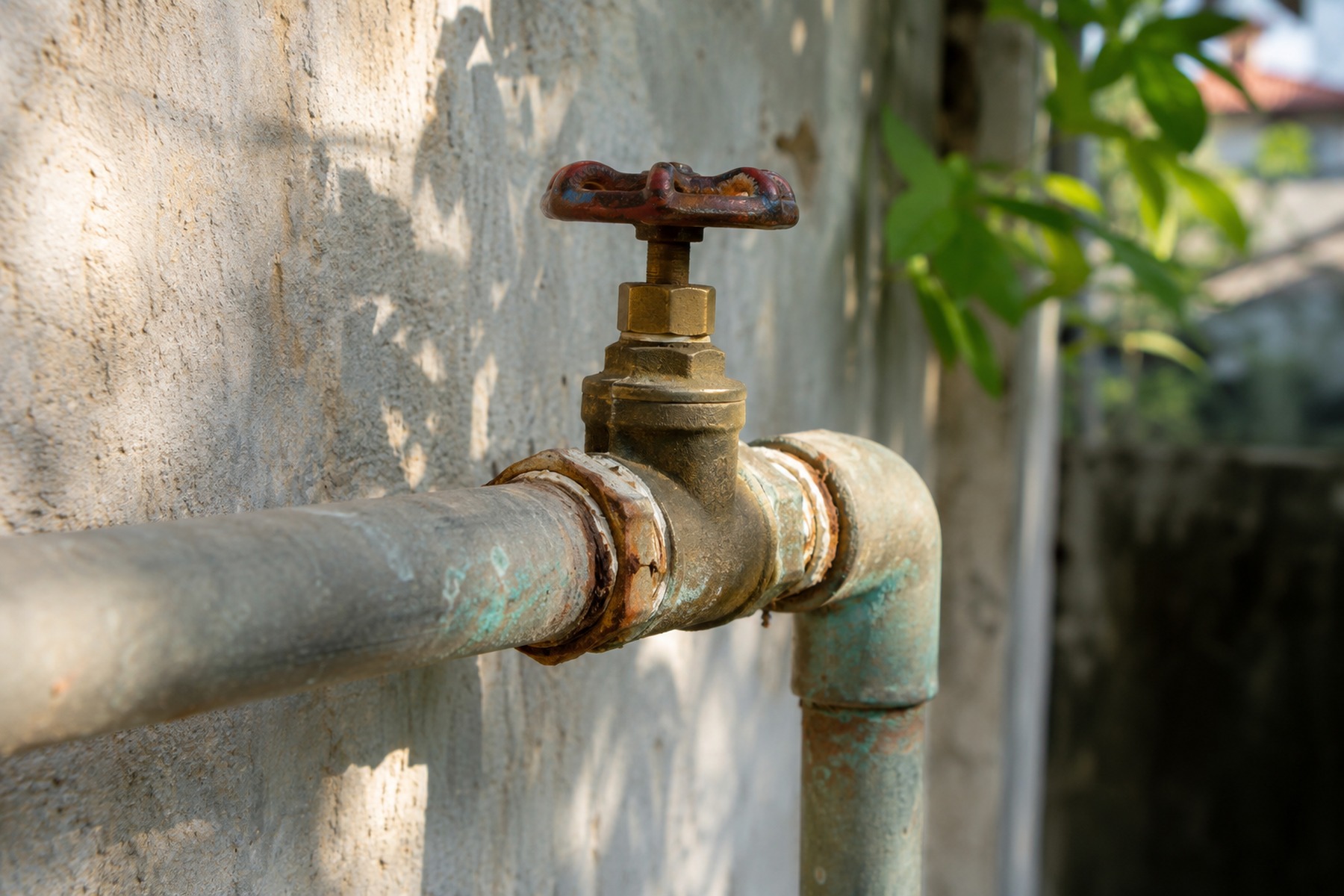
Limits for lead in water in Thailand and from the World Health Organization
Documents show several different lead limits because they apply to different kinds of water. Always check which water a limit is meant for.
| Criteria | Applies to | Lead, not more than |
|---|---|---|
| Thailand's Department of Health criteria for drinkable tap water (2020) | Tap water for drinking | 0.01 mg/L (10 µg/L, or 10 ppb) |
| World Health Organization guidelines for drinking-water quality | Drinking water | 0.01 mg/L (provisional value) |
| Thailand's surface water quality standards (National Environment Board Notification No. 8, 1994) | Surface water sources such as rivers and canals, not drinking water | 0.05 mg/L |
What does "provisional value" mean? The World Health Organization did not calculate the 0.01 mg/L value from a safe level, because no level without harmful effects has been found. Instead, it is set by what water treatment and measurement methods can achieve, and levels should be kept as low as possible. So "meets the criteria" means meeting the standard; it does not mean zero lead.
Watch the units. Some test reports give results in mg/L, others in µg/L or ppb. 10 ppb equals exactly 0.01 mg/L. How to read units correctly is explained in What are ppm and ppb? and the full table of criteria is in Thailand's tap water standard (Department of Health, 2020)
How to test for lead in water
Lead in water cannot be seen and has no color or smell. Clear water does not mean there is no lead. You only know by testing.
Take samples at the tap
Because lead usually comes from pipes and fittings, the World Health Organization points out that lead testing should use samples from the tap people actually drink from, not only at the water source or treatment plant. To see how much lead is in water that has stood in the pipes, you can collect the first water that flows after standing overnight and compare it with water after the tap has run for a while. Agree on the sampling method with the laboratory or testing agency from the start.
Testing methods in use
| Method | Result | Best for |
|---|---|---|
| Laboratory, such as ICP-MS or AAS | Concentration figures, used as official confirmation | Confirming results, reports, important decisions |
| Electrochemical field test kit | Concentration figures at the sampling point | Screening many points, ongoing monitoring, choosing which points to send for confirmation |
| Colorimetric test kit | Approximate range | Seeing initial trends |
Read more about each method in Water quality testing methods, What are ICP-MS and AAS? and What is an electrochemical sensor?
How to reduce the risk from lead in water
What you can do at home, in schools and in buildings:
- Run the water before use when it has stood in the pipes for a long time, such as in the morning or after returning from several days away. Run the tap for a while until the water that was standing in the pipes has flowed out. The water you run off can be used for plants or cleaning floors.
- Use cold tap water for drinking, cooking and making baby formula. Do not use hot water from the tap or water heater, because warm water dissolves more lead from pipes (advice from the United States Environmental Protection Agency).
- Do not assume boiling removes lead. Boiling kills germs but does not reduce lead. If water boils long enough for a lot of it to evaporate, the concentration may rise.
- Choose suitable materials when repairing or building. The World Health Organization advises against installing lead pipes or using lead solder in drinking water systems, and recommends low-lead fittings.
- Maintain drinking water dispensers according to the manufacturer's manual. Clean them on schedule, and include dispensers used by children in water quality testing plans.
- If you use a water filter, choose one that states it reduces lead, replace the cartridge on schedule, and test the water again after installation to confirm it works.
If lead test results exceed the limit
- Stop using water from that point for drinking and cooking for now, and use water from a tested source.
- Send a sample to a laboratory for confirmation, especially if the result came from a field test kit.
- Tell the water system operator, such as the water utility or the local government organization that runs the village water supply, so they can find where in the system the lead comes from.
- If there are young children or pregnant women in the household who have used that water for a long time, consult your subdistrict health promoting hospital or District Public Health Office. Health staff will assess whether further tests are needed.
M-Sense: a lead test kit for water screening
Lead in water can differ with the pipes and fittings of each building, so monitoring requires testing many points. M-Sense is a portable electrochemical test kit for heavy metal contamination in water, developed by the National Nanotechnology Center (NANOTEC), part of Thailand's National Science and Technology Development Agency (NSTDA). It tests lead together with arsenic, cadmium and mercury in about 5 minutes and reports results as numbers from ppb to ppm with a portable reader. It can be used with surface water, groundwater and community water for drinking and household use.
M-Sense was field-tested with the Regional Environment and Pollution Control Office 1 (Chiang Mai) against standard laboratory methods, and the results were consistent. M-Sense is for screening and monitoring. It helps staff see which points should be sent for confirmation, while official confirmation still uses a laboratory. See more in What it detects and the limits and How M-Sense works
Frequently asked questions
What is lead, and how dangerous is it? Lead is a metal found in nature and used widely in batteries, paint and solder. The World Health Organization states that no level of exposure is known to be without harmful effects. The most vulnerable groups are young children and unborn babies. The main effect in children is on brain development.
Where does lead in tap water come from? Mostly it dissolves from lead-containing pipes, fittings, valves, taps and solder on the way from the treatment plant to the tap. It does not mainly come from natural water sources.
What is the limit for lead in drinking water? Thailand's Department of Health criteria for drinkable tap water (2020) set lead at not more than 0.01 mg/L, or 10 ppb, the same as the World Health Organization's provisional value. The value of 0.05 mg/L is the standard for surface water sources, not for drinking water.
Does boiling water reduce lead? No. Boiling kills germs but does not remove lead. If water boils until much of it evaporates, the lead becomes more concentrated.
If water is clear and odorless, does it mean there is no lead? No. Dissolved lead cannot be seen and has no smell. Homes on the same system can still have different lead levels at the tap because of their pipes and fittings. You only know by testing water from the tap you actually drink from.
My child drank water with lead above the limit. What should I do? Stop using that water for drinking and cooking first, then consult your subdistrict health promoting hospital or District Public Health Office. Health staff will assess, based on the amount and length of exposure, whether a blood test is needed. A blood test shows exposure; it does not predict whether disease will develop.
Want to monitor lead in the water of the buildings or communities you look after?
Ask NANOTEC · What it detects and the limits · For agencies · Heavy metals in water: 4 to monitor · What is mercury? Minamata disease
References
- World Health Organization. Lead poisoning and health (fact sheet), 10 June 2026.
- World Health Organization. Guidelines for drinking-water quality, 4th edition incorporating the first and second addenda, 2022, and chemical fact sheet Lead in drinking-water, 2022.
- International Agency for Research on Cancer. IARC Monographs Volume 87: Inorganic and Organic Lead Compounds, 2006.
- Agency for Toxic Substances and Disease Registry (United States). ToxFAQs: Lead.
- United States Environmental Protection Agency. Lead Poisoning and Your Children, 2024.
- Duffus JH. "Heavy metals" — a meaningless term? (IUPAC Technical Report). Pure and Applied Chemistry, 2002.
- Adhikari S, Lu HJ, Ng DQ. Lead levels in drinking water from point-of-use dispensers: a case study of elementary schools. Environmental Science and Pollution Research, 2023.
- Division of Public Health Laboratory, Department of Health. Department of Health criteria for drinkable tap water, 2020.
- National Environment Board Notification No. 8 (1994) on surface water quality standards.
- Department of Health. News on tap water quality and advice on caring for household water systems, 11 April 2025.
- Sanook.com, Sure And Share fact check. Does boiling tap water remove contaminants, heavy metals and lead? (citing Department of Health information), 6 May 2026.
- National Nanotechnology Center. Portable electrochemical test kit for heavy metal contamination in water (M-Sense).