

Water Quality Testing for Heavy Metals: Colorimetric Kits, Electrochemical Field Kits and Laboratories
Water quality testing for heavy metals such as arsenic, lead, cadmium and mercury uses three main methods: colorimetric test kits, electrochemical field test kits, and laboratory analysis. The three are not competitors. Each suits a different stage of the work, from screening large numbers of water sources to confirming results for an official report. This article explains how each method works, what kind of result it gives, and when to use it.
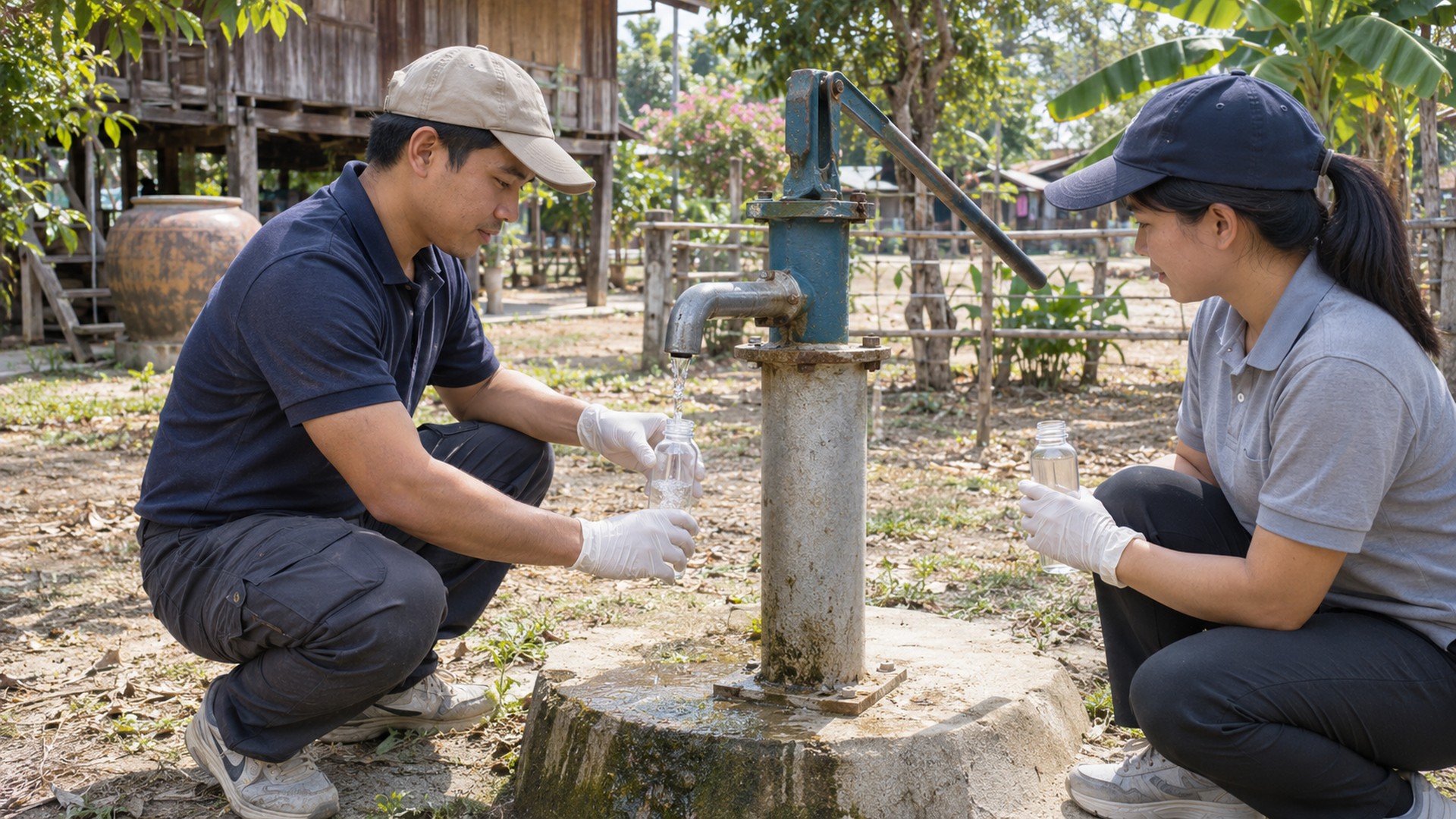
How to test water quality: answer 3 questions first
No single water testing method suits every job. It depends on what you need to know and what you will use the result for. Start by answering these 3 questions.
1. What will you test for?
"Water quality" covers many things. Thailand's Department of Health criteria for drinkable tap water (2020) contain 21 items in total, such as turbidity not more than 5 NTU, dissolved solids not more than 500 milligrams per liter, no coliforms or E. coli, and heavy metals such as arsenic, lead, cadmium and mercury.
Each item uses different tools. Turbidity, for example, can be checked initially with a turbidity tube, while total dissolved solids (TDS) and electrical conductivity (EC) can be read from a probe connected to a display. This article focuses on testing for heavy metals, which must be measured at very low levels and therefore need specific methods.
2. What will you use the result for?
- Screening: finding which points look suspicious and need detailed testing.
- Monitoring: testing the same points repeatedly over time to see whether values rise or fall.
- Confirmation: for an official report, or for decisions that affect many people.
Each kind of work needs a different level of detail, speed and number of test points.
3. What kind of water is it?
Results must be compared with the standard that matches the type of water. Tap water for drinking is compared with Thailand's Department of Health criteria for drinkable tap water (2020), while water in rivers and canals is compared with Thailand's surface water quality standards (National Environment Board Notification No. 8, 1994). For lead, for example, the drinkable tap water limit is not more than 0.01 milligrams per liter, while the surface water limit is not more than 0.05 milligrams per liter. Compare with the wrong set and the reading will be wrong.
Method 1: Colorimetric test kits
How they work
A colorimetric test kit relies on a chemical reaction that produces a color, which is then compared with the color chart supplied with the kit. A well-known example is the arsenic test kit based on the Gutzeit principle. Chemicals are added to turn arsenic in the water into a gas. The gas rises and reacts with a chemically treated paper strip, which turns yellow to brown. A darker color means more arsenic.
What kind of result you get
The result is a "range" read by comparing colors by eye, known as a semi-quantitative result, for example somewhere between one color block and the next. The measurable range depends on the model of each kit.
Strengths
- Easy to use; no electricity or reader needed.
- Can be carried to test many points in one day.
- Suits screening large numbers of water sources, such as surveying every well in a village.
- Newer kits have improved a great deal.
NANOTEC itself has also developed test kits based on color or light changes, such as a manganese test kit and optical test kits for mercury, manganese and copper used in water quality clinic work. This shows that the method clearly still has its place.
Limitations to know
- Most test one substance at a time; to know about 4 metals, you need several kits.
- Reading the color depends on the reader's eyesight and the light at the time.
- Some substances in water can interfere with the color. For example, hydrogen sulfide gas (the "rotten egg" gas) interferes with this type of arsenic kit.
- At low levels near the limit, the color blocks differ only slightly, so users should be trained to read results.
Method 2: Electrochemical field test kits
What is electrochemistry?
Electrochemical sensing measures an "electrical signal" produced by metals in water on a small electrode strip, instead of looking at a color. A reader converts the signal into a concentration, so the result is a number, not a color range.
The "deposit, then strip" principle
One widely used electrochemical technique for measuring heavy metals is anodic stripping voltammetry. As a general principle of the technique:
- Deposit. A small voltage is applied to the electrode for a short time. Metals dissolved in the water are drawn onto the electrode surface and accumulate there, like a magnet picking up iron filings. The longer they accumulate, the smaller the amounts of metal that can be detected.
- Strip. The voltage is changed gradually. The deposited metals return to the water and release an electric current, seen as a "signal peak".
- Read the peaks. Each metal is released at a different voltage, so the position of a peak shows "which metal", and the size of the peak shows "how much". Compared with a calibration curve stored in the software, this gives a concentration.
Because each metal's peak is at a different position, a single measurement can show several metals at once. Research in this field also often coats electrodes with nanomaterials to increase the surface area and help the electrode capture the target metals better.
Strengths
- Small devices that can be taken to the water source.
- Use only a small water sample.
- Give a numerical result in a short time.
- Can test several metals in one measurement.
- Sensitive enough for the microgram-per-liter level, which is the level of drinking water limits.
Limitations to know
- Other components in the water may interfere with the result, such as organic matter, sediment, or other metals whose signal peaks overlap. Good sample preparation reagents and good calibration are therefore needed.
- A reader is required, and users should be trained in the kit's procedure.
- It is a screening and monitoring tool; results to be used officially should be confirmed by a laboratory.
Method 3: Laboratory analysis
How it works
When the most detailed and reliable result is needed, water samples are sent to a laboratory and analyzed with instruments such as:
- ICP-MS (inductively coupled plasma mass spectrometry), which uses a high-temperature plasma to turn elements in the sample into ions and then separates and measures them by mass. It can measure many elements at once at very low levels.
- AAS (atomic absorption spectrometry), which comes in several types, such as hydride generation (HG-AAS), well suited to arsenic, and graphite furnace (GF-AAS).
The World Health Organization (WHO) background document on arsenic in drinking water states that GF-AAS, HG-AAS and ICP-MS are more sensitive than other methods for measuring arsenic in drinking water.
Strengths
- The most accurate and sensitive of the three methods.
- The reference method for confirming results and official reporting.
- Laboratories accredited to ISO/IEC 17025 (the standard for the competence of testing laboratories) have quality control systems for their results.
Limitations to know
- Samples must be preserved and transported to the laboratory.
- Specialized instruments and experts are needed.
- You have to wait for results, which is inconvenient when frequent repeat testing is needed on site.
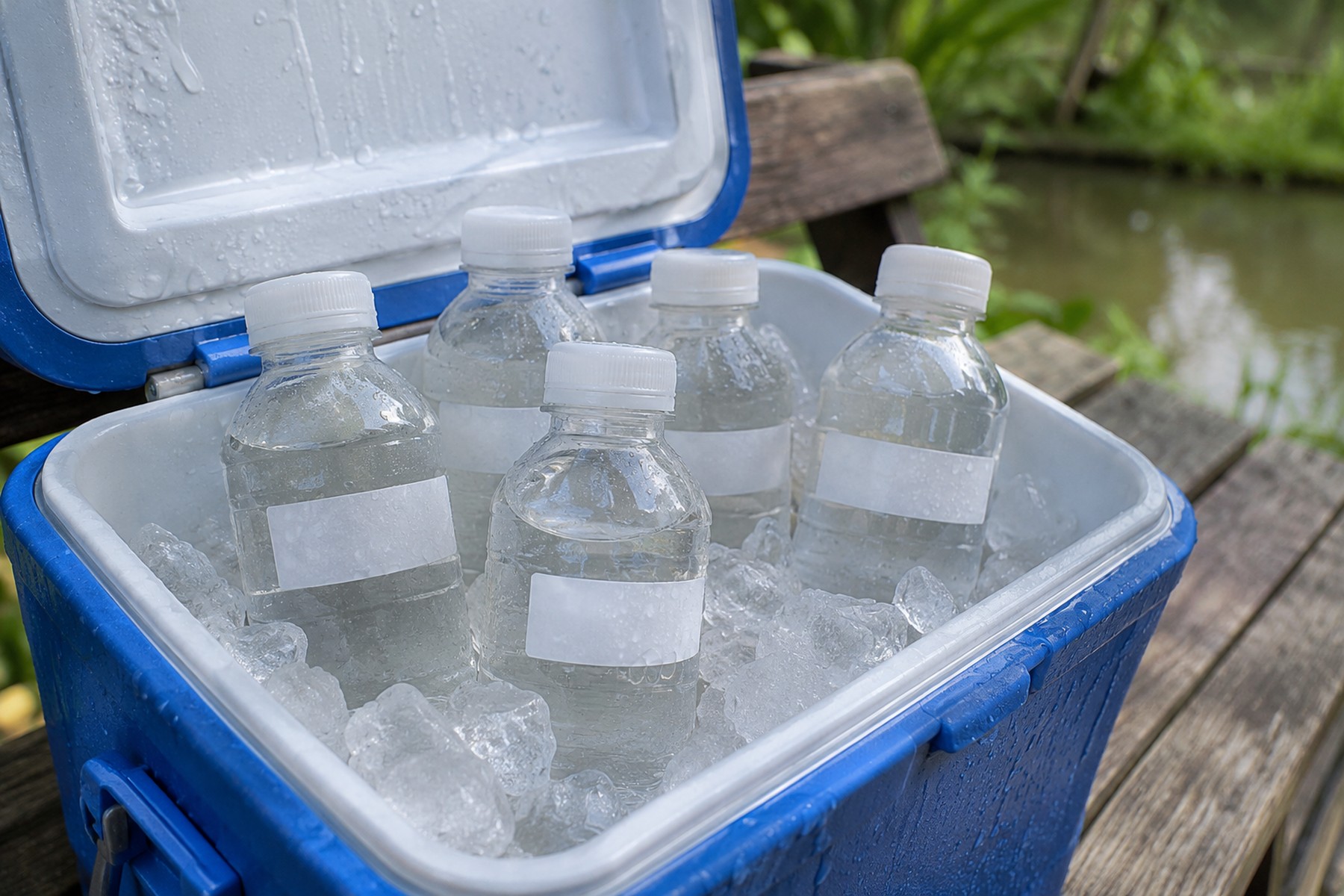
For sample collection, follow the instructions of the laboratory doing the testing, including the type of bottle, preservation and delivery time, because each test item has different requirements.
Comparing the 3 water testing methods
| Colorimetric kit | Electrochemical field test kit | Laboratory | |
|---|---|---|---|
| Result | A range from color comparison | A concentration at the sampling point | A confirmed number |
| Where it is used | At the water source, no electricity needed | At the water source, with a reader | In a laboratory; samples must be transported |
| Advantages | Simple, portable, many points | Fast, numerical, several metals in one measurement | Most accurate and sensitive; the reference method |
| Limitations | Usually one substance at a time; read by eye; some substances interfere with color | Needs good sample preparation and calibration; used for screening | Waiting time; specialized instruments and experts |
| Best for | Broad screening of many water sources | Field screening and monitoring that need numbers fast | Confirmation and official reports |
How the 3 methods work together
In practice, agencies often use several methods in sequence. A simple order is:
- Broad screening: survey many water sources to find which points need a closer look.
- Numerical measurement at the sampling point: use a field test kit that gives numbers, to see how close to or above the limit values are, and test repeatedly to see trends.
- Laboratory confirmation: send only the points with suspicious results, or points that need an official report.
Dividing the work this way directs laboratory resources to the most important samples. This matters for community water work, because there are about 70,000 village water supplies across Thailand, according to the Department of Health report for fiscal year 2025.
In NANOTEC's work on improving village water supply systems, water quality testing is the first step. The steps are: analyze water quality to identify the amount of contaminants, choose a treatment method based on the substances found, upgrade the system, and then monitor water quality after installation. Testing therefore does not end with one round; it must continue to check that the system is still working well.
How to read your results
- Check the unit first. Results may be reported in milligrams per liter, micrograms per liter, ppm or ppb. For water, 1 milligram per liter is about 1 ppm and 1 microgram per liter is about 1 ppb. Read more in What are ppm and ppb?
- Compare with the right set of criteria. For example, the arsenic limit for drinkable tap water under Thailand's Department of Health criteria (2020) is not more than 0.01 milligrams per liter, or 10 ppb. See the table of limits for all 4 metals on the page What it detects, and the limits.
- If a result is above the limit or suspicious, confirm it with standard laboratory methods and inform the agency responsible for the water source or the local water supply system. For health concerns, contact a subdistrict health promoting hospital (Thailand's local primary care unit) or the local public health office.
How M-Sense helps
M-Sense is a portable heavy metal test kit for water based on electrochemistry, developed by the National Nanotechnology Center (NANOTEC), NSTDA, under the A-QUALITY program (clean water innovation for quality of life). It belongs to Method 2 in this article. It detects 4 metals (arsenic, lead, cadmium and mercury), reports a numerical result in the ppb to ppm range, takes about 5 minutes per test, and works with a portable reader, so testing can be done at the sampling point.
The procedure, as reported by the media from a demonstration, can be summarized roughly as: insert the electrode chip into the reader, mix the water sample with the test reagent, drop it onto the chip, start the measurement, then read the value on the screen (see details on the page How M-Sense works).
M-Sense has been field-tested with the Regional Environment and Pollution Control Office 1 (Chiang Mai) in the Kok River basin, compared with standard laboratory methods, and the results were consistent. On 15 November 2026 it was handed over to the Chiang Rai Provincial Public Health Office for screening water quality in the area. M-Sense is used for screening and monitoring; suspicious results are still sent for confirmation by standard laboratory methods. See real-world use on the page Field use.
Frequently asked questions
Can I test water quality myself? You can do initial testing with field test kits, both colorimetric and electrochemical, but users should be trained in the kit's procedure, and if a result is above the limit or suspicious, it should be sent to a laboratory for confirmation.
Can a field test kit replace a laboratory? No, it complements one. Field test kits allow fast screening and monitoring at the sampling point, while the laboratory is the reference method for confirmation and official reports.
What is the difference between colorimetric and electrochemical kits? A colorimetric kit reads the result from a color change, gives a range and usually tests one substance at a time. An electrochemical kit measures an electrical signal with a reader, gives a number and can test several metals in one measurement.
What should be tested in a village water supply? Thailand's Department of Health criteria for drinkable tap water (2020) have 21 items, covering turbidity, dissolved solids, germs and heavy metals. Heavy metals are only one part. Consult the local health authority or a laboratory about which items should be tested.
Why might results from different methods not match exactly? Each method has a different measuring principle, sensitivity and interferences. Colorimetric results are ranges, while the other two methods give numbers. Samples taken at different times can also differ. That is why the laboratory result is used as the reference when a decision must be made.
Does your agency need to test water quality and monitor heavy metals?
Ask NANOTEC · How agencies can request use
References
- Bureau of Laboratory, Department of Health, Thailand. Criteria for drinkable tap water, Department of Health, 2020 (document SD-RLDC-006).
- National Environment Board Notification No. 8 (1994) on surface water quality standards, Thailand.
- Bureau of Food and Water Sanitation, Department of Health, Thailand. Situation of village water supply quality, fiscal year 2025.
- World Health Organization. Arsenic in drinking-water: background document for development of WHO Guidelines for Drinking-water Quality.
- Fakayode SO, et al. Electrochemical and Colorimetric Nanosensors for Detection of Heavy Metal Ions: A Review. Sensors, 2023.
- Udawaththa N, et al. Advances and opportunities in point-of-care detection of toxic metals. Analyst, 2026.
- Feldmann J. Onsite testing for arsenic: field test kits. Reviews of Environmental Contamination and Toxicology, 2008.
- National Nanotechnology Center. Portable electrochemical test kit for heavy metal contamination in water (M-Sense).
- National Nanotechnology Center. Report on the use of technology to solve water quality problems and improve community access to clean water.
- Krungthep Turakij (Bangkok Business News). News on the M-Sense handover to the Chiang Rai Provincial Public Health Office, 15 November 2026.