
ไทย
M-Sense · NANOTEC, NSTDA

Know the heavy metal levels in water, at the source, in about 5 minutes

A portable electrochemical test kit for arsenic, lead, cadmium and mercury with numerical results, helping local agencies monitor water quality right away without waiting to send samples to a laboratory.

See how it works
Tests 4 metalsAbout 5 minutesppb to ppm rangeFor field use
What it detects

4 heavy metals to watch in water

See what it detects and the limits
As

Arsenic

not more than 0.01 mg/L
Pb

Lead

not more than 0.01 mg/L
Cd

Cadmium

not more than 0.003 mg/L
Hg

Mercury

not more than 0.001 mg/L

Drinkable tap water criteria, Department of Health, 2020

Try a simulated test

Electrochemistry: how heavy metals in water are read

Choose a water sample and see what signal the reader picks up. Each metal produces a signal peak at a different voltage, and the peak height shows the amount.
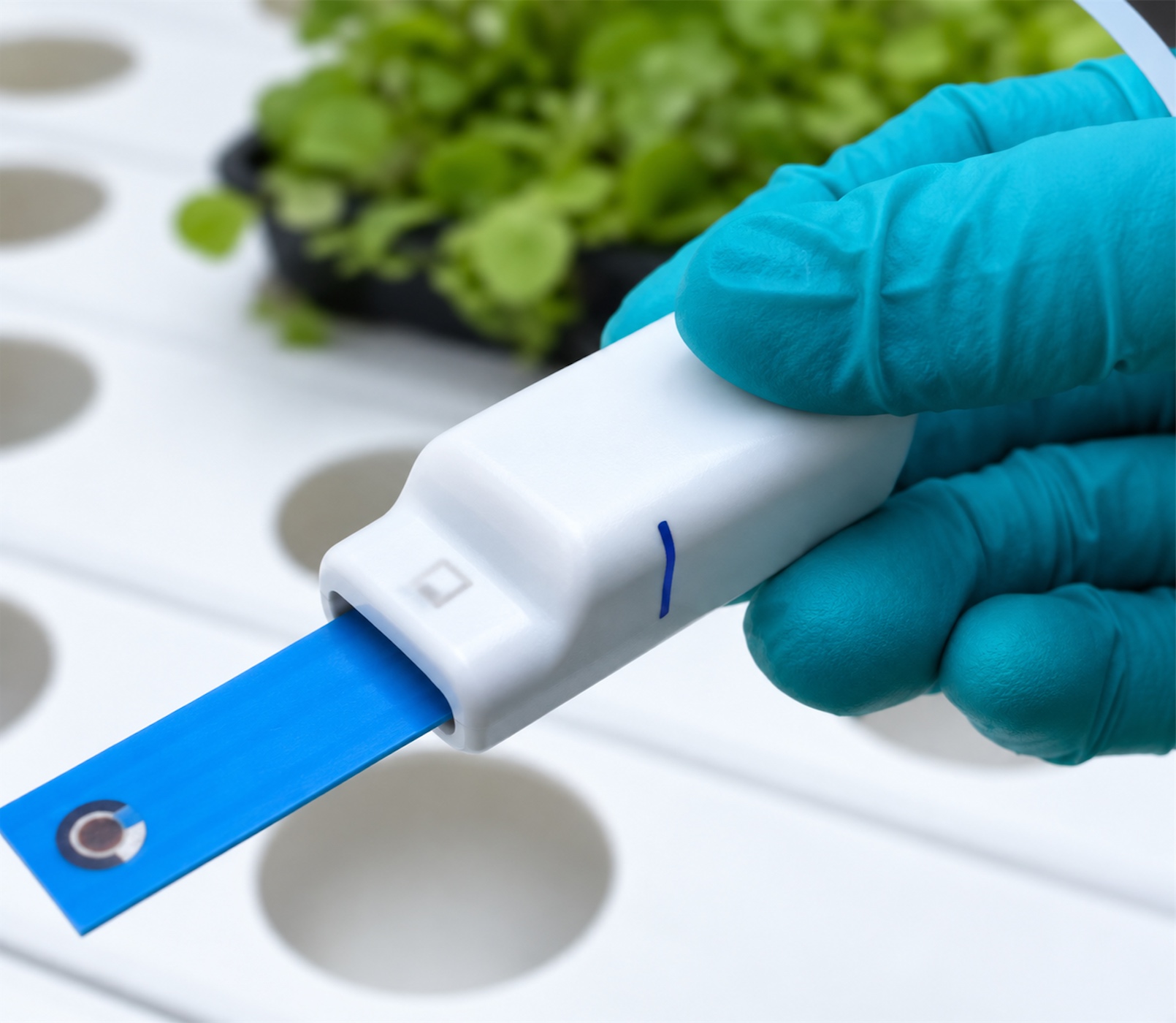
Illustration of an M-Sense sensor strip inserted into a portable reader, held in a gloved hand (AI-generated illustration based on a real NANOTEC photo)
AI-generated illustration based on a real NANOTEC photo
M-Sense test kit

Sensor strip and portable reader

Drop a water sample onto the sensor strip, insert it into the reader, and read the number on the screen. It works at the water source, with no need to carry samples back to a laboratory.

See the test steps

How is it different from conventional testing?

Colorimetric test kitSending to a laboratoryM-Sense
ResultColorimetric test kitColor range or rough levelSending to a laboratoryPrecise valuesM-SenseNumerical values, from ppb (parts per billion) to ppm (parts per million)
TimeColorimetric test kitDepends on the kit typeSending to a laboratoryShipping and analysis timeM-SenseAbout 5 minutes
Where usedColorimetric test kitIn the fieldSending to a laboratoryLaboratoryM-SenseIn the field, at the sampling point

What are ppb and ppm? They are units that show how much metal is in the water. The higher the number, the more metal is present.

  • 1 ppm = about 1 milligram of metal (one thousandth of a gram) in 1 liter of water
  • 1 ppb = about 1 microgram of metal (one millionth of a gram) in 1 liter of water, 1,000 times smaller than ppm
  • Arsenic limit in drinkable tap water: not more than 10 ppb
Read more: what are ppm and ppb?

M-Sense is used for screening and monitoring. Official confirmation still uses standard laboratory methods where needed.

AI-generated illustration
Results consistent with the lab

Tested in a real river against standard methods

NANOTEC field-tested M-Sense with the Regional Environment and Pollution Control Office 1 in the Kok River basin, comparing it with standard laboratory methods. The results were consistent.

See it in the field

In use

  • The Regional Environment and Pollution Control Office 1 (Chiang Mai) uses it to monitor heavy metals in water sources, in cooperation with the Pollution Control Department
  • The Chiang Rai Provincial Agriculture Office is trialing it in the area
  • The Chiang Rai Provincial Public Health Office received M-Sense on 15 November 2026 in Mae Sai District

For agencies responsible for water quality

  • Environmental agencies
  • Public health
  • Local government organizations and village water supply operators
  • Agricultural agencies
  • Remote areas with limited access to laboratories
See how agencies can apply

From NANOTEC

M-Sense was developed by the National Nanotechnology Center (NANOTEC), NSTDA, under the A-QUALITY program (clean water innovation for quality of life), which also upgrades village water supply systems and drinking water production systems in 15 provinces.

About NANOTEC

Frequently asked questions

What is M-Sense?

A portable test kit for heavy metal contamination in water, developed by NANOTEC, NSTDA. It uses an electrochemical technique with a portable reader, so water can be tested at the source without sending samples to a laboratory.

What can it detect?

Four metals: arsenic, lead, cadmium and mercury.

How long does it take?

About 5 minutes per test.

What kind of result do I get?

A numerical concentration, from ppb (parts per billion) to ppm (parts per million). These units show how many micrograms or milligrams of metal are in 1 liter of water, so results can be compared with water quality criteria and used to track trends in more detail than a colorimetric test kit.

How accurate is it?

NANOTEC ran field tests with the Regional Environment and Pollution Control Office 1 in the Kok River basin, comparing results with standard laboratory methods. The results were consistent.

Can it replace a laboratory?

M-Sense is used for screening and monitoring in the field. Official confirmation still uses standard laboratory methods where needed.

Want to know if M-Sense suits your area?

NANOTEC, NSTDA assistantAnswers are based on NANOTEC information. Questions it cannot answer are passed to the team.

Privacy policy

The M-Sense website and its question-answering assistant are operated on behalf of the National Nanotechnology Center (NANOTEC), NSTDA.

Data collected: the messages you type in the chat and the contact details you enter yourself, such as name, organization, position, province, phone number and email. If you chat through LINE, the system sees your LINE display name and profile picture.

Used for: answering questions, passing your request to the NANOTEC team, contacting you back and improving the answers. Not used for other marketing, and never sold.

Automatic answers are generated by an artificial intelligence system, so chat messages are processed by AI and cloud service providers, which may be located outside Thailand.

Who sees the data: NANOTEC staff who handle inquiries and the website administrators.

You can ask to see, correct or delete your data through the "Ask NANOTEC" button or LINE @nanotec.