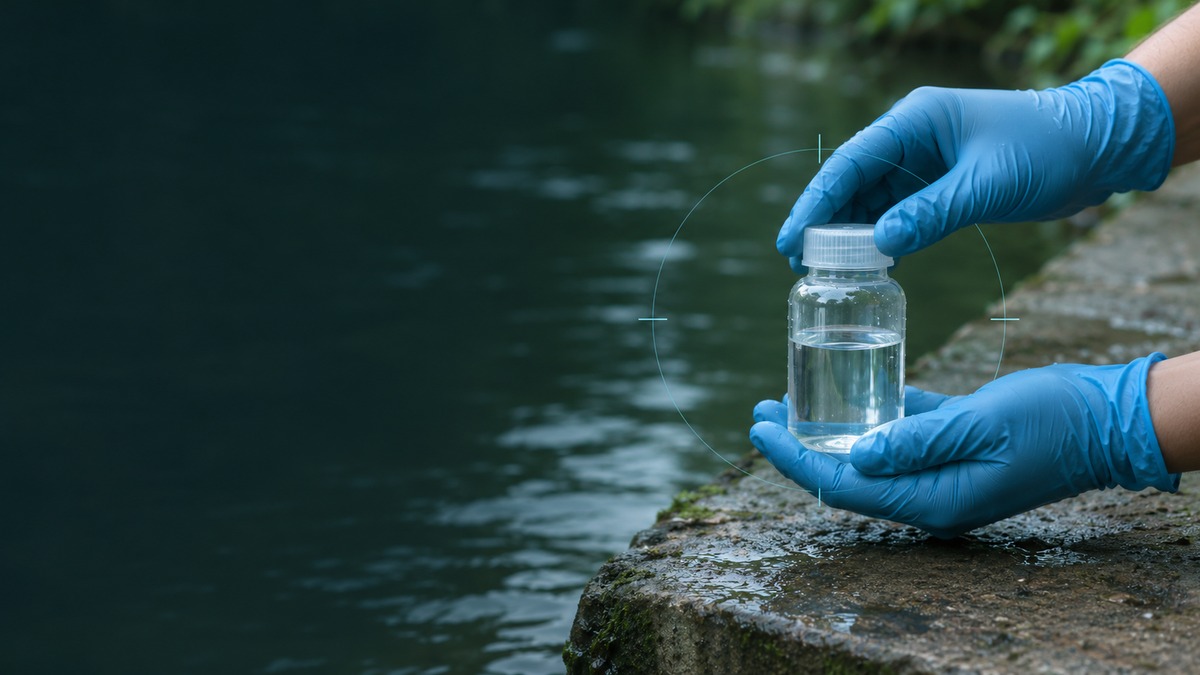
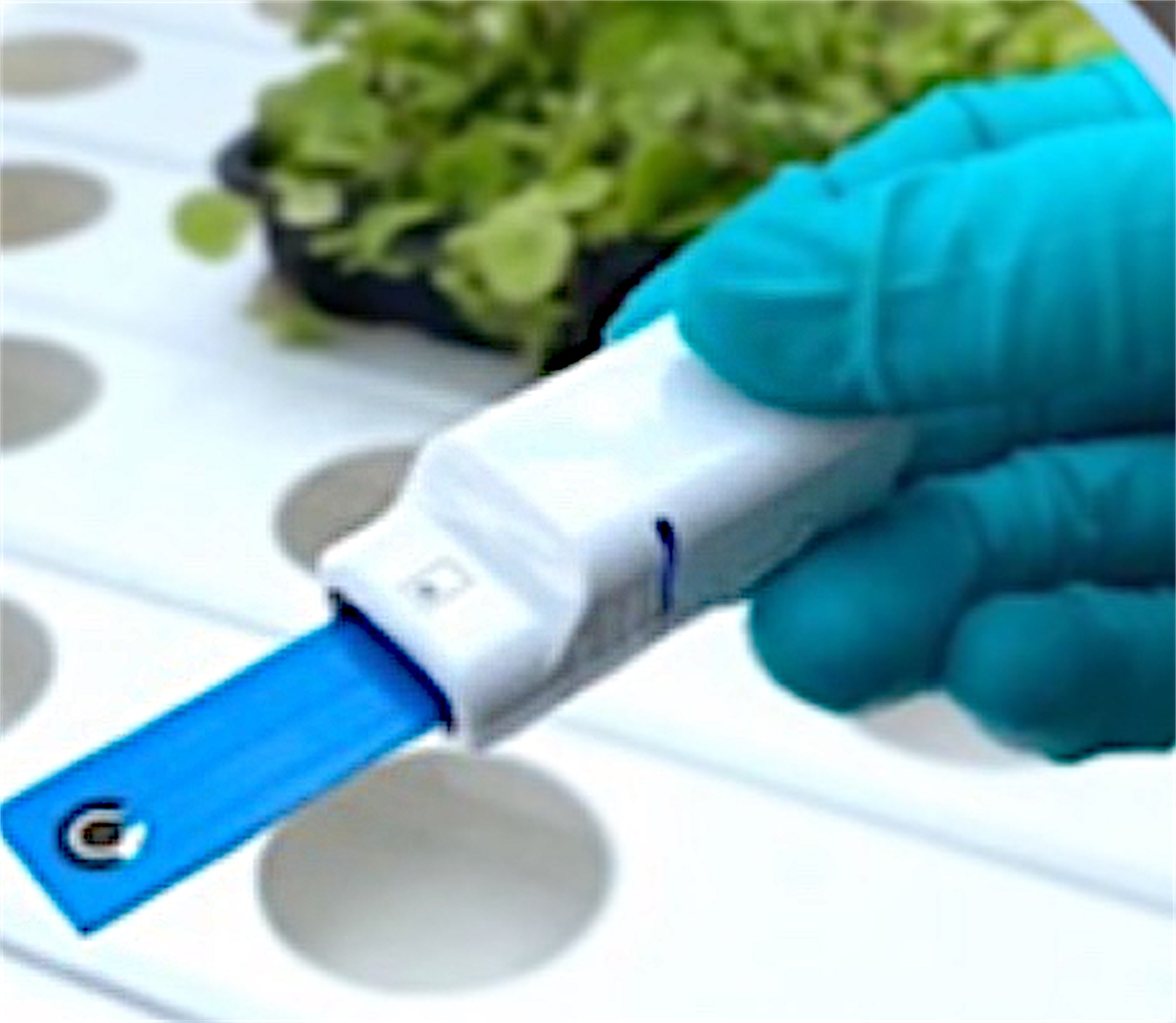
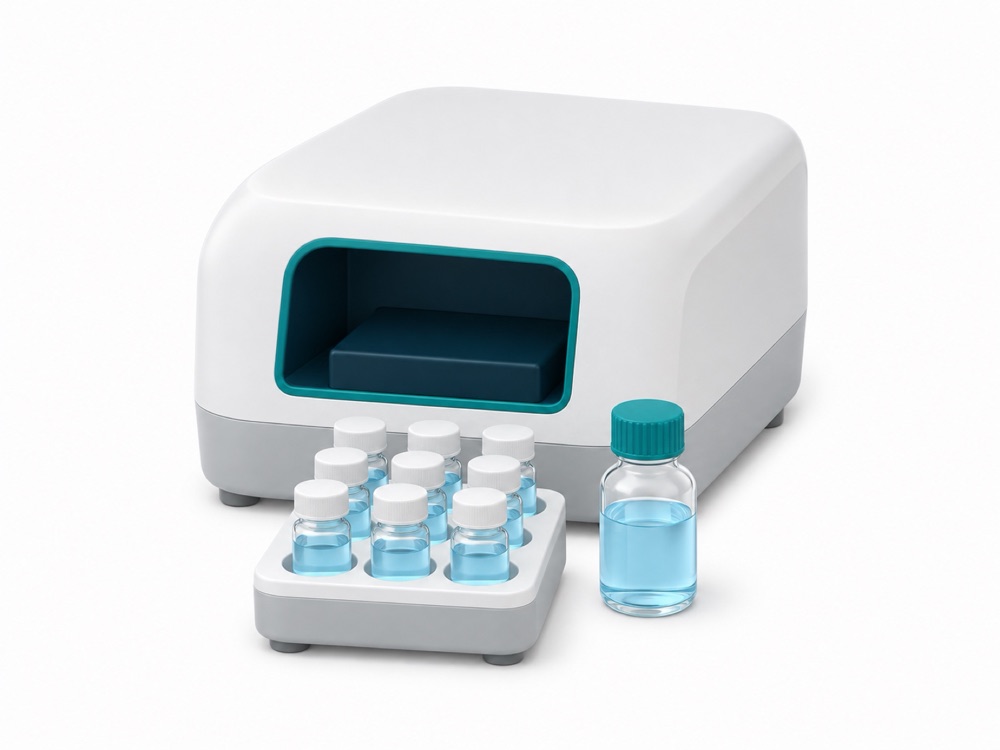
M-Sense uses an electrochemical technique with a portable reader. Officers can test water samples at the sampling point, with no need to ship them to a central laboratory.
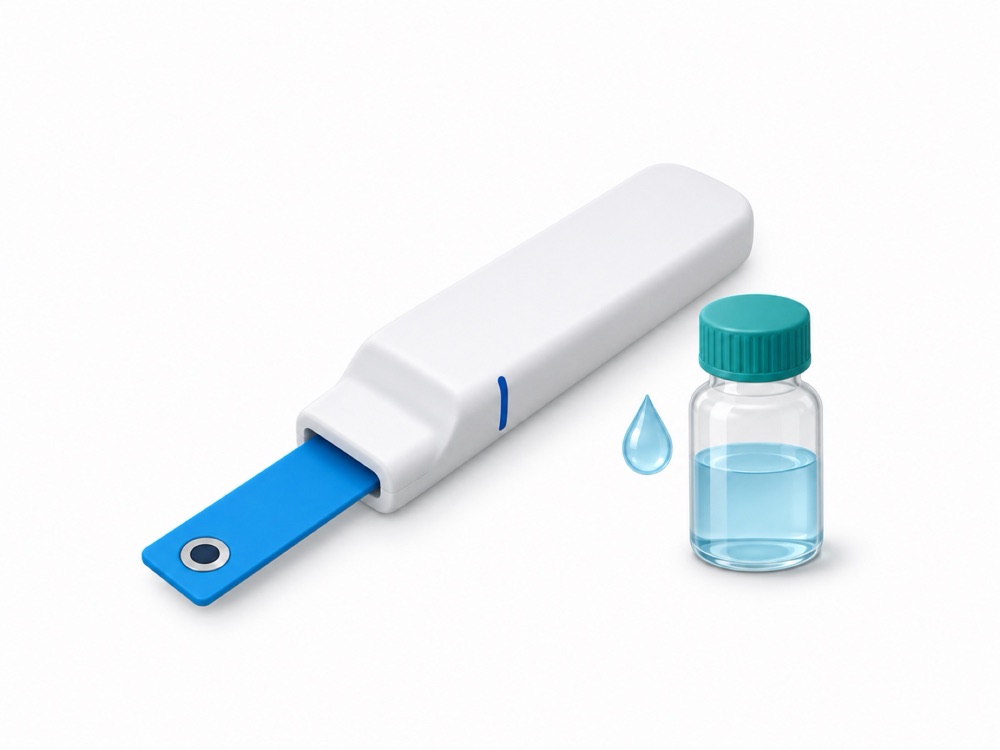
AI-generated illustration
What is electrochemistry?
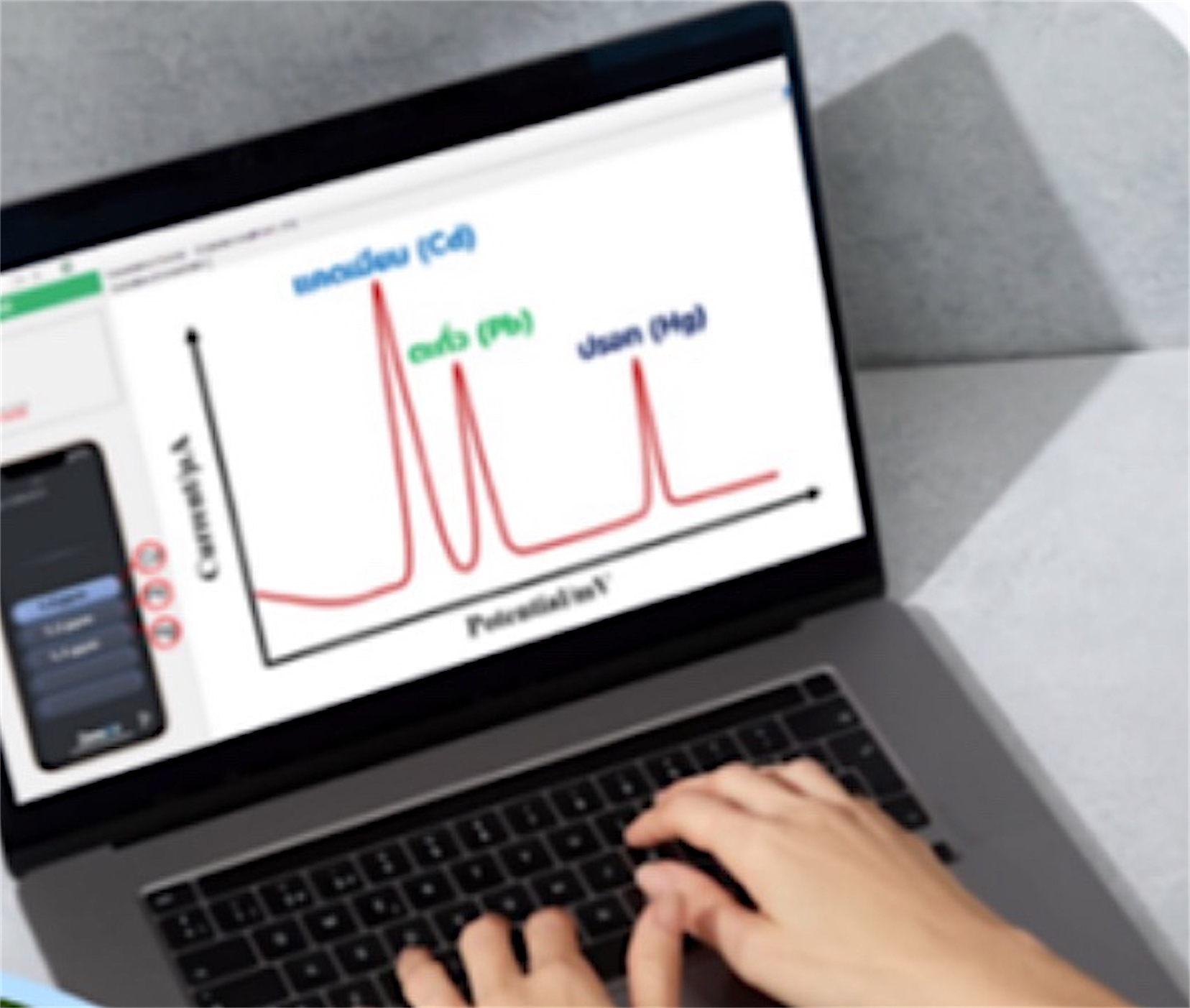
Each heavy metal has its own electrical behavior. When the water sample touches the sensor, the reader measures the electrical signal and converts it into the concentration of each heavy metal, so the result is a number rather than a color reading.
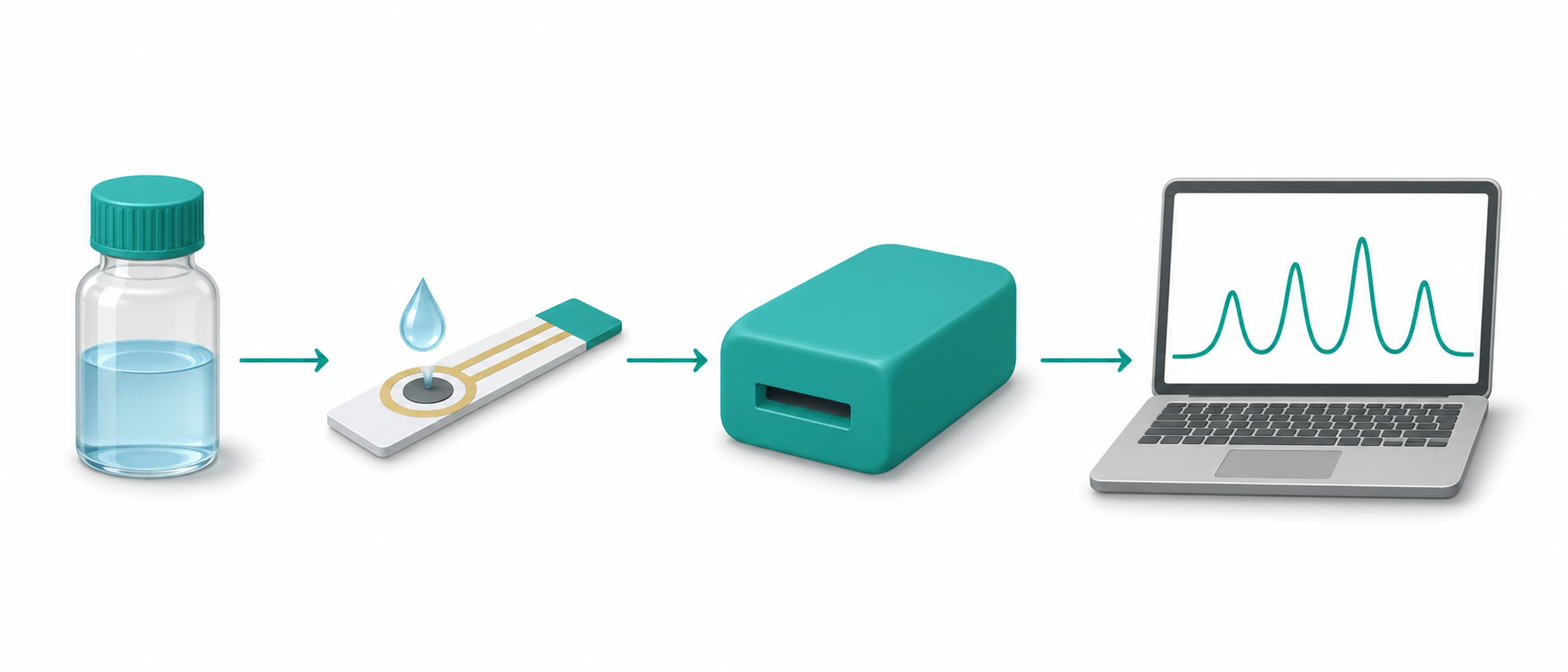
Water sample
M-Sense sensor
Portable reader
Numerical value (ppb–ppm)
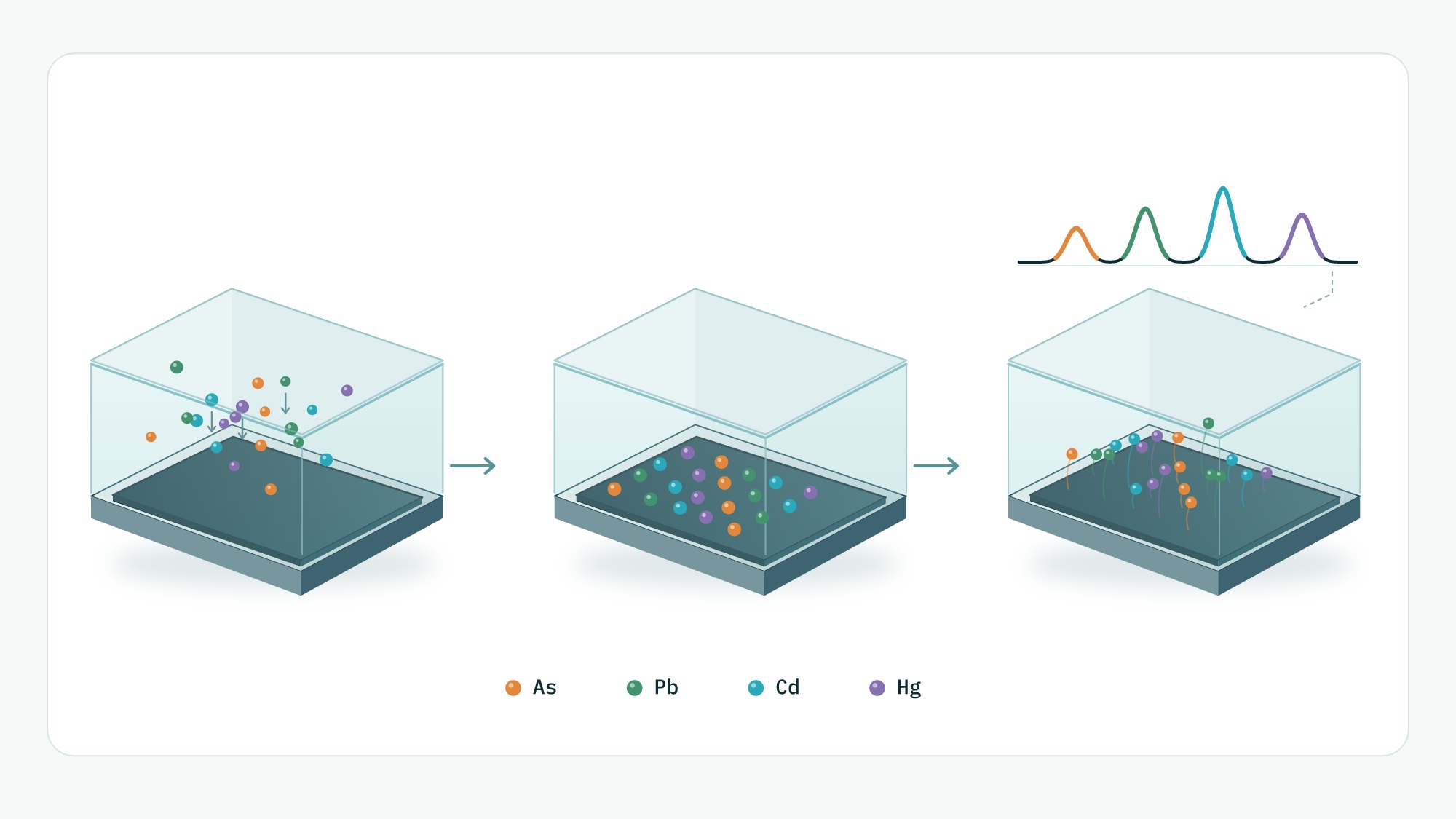
Illustration of the principle: ions move to the electrode → deposit on the surface → are released during the voltage sweep. Each metal gives its own signal peak (peak positions and heights in the image are illustrative).
Inside the sensor strip
Separate the electrode layers to see what each one does
Move the slider to separate or assemble the layers, drag the image to rotate it, and tap a layer name to read what it does.
1
2
3
4
5
6
Zoom in on the working electrode surface
Shows the general principle of a screen-printed electrode, not the detailed design of M-Sense. Peak positions and the number of ions in the image are illustrative.
Try a simulated test
Electrochemistry: how heavy metals in water are read
Choose a water sample and see what signal the reader picks up. Each metal produces a signal peak at a different voltage, and the peak height shows the amount.
Test steps
Step illustration: water sample → sensor strip → reader → value on screen (the device image is illustrative, not the actual device's appearance)
Collect a water sample at the water source, well or water outlet
Test with the M-Sense kit and portable reader
Read the concentration in about 5 minutes
Compare with water quality criteria to screen for points that need attention
Send points with questionable results for confirmation by standard laboratory methods
Illustration: test points along a water sourcePhoto: NANOTEC, NSTDAPhoto: NANOTEC, NSTDA
Comparing technologies
3 ways to test heavy metals in water, working together
Each method has different strengths. No single method suits every task. Agencies often use them in sequence, from screening in the field to confirming results in the laboratory.
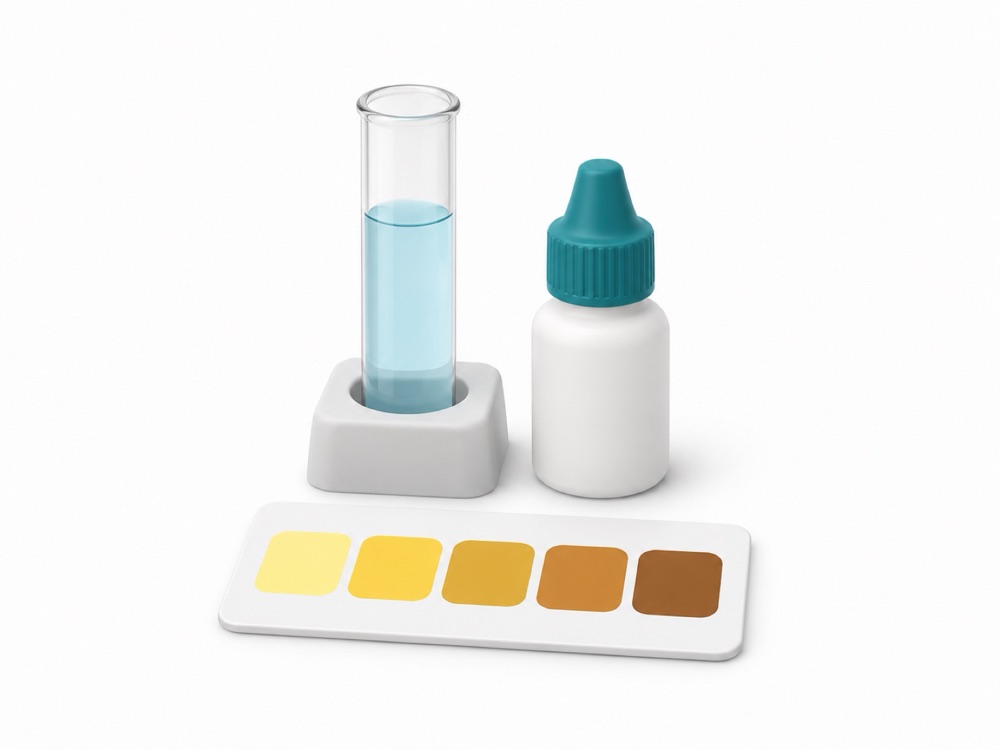
Colorimetric test kit (Colorimetric kit)
Read from the color change when a reagent reacts, then compared with a color chart
Gives a range of values
Result
A range of values, by comparing colors by eye
Per test
Mostly one substance at a time
Where used
At the water source, no electricity needed
Results
On the spot
Strengths
Easy to use, portable, many sites in one day
Best for
Broad screening of many water sources
M-Sense is in this group
Electrochemical field test kit (Electrochemical sensor)
Reads the electrical signal of metals on a small electrode strip. The reader converts it into numbers.
Gives numbers, with a signal peak for each metal
Result
Numerical concentration, ppb to ppm
Per test
Several metals in a single measurement
Where used
At the water source, with the reader
Results
About 5 minutes, at the sampling point
Strengths
Fast numbers; repeat tests at the same point to see trends
Best for
Field screening and monitoring that needs numbers quickly
Laboratory (ICP-MS, AAS)
Analyzed with specialized instruments, such as separating elements by mass or measuring atomic light absorption
Gives confirmed numbers
Result
Confirmed numbers, the most accurate and sensitive
Per test
Many elements at once (ICP-MS)
Where used
In the laboratory; samples must be preserved and shipped
Results
After sending samples and waiting for results
Strengths
Reference method with quality control of results
Best for
Confirming results and official reports
Used in sequence
1Broad screeningSurvey many water sources to find points worth a closer look
2Measure numbers at the sampling pointSee how close to or above the limit the values are, and retest to see trendsWhere M-Sense helps
3Confirm with a laboratorySend only points with questionable results, or where an official report is needed
NANOTEC is in discussions with the Massachusetts Institute of Technology (MIT) on developing the reader and data processing to be more convenient, faster and easier to use, reducing the skills users need
and M-Sense is part of a plan to develop a test kit standard with the Department of Science Service.