ไทย
M-Sense / What it detects

4 heavy metals M-Sense can detect

Arsenic, lead, cadmium and mercury can contaminate water sources from both natural sources and human activity. They are invisible and have no color or smell that gives them away, so knowing the actual levels is the starting point for managing water.

AI-generated illustration

4 substances

As

Arsenic

Drinkable tap water limit: not more than 0.01 mg/L (10 ppb)
Pb

Lead

Drinkable tap water limit: not more than 0.01 mg/L (10 ppb)
Cd

Cadmium

Drinkable tap water limit: not more than 0.003 mg/L (3 ppb)
Hg

Mercury

Drinkable tap water limit: not more than 0.001 mg/L (1 ppb)

M-Sense reads values from ppb (parts per billion) to ppm (parts per million), so it shows how close to or above the limit a measured value is.

ppb and ppm are units that show how much metal is in the water. The higher the number, the more metal is present.

  • 1 ppm = about 1 milligram of metal (one thousandth of a gram) in 1 liter of water
  • 1 ppb = about 1 microgram of metal (one millionth of a gram) in 1 liter of water, 1,000 times smaller than ppm
  • Arsenic limit in drinkable tap water: not more than 10 ppb
Read more: what are ppm and ppb?

There are several sets of criteria for different types of water

Type of waterCriteria used
Tap water for drinkingCriteria usedThailand's Department of Health criteria for drinkable tap water (2020)
River and canal waterCriteria usedThailand's surface water quality standards (National Environment Board Notification No. 8, 1994)
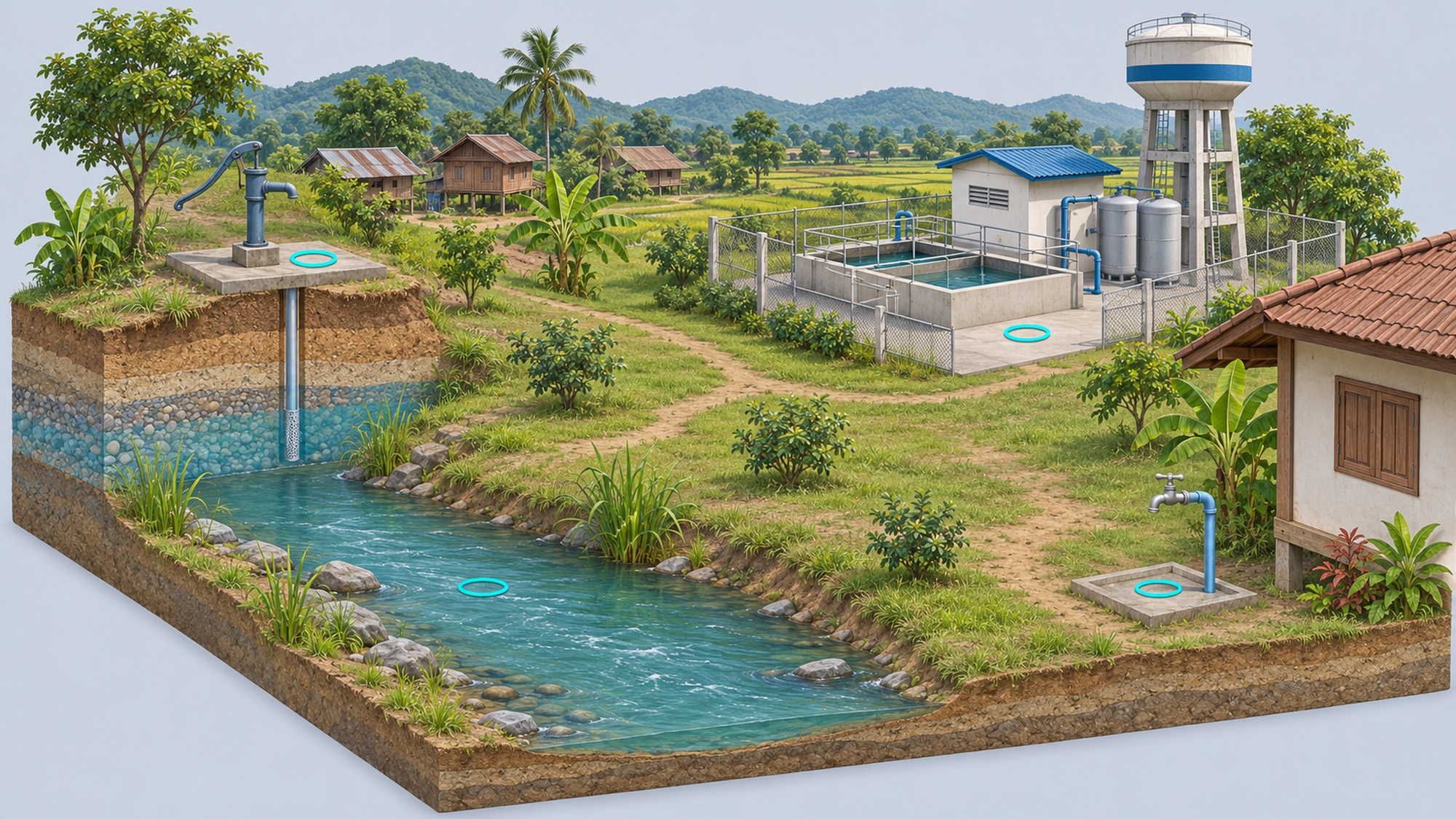
Illustration of 3 types of water source: a river, groundwater, and a water supply system up to a household tap, each with a measurement ring
Illustration: surface water, groundwater and tap water use different sets of criteria

Read results as

Is the measured value above the limit?

Enter the reading and unit. The tool converts the unit and compares it with the drinkable tap water limit right away.

Comparison table (mg/L, not more than)

SubstanceDrinkable tap water, Department of Health 2020Surface water sources, Notification No. 8 (1994)
ArsenicDrinkable tap water, Department of Health 20200.01Surface water sources, Notification No. 8 (1994)0.01
LeadDrinkable tap water, Department of Health 20200.01Surface water sources, Notification No. 8 (1994)0.05
CadmiumDrinkable tap water, Department of Health 20200.003Surface water sources, Notification No. 8 (1994)0.005 (water with hardness not more than 100 mg/L)
MercuryDrinkable tap water, Department of Health 20200.001Surface water sources, Notification No. 8 (1994)0.002

Note: surface water values are for assessing raw water sources. They do not mean the water is safe to drink.

Result above the limit: what next?

  1. Confirm the result with standard laboratory methods

  2. Notify the local agency responsible for the water source or water supply system

  3. Get advice on improving water quality. NANOTEC upgrades village water supply systems to remove arsenic.

About NANOTEC

For health concerns, contact the sub-district health promoting hospital or the local public health office

Talk to the NANOTEC team

NANOTEC, NSTDA assistantAnswers are based on NANOTEC information. Questions it cannot answer are passed to the team.

Privacy policy

The M-Sense website and its question-answering assistant are operated on behalf of the National Nanotechnology Center (NANOTEC), NSTDA.

Data collected: the messages you type in the chat and the contact details you enter yourself, such as name, organization, position, province, phone number and email. If you chat through LINE, the system sees your LINE display name and profile picture.

Used for: answering questions, passing your request to the NANOTEC team, contacting you back and improving the answers. Not used for other marketing, and never sold.

Automatic answers are generated by an artificial intelligence system, so chat messages are processed by AI and cloud service providers, which may be located outside Thailand.

Who sees the data: NANOTEC staff who handle inquiries and the website administrators.

You can ask to see, correct or delete your data through the "Ask NANOTEC" button or LINE @nanotec.