
Drinking Water Standards in Thailand: How to Read the 2020 Tap Water Criteria and Which Values Matter
The drinking water standards used today to decide whether tap water in Thailand is "drinkable" are Thailand's Department of Health criteria for drinkable tap water (2020). Water must pass all three areas: physical, chemical and microbiological. If any item is above the limit, the water does not pass. This article explains what the criteria include, which values to look at first, how to read a test report, and why numbers in the news sometimes seem not to match.
What are Thailand's 2020 drinking water standards for tap water?
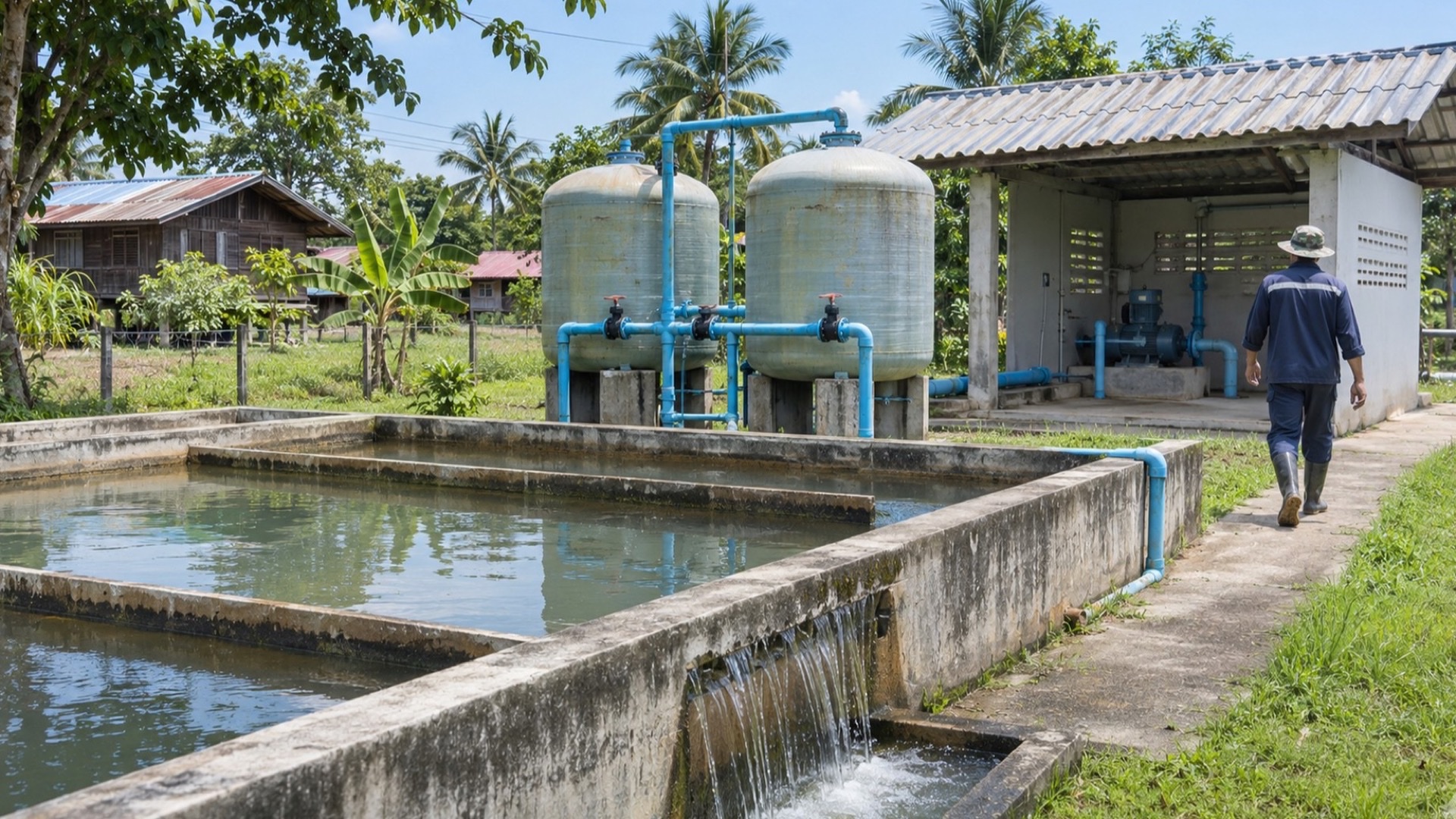
These criteria apply to tap water intended for drinking. Thailand's Department of Health uses them to decide whether a village water supply "passes" or "fails", and to certify "drinkable tap water" areas of the Provincial Waterworks Authority and the Metropolitan Waterworks Authority (the two state utilities that supply tap water outside and inside greater Bangkok).
The Department of Health states that the criteria are based on the World Health Organization (WHO) guidelines, and that tap water produced and controlled to these criteria is safe for drinking, cooking, washing dishes and washing ingredients.
The easiest document to find is the criteria table that the Department of Health's Bureau of Laboratory attaches to its test reports (document number SD-RLDC-006, effective from 28 April 2023). This table lists 21 items in total.
Several sets of water quality standards, for different kinds of water
News reports often say "above the standard" without saying which kind of water the standard is for. Each set of criteria was written for a different type of water, so before comparing numbers you need to know which set is being used.
| Set of criteria | Applies to | Used for |
|---|---|---|
| Thailand's Department of Health criteria for drinkable tap water (2020) | Tap water intended for drinking | Deciding whether tap water is drinkable |
| Thailand's surface water quality standards (National Environment Board Notification No. 8, 1994) | Water in rivers and canals, which is not yet drinking water | Used by the Pollution Control Department to report river test results |
| WHO Guidelines for Drinking-water Quality, 4th edition incorporating the first and second addenda | Drinking water (international guidance) | The reference that many countries use to set their own standards |
| Provincial Waterworks Authority tap water quality standard (1 October 2024) | Water produced by the Provincial Waterworks Authority | An internal organizational standard; some items differ from the Department of Health |
| Department of Health recommended criteria for drinking water quality surveillance | Drinking water in surveillance work | A different document from the 2020 criteria; the two should not be mixed |
Clear examples of the differences:
- Lead: drinkable tap water, not more than 0.01 milligrams per liter; surface water, not more than 0.05 milligrams per liter.
- Manganese: drinkable tap water, not more than 0.3; surface water, not more than 1.0; the Provincial Waterworks Authority standard sets not more than 0.08 milligrams per liter.
- Turbidity: the Department of Health criterion is not more than 5 NTU, while the Provincial Waterworks Authority standard is not more than 4 NTU.
- Arsenic: the same value for both drinkable tap water and surface water: not more than 0.01 milligrams per liter.
A caution about arsenic: some news reports mention a value of 0.05 milligrams per liter and call it a "relaxed" or "tolerable" limit. This value comes from an older set of criteria. The current Department of Health criteria for drinkable tap water (2020) set arsenic at not more than 0.01 milligrams per liter. When comparing water used for drinking, always use 0.01.
One more thing to know: surface water standard values are used to assess "raw water" before it enters a treatment system. River water that meets the surface water standard is not necessarily safe to drink straight away.
What the 2020 criteria include: 3 areas, 21 items
| Area | Item | Value set |
|---|---|---|
| Physical | Turbidity | Not more than 5 NTU (nephelometric turbidity units) |
| Physical | Color | Not more than 15 platinum-cobalt units |
| Physical | pH (acidity/alkalinity) | 6.5–8.5 |
| General chemical | Total dissolved solids | Not more than 500 milligrams per liter |
| General chemical | Iron | Not more than 0.3 milligrams per liter |
| General chemical | Manganese | Not more than 0.3 milligrams per liter |
| General chemical | Fluoride | Not more than 0.7 milligrams per liter |
| General chemical | Hardness, sulfate, chloride, nitrate, nitrite, copper, zinc | See the values in the Department of Health's full criteria table |
| Toxic heavy metals | Arsenic | Not more than 0.01 milligrams per liter |
| Toxic heavy metals | Lead | Not more than 0.01 milligrams per liter |
| Toxic heavy metals | Cadmium | Not more than 0.003 milligrams per liter |
| Toxic heavy metals | Mercury | Not more than 0.001 milligrams per liter |
| Toxic heavy metals | Total chromium | Not more than 0.05 milligrams per liter |
| Microbiological | Coliforms (a group of bacteria used to indicate contamination) | Must not be detected |
| Microbiological | E. coli | Must not be detected |
Which values matter, and which to check first
Every item matters, because water must pass all of them to be "drinkable". But real data from village water supplies show that some problems are much more common than others.
1. Germs: the most common problem
The Department of Health's report on village water supplies for fiscal year 2025 lists the items most often found not to meet the criteria, from most to least common:
| Rank | Items most often not meeting the criteria |
|---|---|
| 1 | Coliforms |
| 2 | E. coli |
| 3 | Dissolved solids |
| 4 | Iron and turbidity |
The top 2 items are about germs, so they relate directly to the disinfection system. For many village water supplies, keeping disinfection working consistently and building the knowledge of system operators is the work that helps most.
2. Turbidity, color, iron, manganese: problems people can see
Cloudy water, yellowish water or rust stains are usually a matter of turbidity, iron and manganese. Water users can see these problems, which is a main reason why many households do not feel confident drinking tap water, even when the water may already meet the microbiological criteria.
3. The 5 toxic heavy metals: invisible, so they must be tested
In the village water supply report for fiscal year 2025, arsenic was beginning to be found in some areas, only slightly above the limit. But heavy metals cannot be seen by eye; the only way to know is to test. Their health effects come from long-term exposure, so areas at risk should be tested regularly.
| Substance | Department of Health 2020 (mg/L) | Equal to (ppb) | WHO (mg/L) |
|---|---|---|---|
| Arsenic | Not more than 0.01 | 10 | 0.01 (provisional) |
| Lead | Not more than 0.01 | 10 | 0.01 (provisional) |
| Cadmium | Not more than 0.003 | 3 | 0.003 |
| Mercury | Not more than 0.001 | 1 | 0.006 (inorganic mercury only) |
ppb stands for parts per billion.
Three points in this table are worth understanding:
- "Provisional" does not mean definitely safe. WHO set the arsenic and lead values according to what treatment systems and measurement can achieve, and advises keeping levels as low as reasonably possible. For lead, WHO states that there is no known level of exposure without harmful effects.
- Thailand's mercury limit is stricter, because the Department of Health counts total mercury (0.001), while WHO counts only inorganic mercury (0.006), which is almost the only form found in drinking water. For the other 3 substances, the Department of Health uses the same values as WHO.
- Lead in tap water usually comes from pipes inside buildings. WHO states that most lead dissolves from pipes, fittings and lead solder, not from the water source, so samples must be taken "at the tap".
Read more about the 4 substances M-Sense can detect on the page What it detects, and the limits.
How to read a test report against drinking water standards
What "not more than" means
The 2020 criteria express most values as "not more than". For example, arsenic not more than 0.01 milligrams per liter means that a result equal to or below this value passes. Coliforms and E. coli must be "not detected".
Abbreviations on test reports
- ND stands for Not Detected.
- A microbiological value written as "<1.1" in Department of Health documents means no germs were found.
"Not detected" does not mean zero
Not detected means below the level that the method can measure. Each test method has a different lowest measurable level. WHO gives the examples that arsenic can be measured down to 0.1 micrograms per liter by inductively coupled plasma mass spectrometry (ICP-MS) and 2 micrograms per liter by atomic absorption spectrometry. Agencies in the United States also warn that some laboratories can measure arsenic only down to 10 micrograms per liter, so a "not detected" result might still be close to 10. When reading a result, also check the lowest level the method can measure.
Convert units correctly before comparing with a limit
| Unit | Equal to | Example: arsenic |
|---|---|---|
| Milligrams per liter (mg/L) | About 1 part per million (ppm) | 0.01 mg/L |
| Micrograms per liter (µg/L) | 1 mg/L = 1,000 µg/L ≈ parts per billion (ppb) | 10 µg/L = 10 ppb |
A common mistake is to see a result of "10" in ppb, compare it with a limit of "0.01" in mg/L, and think it is 1,000 times over. In fact the two values are equal.
Hypothetical example: a tap water test at one point finds lead at 6 ppb, which equals 0.006 mg/L. This is below the 0.01 limit, so it passes. If another point shows 15 ppb, which equals 0.015 mg/L, it is above the limit: stop drinking the water and confirm the result.
Passing is not 100 percent safe; exceeding is not immediately dangerous
Most limits are based on drinking the water over a whole lifetime. The guidelines of Australia's National Health and Medical Research Council, which follow WHO principles, explain that a small exceedance for a short time does not necessarily mean an immediate increase in risk, but every exceedance must be investigated to find the cause and reported to the health authorities. Equally, a passing result should be called "meets the standard", not "100 percent safe", especially for lead, for which there is no known level without harmful effects.
What to do if tap water is above the drinking water standards
The steps below are a synthesis of advice from Thailand's Ministry of Public Health and drinking water agencies in other countries. They can be used as initial guidance, but if local authorities have specific advice, follow the local authorities first.
- Stop using the water for drinking and cooking for now. Use water from a tested source, such as tap water that meets the criteria, or bottled water carrying the registration mark of Thailand's Food and Drug Administration (Thai FDA).
- Confirm the result with a laboratory. Field test kit results are screening results. The Director-General of the Department of Health himself has called the use of field arsenic test kits preliminary testing. Agencies in the United States advise retesting to confirm before deciding to invest in a treatment system.
- Inform whoever runs the water system. For tap water, inform the water producer: the Provincial Waterworks Authority, the Metropolitan Waterworks Authority, or the local government organization (such as a municipality or subdistrict administrative organization) that manages the village water supply. The Department of Health hotline is 1478 and the Provincial Waterworks Authority hotline is 1662.
- Consult a local health service if you have been drinking the water for a long time or have unusual symptoms. Go to a subdistrict health promoting hospital (Thailand's local primary care unit) or a hospital near you. A doctor will decide whether further tests are needed.
- If you treat the water, choose a method that really works for that substance. Boiling and chlorination kill germs but do not remove arsenic or heavy metals. Methods cited by agencies include reverse osmosis (RO), ion exchange, distillation, or filters certified to remove that substance, and the water must be tested again after installation to confirm that it really works.
For village water supply systems, solutions should start from the test results, followed by a choice of treatment method based on the substance found. Read guidance for agencies on the page For agencies.
How M-Sense helps
M-Sense is a portable heavy metal test kit for water based on electrochemistry, developed by the National Nanotechnology Center (NANOTEC), part of Thailand's National Science and Technology Development Agency (NSTDA). It detects 4 metals (arsenic, lead, cadmium and mercury) in about 5 minutes and reports a numerical result in the ppb to ppm range on a portable reader, so the number can be compared with the drinkable tap water criteria right at the sampling point.
M-Sense is used for screening and monitoring, helping to show quickly which points should be sent for confirmation first. Official confirmation still uses standard laboratory methods. In field testing with the Regional Environment and Pollution Control Office 1 in the Kok River basin, M-Sense results were consistent with standard laboratory methods. See how it works on the page How M-Sense works and examples of use on the page Field use.
Frequently asked questions
What is the latest Department of Health tap water standard in Thailand? The criteria the Department of Health currently uses to judge drinkable tap water are Thailand's Department of Health criteria for drinkable tap water (2020). They contain 21 items in 3 areas: physical, chemical and microbiological.
What is the arsenic limit in drinking water from the tap? Not more than 0.01 milligrams per liter, or 10 ppb, under the Department of Health criteria for drinkable tap water (2020), which equals the WHO guideline value. The 0.05 value seen in some news reports comes from older criteria and is not the current drinking water criterion.
My test report says ND. Does that mean the water is safe? ND means not detected, i.e. below the level the method can measure; it does not mean zero. Check also the lowest level the method can measure. If that level is well below the limit, an ND result means the water meets the criterion.
If tap water meets the standard, can I drink straight from the tap at home? Certification looks at the water from the production and distribution system. Quality at the tap in your home also depends on your storage tank and household pipes. The Department of Health advises cleaning water storage tanks every 6 months. Read more in Is tap water safe to drink?
Who should I contact if a water test is above the limit? Inform the local tap water producer or the local government organization that manages the village water supply, or call the Department of Health hotline 1478. If you are worried about your health, consult a subdistrict health promoting hospital or the Provincial Public Health Office.
Want to know whether the water in your area meets the criteria?
Ask NANOTEC · What it detects, and the limits · For agencies
References
- Bureau of Laboratory, Department of Health, Thailand. Criteria for drinkable tap water, Department of Health, 2020 (document SD-RLDC-006, effective 28 April 2023).
- Department of Health, Thailand. Press release: tap water produced to standard is clean and safe, 11 April 2025.
- Bureau of Food and Water Sanitation, Department of Health, Thailand. Performance and situation of village water supply quality, fiscal year 2025 (data as of 24 July 2025).
- National Environment Board, Thailand. Notification No. 8 (1994) on surface water quality standards.
- Provincial Waterworks Authority, Thailand. Tap water quality standard, 1 October 2024.
- Department of Health, Thailand. Recommended criteria for drinking water quality surveillance.
- World Health Organization. Guidelines for drinking-water quality, 4th edition incorporating the first and second addenda, 2022, and the 2022 chemical background documents (arsenic, lead, cadmium, mercury).
- World Health Organization. Lead poisoning and health (fact sheet).
- National Health and Medical Research Council (Australia). Australian Drinking Water Guidelines, 9.12 Assessing the significance of short-term exceedances of health-based guideline values.
- Minnesota Department of Health. Arsenic in well water · Commonwealth of Massachusetts. Arsenic in Private Well Water FAQs.
- Thai PBS. Field arsenic test kits recommended for checking water quality, 8 April 2025.
- Hfocus. Ministry of Public Health warns people in at-risk areas to avoid arsenic-contaminated water, 11 November 2026.
- National Nanotechnology Center. Portable electrochemical test kit for heavy metal contamination in water (M-Sense).
- Krungthep Turakij (Bangkok Business News). News on arsenic contamination in the Sai River and the delivery of M-Sense arsenic sensors, November 2026.