

Heavy Metals in Water: 4 to Watch (Arsenic, Lead, Cadmium and Mercury)
The heavy metals in water that water and health agencies watch most closely are arsenic, lead, cadmium and mercury. All four are listed as toxic heavy metals in Thailand's Department of Health criteria for drinkable tap water (2020). Each comes from different sources, enters the body mainly by a different route, and has a different limit. Heavy metals in water are invisible and odorless, so the only way to know is to test. Health effects depend on how much is taken in and for how long.
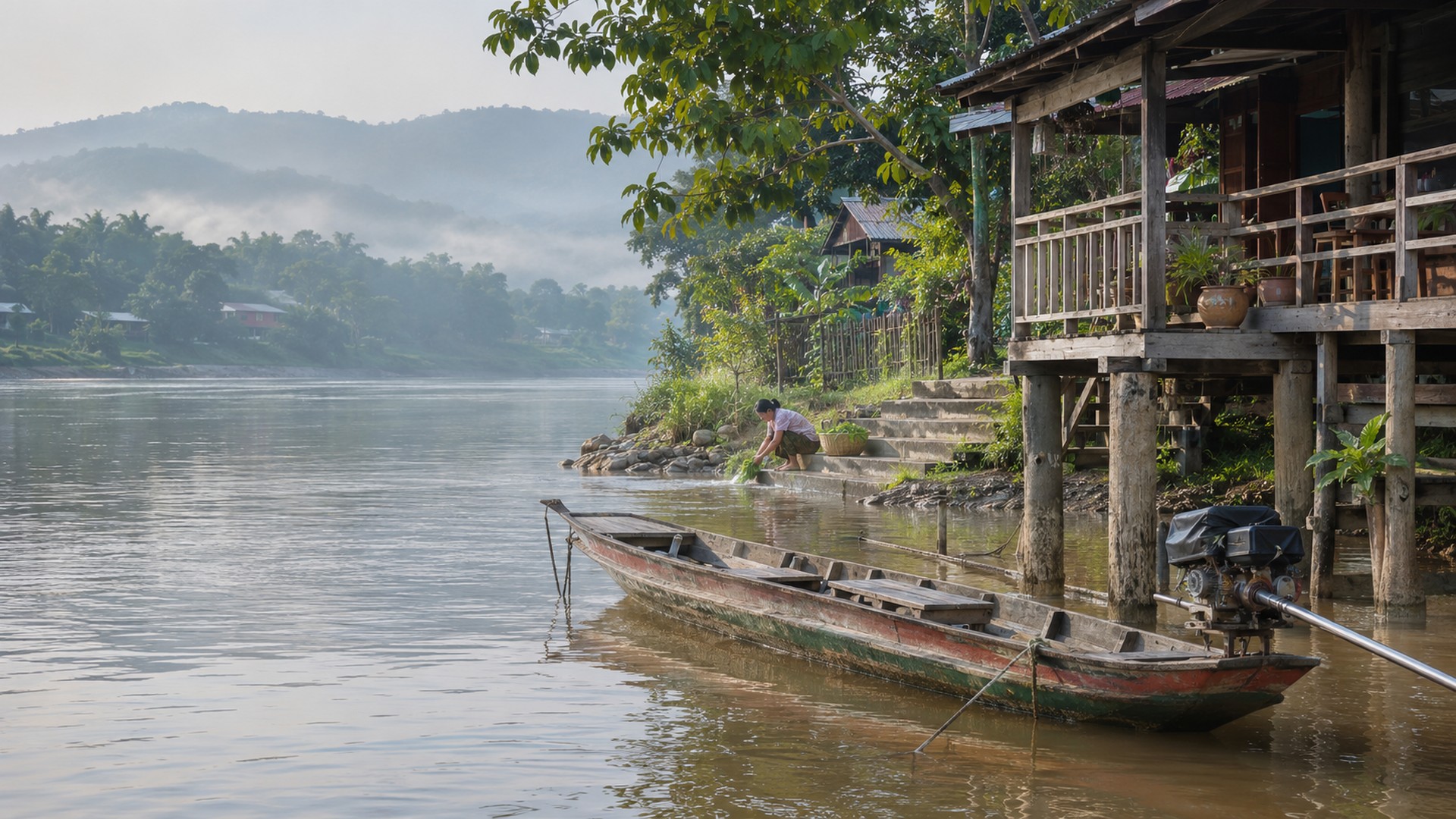
Why these 4 heavy metals in drinking water matter
Thailand's Department of Health criteria for drinkable tap water (2020) cover three areas: physical, chemical and biological. The chemical criteria list 5 toxic heavy metals: lead, total chromium, cadmium, arsenic and mercury. This article explains the 4 that the M-Sense test kit can detect.
Before reading on, two principles apply to all of them:
- Exposure is not the same as disease. Health effects depend on the dose, the duration, the chemical form and individual factors such as age, nutrition and smoking. The World Health Organization (WHO) notes that the risk at low levels is still highly uncertain.
- Water is not the only route. Arsenic comes mainly from contaminated groundwater. Lead in tap water usually comes from pipes and fittings inside the home. For cadmium and mercury, most people take in more from food than from drinking water.
Summary table: 4 heavy metals in water
| Arsenic | Lead | Cadmium | Mercury | |
|---|---|---|---|---|
| Main route of exposure | Contaminated groundwater, and food grown or cooked with it | Pipes, fittings and lead solder in buildings; dust; paint | Food such as rice, leafy vegetables, shellfish, offal, and cigarettes; water is a minor route | Fish and shellfish; in drinking water it is inorganic mercury |
| Effects of long-term high exposure | Skin discoloration and thickening; higher risk of some cancers | Affects children's brain and intelligence; blood pressure; kidneys | Kidney damage; fragile bones | Kidneys; nervous system |
| Groups needing extra care | Unborn babies, infants, young children | Young children, pregnant women | Smokers, older people | Unborn babies, young children, pregnant women |
| IARC | Group 1 | Inorganic compounds Group 2A | Group 1 | Methylmercury Group 2B · metallic and inorganic mercury Group 3 |
| Thailand's Department of Health drinkable tap water criteria (2020) | Not more than 0.01 mg/L | Not more than 0.01 mg/L | Not more than 0.003 mg/L | Not more than 0.001 mg/L |
| Removed by boiling? | No | No | No | No |
What is IARC? The International Agency for Research on Cancer, part of WHO, classifies substances by the weight of evidence on whether they cause cancer. Group 1 means carcinogenic to humans, Group 2A probably carcinogenic to humans, Group 2B possibly carcinogenic to humans, and Group 3 not classifiable because the evidence is insufficient. The classification shows how strong the evidence is. It does not show how potent a substance is, or what amount is harmful.
1. Arsenic
Sources. Arsenic is found throughout the Earth's crust. Groundwater may be high in arsenic in areas with sulfide ore deposits or sediments derived from volcanic rock. Related human activities include mining, smelting and coal burning. WHO states that contaminated groundwater is the greatest public health threat from arsenic.
Health effects. Drinking water with high arsenic over a long period causes dark spots on the skin and hardened, thickened skin on the palms and soles, usually after about 5 years of continuous exposure. It also raises the risk of skin, bladder, lung and kidney cancer.
Limit. Thailand's Department of Health (2020) and WHO use the same value, 0.01 milligrams per liter. WHO calls this a "provisional" value because it is based on the difficulty of removal and the limits of measurement, and advises keeping levels as low as reasonably possible.
Read more in What is arsenic?
2. Lead
Sources. Lead in tap water is almost never natural. Most of it dissolves from pipes, lead solder, fittings or lead-containing alloy fixtures in the home or in the service pipe that connects to it. More lead dissolves when water is soft and acidic, when it has stood in the pipes for a long time, and when it is warm. Drinking water generally contains less than 5 micrograms of lead per liter, but in buildings with lead pipes or fittings, levels above 100 micrograms per liter have been measured. Lead testing should therefore use samples taken "at the tap", not only at the water source.
Other sources of lead besides water include mining, battery smelting and recycling, house paint, glazed ceramics, dust and soil.
Health effects. In children, lead affects brain development and lowers intelligence, attention and school performance. In adults, it raises the risk of high blood pressure, cardiovascular disease and long-term kidney damage. In pregnant women, lead stored in bone can return to the blood, leading to slower growth of the baby and premature birth.
Young children absorb 4–5 times as much lead from what they swallow as adults do. WHO states that there is no known level of lead exposure without harmful effects.
Limit. Thailand's Department of Health (2020) and WHO use 0.01 milligrams per liter, a provisional value like that for arsenic. WHO recommends not installing new lead pipes or lead solder, and using low-lead fittings.
What you can do at home. The United States Environmental Protection Agency advises using cold water from the tap for drinking, cooking and preparing baby formula, and running the tap for a while when water has stood in the pipes for a long time. Boiling does not reduce lead.
3. Cadmium
Sources. For most people, food is the main source. Adults take in about 10–35 micrograms of cadmium a day, and smoking is an important additional source. Foods that may contain cadmium include leafy vegetables, grains, legumes, shellfish and animal offal. Drinking water usually contains less than 1 microgram of cadmium per liter. Cadmium can enter water from impurities in the zinc coating of galvanized iron pipes, lead solder and some metal fittings, and enters the environment from industrial wastewater, fertilizers and air pollution.
Health effects. The kidney is the main organ affected. Cadmium accumulates in the kidneys and stays in the body for a very long time, with a half-life of 10–35 years. Repeated exposure damages the kidneys and is linked to fragile bones.
IARC. IARC classifies cadmium and cadmium compounds in Group 1, according to IARC Monographs Volume 100C (2012). Some WHO drinking water guideline documents still state that cadmium is in Group 2A, which reflects information from before that review. WHO also notes that the evidence of carcinogenicity comes from inhalation; there is no evidence from ingestion.
Limit. Thailand's Department of Health (2020) and WHO use 0.003 milligrams per liter. WHO derived this value from 10 percent of the tolerable intake, because people already take in a lot of cadmium from food.
4. Mercury
Sources. Mercury has 3 main forms: metallic mercury (mercury vapor), inorganic mercury, and organic mercury such as methylmercury. For most people, fish and shellfish are the main source. In uncontaminated drinking water, almost all mercury is inorganic, so people are unlikely to take in methylmercury directly from drinking water. Normal surface water and groundwater contain less than 0.5 micrograms of mercury per liter, but local mineral deposits can raise mercury in groundwater. Other sources include breathing mercury vapor at work, coal burning and broken mercury-containing products.
Health effects. Mercury affects the nervous system, kidneys, digestive system, immune system, skin and eyes. Inorganic mercury, the form found in drinking water, mainly affects the kidneys. The groups needing extra care are unborn babies, young children and pregnant women, especially with respect to methylmercury from fish.
Limit: why Thailand and WHO differ. Thailand's Department of Health (2020) sets mercury at not more than 0.001 milligrams per liter, while WHO uses 0.006 milligrams per liter. The numbers differ because they measure different things: the Thai value is for total mercury, and the WHO value applies to inorganic mercury only. In this case the Thai criterion is stricter.
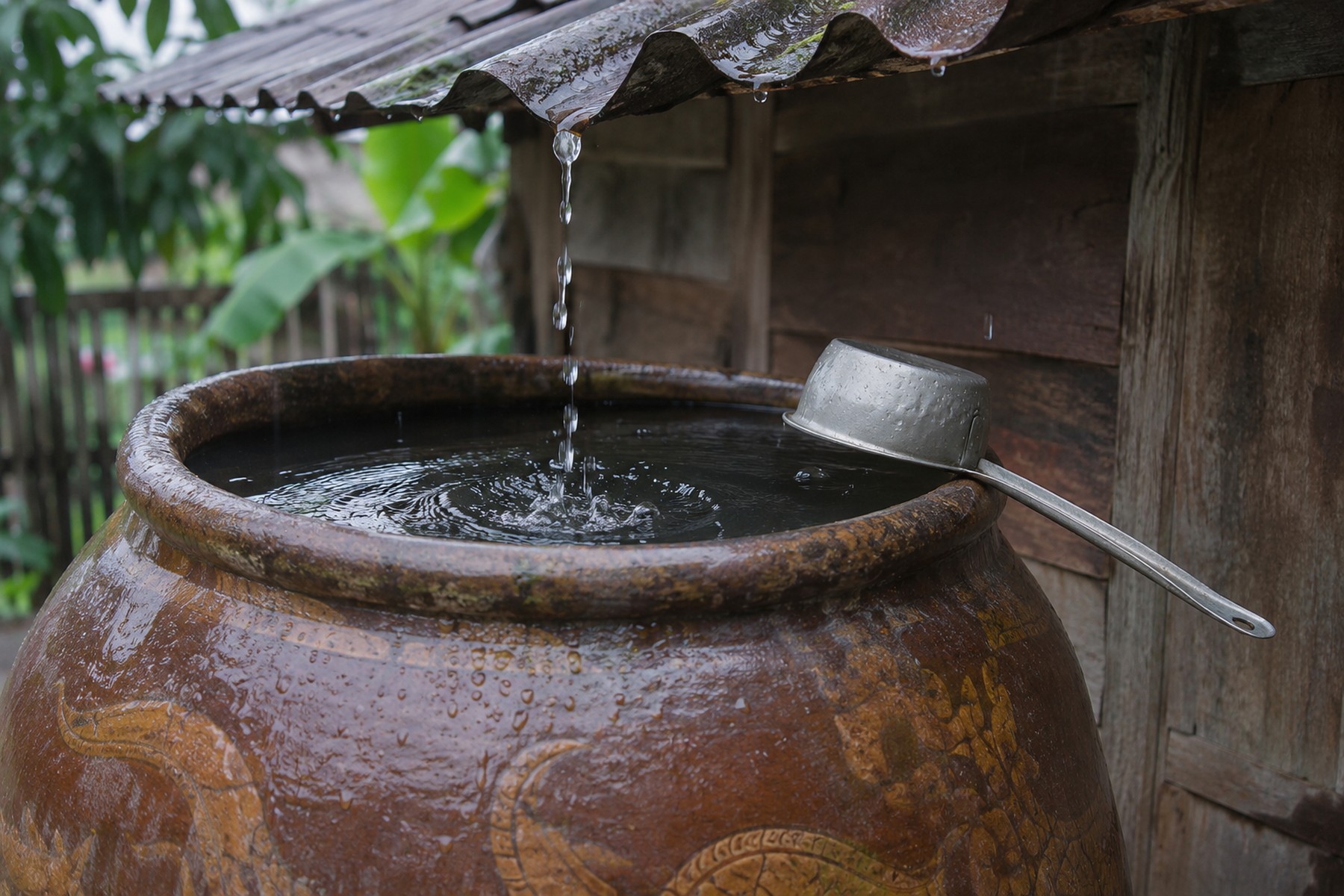
Several standards, for different kinds of water
The value used for judging depends on the kind of water. Water that will be drunk should be compared with the drinkable tap water criteria, not with the surface water standard.
| Substance (mg/L) | Drinkable tap water, Thailand's Department of Health (2020) | Surface water, National Environment Board Notification No. 8 (1994) | WHO (drinking water guidelines, published 2022) |
|---|---|---|---|
| Arsenic | Not more than 0.01 | Not more than 0.01 | 0.01 (provisional) |
| Lead | Not more than 0.01 | Not more than 0.05 | 0.01 (provisional) |
| Cadmium | Not more than 0.003 | Not more than 0.005 (water with hardness not more than 100 mg/L) · not more than 0.05 (water with hardness above 100 mg/L) | 0.003 |
| Mercury | Not more than 0.001 | Not more than 0.002 | 0.006 (inorganic mercury) |
Surface water values are used to assess raw water sources; they do not mean the water is drinkable. In the units that test instruments often use: arsenic 0.01 = 10 ppb · lead 0.01 = 10 ppb · cadmium 0.003 = 3 ppb · mercury 0.001 = 1 ppb. See how to convert units in What are ppm and ppb?
A common mistake is to read a result of "10" in ppb and compare it with a limit of "0.01" in milligrams per liter, and conclude that the water is 1,000 times over the limit, when the two values are actually equal.
What "below the limit" and "above the limit" mean
- Meets the standard means the result is equal to or below the set value. For arsenic and lead, however, the limits are provisional, so levels should be kept as low as reasonably possible.
- Above the limit means you should stop drinking the water for now and confirm the result. A small exceedance for a short time does not necessarily mean an immediate increase in risk, because most limits are based on drinking the water over a lifetime, but every exceedance should be investigated to find the cause.
Heavy metal contamination in water: the Thai context
Studies in Thailand show how each metal reaches people by a different route.
- Ron Phibun, Nakhon Si Thammarat Province (southern Thailand) is the most studied arsenic area in the country. The first arsenic-related skin disease was reported there in 1987. The key lesson is that switching to safe drinking water sources, such as rainwater and tap water, is the main measure.
- Mae Sot, Tak Province (western Thailand) has studies of cadmium in rice-growing areas. The main route of exposure is rice, with drinking water as a contributing factor. This matches WHO's information that cadmium comes mainly from food.
- Kok River basin, Chiang Rai Province (northern Thailand): Thailand's Pollution Control Department has sampled the water regularly since 2025 and reports results against the surface water standard. Several agencies work together in the area. As of 17 November 2026, the Ministry of Public Health stated that there were no reported cases of acute poisoning and that the situation was at the monitoring stage.
Most Thai studies cover a limited number of wells or areas, so they cannot describe a whole province, and a water test at a single point cannot tell where heavy metals came from. Finding the source requires an on-site investigation.
Does boiling water remove heavy metals?
No. Boiling kills germs but does not remove arsenic, lead or other heavy metals, and if water is boiled for a long time and much of it evaporates, the concentration may rise. Adding chlorine does not remove arsenic either. Both Thailand's Ministry of Public Health and agencies in other countries confirm this.
If you treat water, choose a method that really works for the substance, such as reverse osmosis, ion exchange, distillation, or a filter certified to remove that substance, and test the water again after installation to confirm that it works.
What to do if you suspect heavy metals in your water
- Test the water. Choose the sampling point to suit the substance; for lead, for example, sample at the tap.
- If the result is above the limit, stop using the water for drinking and cooking for now. Use water from a tested source.
- Confirm the result with a laboratory. Field test kit results are screening results.
- Inform whoever runs the water system, such as the local waterworks or the local government organization that manages the village water supply.
- Consult a health service if you have been drinking the water for a long time or have unusual symptoms. Go to a subdistrict health promoting hospital (Thailand's local primary care unit) or a hospital near you. A doctor will decide what further tests are needed.
These steps summarize advice from Thailand's Ministry of Public Health and agencies in other countries.
How M-Sense helps
M-Sense is a portable heavy metal test kit for water based on electrochemical sensing, developed by the National Nanotechnology Center (NANOTEC), part of Thailand's National Science and Technology Development Agency (NSTDA). It detects all 4 metals in this article (arsenic, lead, cadmium and mercury) in about 5 minutes and reports a numerical result in the ppb to ppm range on a portable reader. It can be used with surface water, groundwater and community water for drinking and household use.
M-Sense has been field-tested with the Regional Environment and Pollution Control Office 1 (Chiang Mai) in the Kok River basin, compared with standard laboratory methods, and the results were consistent. It was handed over to the Chiang Rai Provincial Public Health Office on 15 November 2026. M-Sense is used for screening and monitoring, helping officers know which points should be sent for confirmation; official confirmation still uses a laboratory. Learn more in What it detects, and the limits and How M-Sense works.
Frequently asked questions
Which heavy metals in water need to be monitored? Thailand's Department of Health criteria for drinkable tap water (2020) list 5 toxic heavy metals: lead, total chromium, cadmium, arsenic and mercury. The M-Sense test kit detects 4 of them: arsenic, lead, cadmium and mercury.
If water is clear and odorless, does that mean it has no heavy metals? No. Looking at water only tells you about its physical quality. Heavy metals in water are invisible and odorless; only a test can tell you.
Where does lead in tap water come from? Mostly from pipes, fittings and lead solder in the home or in the service pipe connected to it, not from the natural water source. That is why samples should be taken at the tap.
Why is Thailand's mercury limit lower than WHO's? Because they measure different things. Thailand's Department of Health sets total mercury at not more than 0.001 milligrams per liter, while WHO sets 0.006 milligrams per liter for inorganic mercury only.
Does boiling water remove heavy metals? No. Boiling kills germs but does not remove heavy metals. If much of the water evaporates, the concentration may rise.
I have been drinking water that tested above the limit. Do I need a medical test? Consult a subdistrict health promoting hospital or a hospital near you. A doctor will assess, based on how much and for how long you were exposed, which tests are needed. Body tests show exposure but cannot predict whether disease will develop.
Want to know which heavy metals the water in your area should be tested for?
Ask NANOTEC · What it detects, and the limits · For agencies · What is arsenic?
References
- World Health Organization. Guidelines for drinking-water quality, 4th edition incorporating the first and second addenda, 2022, and the 2022 chemical background documents Arsenic, Lead, Cadmium and Mercury in drinking-water.
- World Health Organization. Arsenic (fact sheet), 7 December 2022.
- World Health Organization. Lead poisoning and health (fact sheet), 2026.
- World Health Organization. Mercury and health (fact sheet), 24 October 2024.
- International Agency for Research on Cancer. IARC Monographs Volume 100C: Arsenic, Metals, Fibres, and Dusts, 2012.
- International Agency for Research on Cancer. IARC Monographs Volume 58: Beryllium, Cadmium, Mercury, and Exposures in the Glass Manufacturing Industry, 1993.
- Agency for Toxic Substances and Disease Registry (United States). ToxFAQs: Cadmium and ToxFAQs: Lead.
- United States Environmental Protection Agency. Lead Poisoning and Your Children, 2024.
- Centers for Disease Control and Prevention (United States). Arsenic in private well water (archived).
- Minnesota Department of Health. Arsenic in well water.
- National Health and Medical Research Council (Australia). Australian Drinking Water Guidelines, 9.12 Assessing the significance of short-term exceedances.
- Bureau of Laboratory, Department of Health, Thailand. Criteria for drinkable tap water, Department of Health, 2020 (SD-RLDC-006).
- National Environment Board Notification No. 8 (1994) on surface water quality standards, Thailand.
- Department of Health, Thailand. News on tap water quality and advice on caring for household water systems, 11 April 2025.
- Sanook.com Sure And Share fact check. Does boiling tap water remove contaminants, heavy metals and lead? (citing the Department of Health), 6 May 2026.
- Hfocus. News on Ministry of Public Health advice about arsenic-contaminated water, 11 and 17 November 2026.
- Thai PBS. Field arsenic test kits recommended for checking water quality, 8 April 2025.
- Garelick H, et al. Arsenic pollution sources. Reviews of Environmental Contamination and Toxicology, 2008.
- Jones H, et al. Case reports: arsenic pollution in Thailand, Bangladesh, and Hungary. Reviews of Environmental Contamination and Toxicology, 2008.
- Chongsuvivatwong V, et al. Follow up of water use in a tin mining area affected with arsenic poisoning. Southeast Asian Journal of Tropical Medicine and Public Health, 2000.
- Honda R, et al. Cadmium induced renal dysfunction among residents of rice farming area downstream from a zinc-mineralized belt in Thailand. Toxicology Letters, 2010.
- National Nanotechnology Center. Portable electrochemical test kit for heavy metal contamination in water (M-Sense).
- Krungthep Turakij (Bangkok Business News). News on the M-Sense handover to the Chiang Rai Provincial Public Health Office, 15 November 2026.