

Minamata Disease: What Mercury Is and How It Gets Into Water and Fish
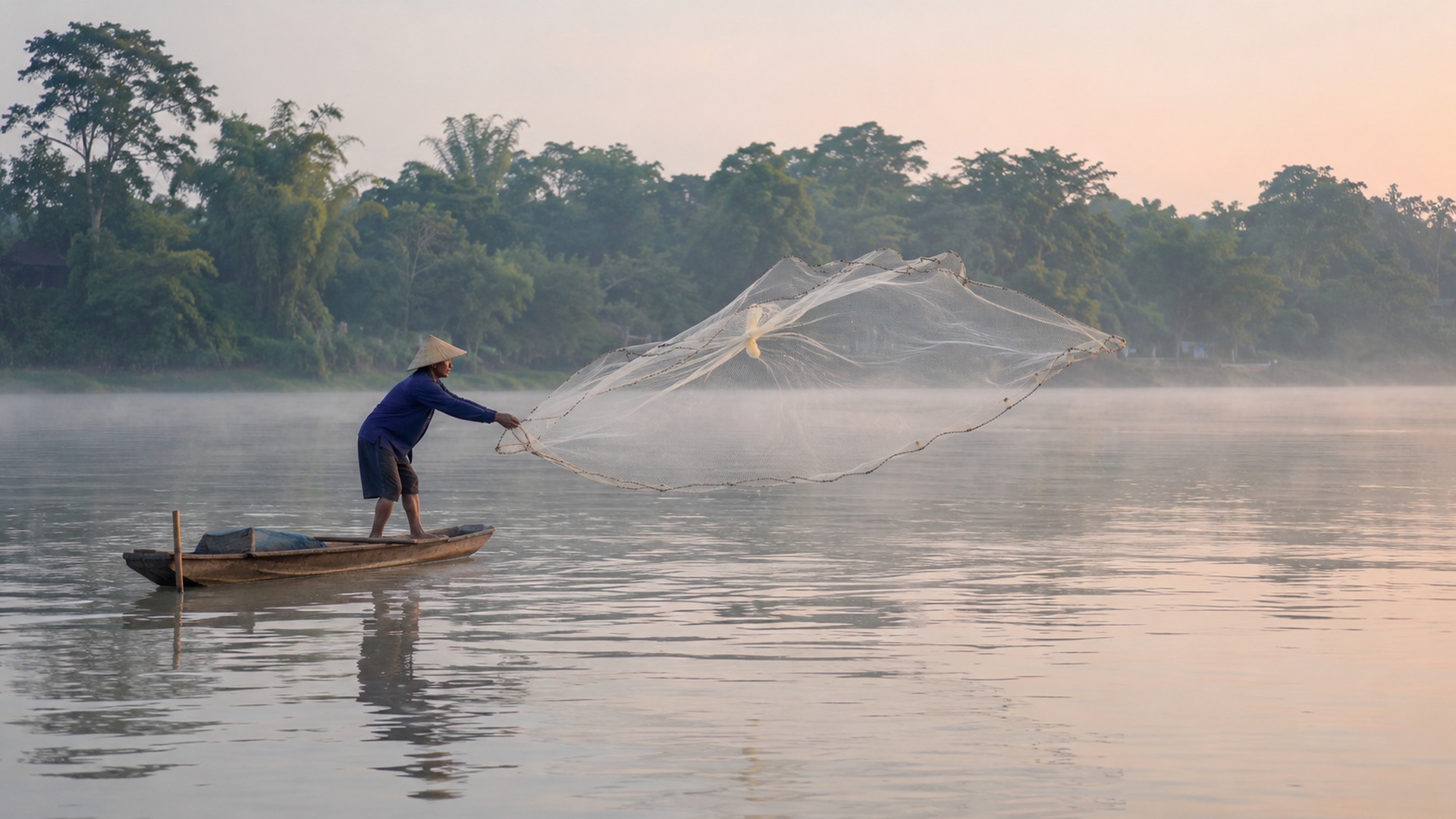
Minamata disease is a form of mercury poisoning caused by eating fish and shellfish contaminated with methylmercury. It was first confirmed in Minamata, Japan, in 1956, and it remains the world's key lesson on mercury. Mercury itself is a metal that is a silver liquid at room temperature and can evaporate into a vapor. It comes from both natural sources and human activities. When it reaches rivers, lakes or the sea, some bacteria convert it into methylmercury, which builds up in fish and shellfish, so most people take in more mercury from eating fish and shellfish than from drinking water. This article explains the forms of mercury, how mercury gets into water and fish, what causes Minamata disease, and what limit Thailand sets for mercury in drinking water.
What is mercury, and what forms does it take?
Mercury is a metallic element in the group of toxic heavy metals listed in Thailand's Department of Health criteria for drinkable tap water (2020). The first thing to understand is that mercury comes in several forms, and each form enters the body by a different route and has different effects. The World Health Organization (WHO) groups it into three main forms.
| Form | Where it is found | Main route of exposure | Main organs affected |
|---|---|---|---|
| Elemental mercury | Old-style thermometers, mercury blood pressure gauges, some lamps | Breathing in mercury vapor | Nervous system, lungs, kidneys |
| Inorganic mercury, such as mercury chloride | Drinking water, some skin-lightening creams | Swallowing or skin contact | Kidneys |
| Organic mercury, such as methylmercury | Fish and shellfish | Eating fish and shellfish | Nervous system, especially the brain of an unborn baby |
WHO notes that in uncontaminated drinking water, almost all mercury is inorganic mercury. People are therefore unlikely to take in methylmercury directly from drinking water.
What is mercury used for?
Products that have contained, or still contain, mercury include thermometers, barometers, mercury blood pressure gauges, some lamps including fluorescent lamps, batteries, electrical switches and relays, amalgam dental fillings, some medicines, and some cosmetics such as skin-lightening creams. Many countries are now phasing mercury out of these products under the Minamata Convention, described below.
How does mercury get into water and fish?
Where does mercury come from?
Mercury in the environment comes from nature, for example local mineral deposits that can raise mercury levels in groundwater, and from certain human activities identified by WHO, such as burning coal, small-scale gold mining that uses mercury, some industries, and mercury-containing products that break or are thrown away improperly. A water test at a single point cannot tell which source the mercury came from.
Mercury in water: from inorganic mercury to methylmercury
When mercury reaches a river, lake or the sea, some bacteria in the water and sediment convert it into methylmercury, a form that living things absorb easily and eliminate slowly.
WHO states that ordinary surface water and groundwater contain less than 0.5 µg/L of mercury. That level is very low, but mercury can keep building up along the food chain.
Mercury in fish: building up the food chain
Methylmercury accumulates in small organisms and is passed upward each time one organism is eaten by another.
- Plankton and small animals take up methylmercury from the water.
- Small fish eat large amounts of plankton.
- Large predatory fish eat many small fish over their lifetime.
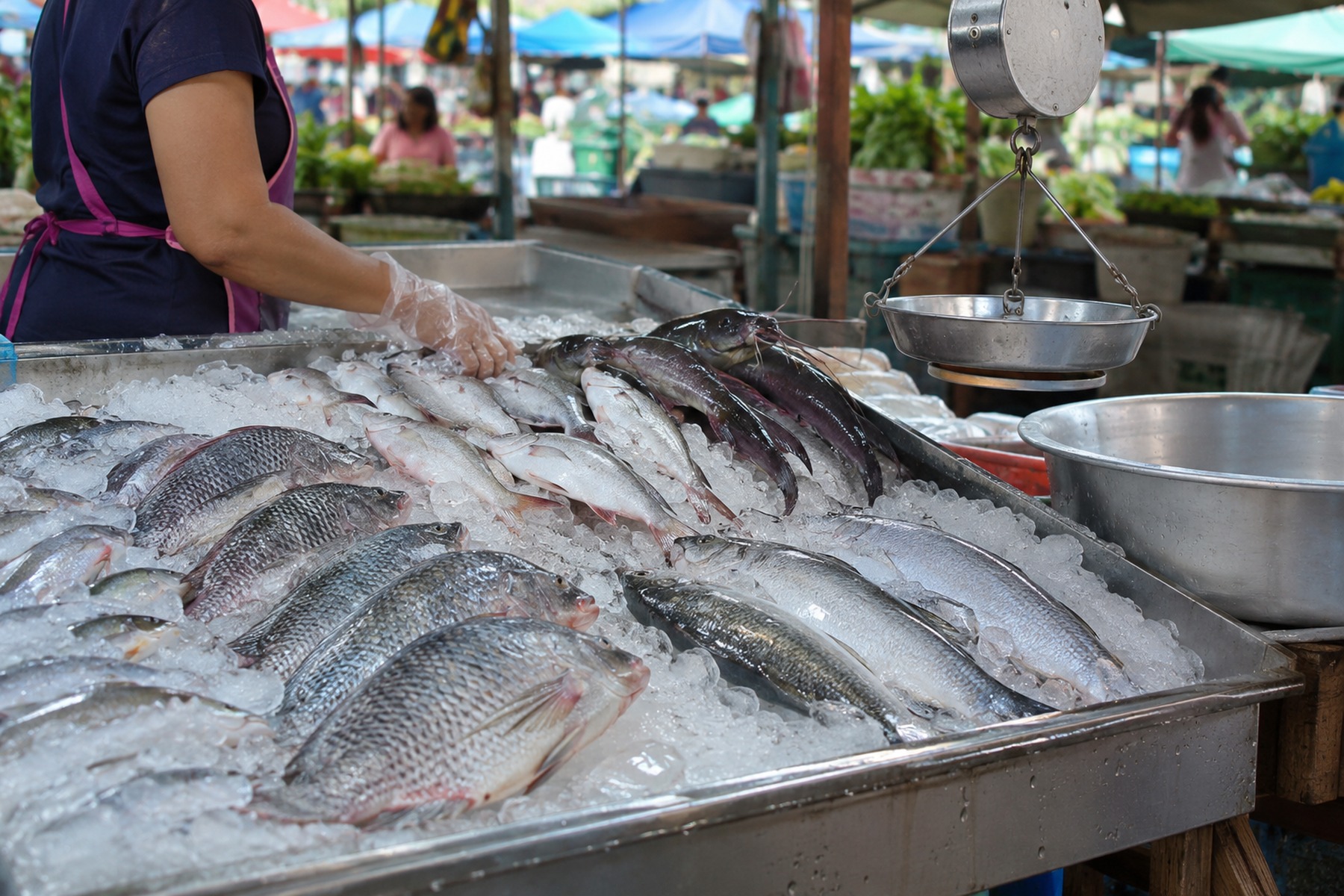
WHO explains that large predatory fish usually carry more methylmercury because they eat many smaller fish. This is why water with very little mercury can still produce fish at the top of the food chain with mercury levels many times higher than the water.
Is it safe to eat fish?
Fish is a nutritious food. A joint expert consultation of the Food and Agriculture Organization of the United Nations (FAO) and WHO in 2010 concluded that, overall, mothers who eat fish lower the risk that their child's brain development falls short of its potential, compared with mothers who do not eat fish. The monitoring evidence does not point to giving up fish.
In Thailand, Ministry of Public Health Notification No. 414 (2020) on food containing contaminants already sets the maximum amount of mercury allowed in each type of food. Pregnant women with questions about eating fish can ask the health staff who provide their antenatal care.
What causes Minamata disease?
Minamata disease is poisoning by methylmercury taken in through contaminated fish and shellfish. It is named after the city of Minamata in Kumamoto Prefecture, Japan, the first place where the disease was confirmed. The timeline below follows the account published by Japan's National Institute for Minamata Disease.
| Year | Event |
|---|---|
| 1951 | Dead and abnormal fish and shellfish begin to be noticed in Minamata Bay |
| 1 May 1956 | The disease is officially confirmed; this is regarded as the date Minamata disease was recognized |
| November 1956 | A Kumamoto University research team reports heavy-metal poisoning taken in through fish and shellfish |
| 1959 | The research team proposes that the likely cause is an organic mercury compound |
| 1961–1962 | Methylmercury is extracted from shellfish in the bay and from catalyst waste in a chemical production process |
| September 1968 | The Japanese government concludes that the cause was a methylmercury compound formed as a by-product of a chemical production process at a local factory and released into the bay with wastewater |
Symptoms and long-term effects
Minamata disease mainly damages the central nervous system. It is not contagious. Reported symptoms vary and include pain, stiff arm and leg muscles, tremors, cramps, and involuntary abnormal movements.
One of the most important lessons is fetal (congenital) Minamata disease. Some children born in the area had neurological symptoms from birth, which were later found to result from methylmercury they were exposed to in the womb. People in this group still need rehabilitation for walking and swallowing today.
Lessons from Minamata
- Clear-looking water does not mean safe water. Mercury in water is invisible, yet it can build up in fish.
- Warning signs in the environment come first. Dead fish and abnormal animals were noticed years before the disease was confirmed in people.
- Continuous monitoring matters. Knowing results quickly helps stop exposure quickly.
- The most vulnerable group is the unborn baby.
The Minamata Convention on Mercury
These lessons led to the Minamata Convention on Mercury, a global treaty to protect human health and the environment from the harmful effects of mercury. Its secretariat is run by the United Nations Environment Programme (UNEP).
| Item | Details |
|---|---|
| Adopted | 10 October 2013, in Kumamoto, Japan |
| Entered into force | 16 August 2017 |
| Thailand | Acceded on 22 June 2017; in force for Thailand from 20 September 2017 |
| Main provisions | Phase out or reduce mercury in products and manufacturing processes, ban new mercury mines, control small-scale gold mining, and control mercury releases to air, land and water |
WHO notes that amendments to the Convention adopted in 2023 ban the manufacture, import and export of certain mercury-added products after 2025, such as batteries, switches, fluorescent lamps, non-electronic measuring devices and cosmetics.
How does mercury poisoning affect health?
Exposure to mercury does not mean everyone will become ill. The effects depend on the form of mercury, the amount, the length of exposure and the route. WHO states that mercury affects the nervous, digestive and immune systems, the lungs, kidneys, skin and eyes.
- Nervous system: reported symptoms include tremors, sleeplessness, memory loss, headaches, and problems with thinking and movement.
- Kidneys: effects range from more protein in the urine to kidney failure. Inorganic mercury, the form found in drinking water, mainly affects the kidneys.
- Groups needing special care: unborn babies, young children and pregnant women, especially regarding methylmercury from fish.
On cancer, the International Agency for Research on Cancer (IARC) classifies methylmercury compounds in Group 2B (possibly carcinogenic to humans), while elemental and inorganic mercury are in Group 3 (not classifiable because evidence is insufficient). These groups describe how strong the evidence is, not how potent a substance is.
Mercury in water: Thai and WHO limits
| Standard | Applies to | Mercury, not more than |
|---|---|---|
| Thailand's Department of Health criteria for drinkable tap water (2020) | Tap water used for drinking | 0.001 mg/L (1 ppb), as total mercury |
| WHO Guidelines for drinking-water quality | Drinking water | 0.006 mg/L, inorganic mercury only |
| Thailand's surface water quality standards (National Environment Board Notification No. 8, 1994) | Surface water sources, not drinking water | 0.002 mg/L |
The Thai and WHO figures differ because they measure different things. The Department of Health value covers total mercury, while the WHO value covers inorganic mercury only. In this case, the Thai drinking water criterion is the stricter one.
The 0.001 mg/L limit equals 1 µg/L, or 1 ppb. It is the lowest of the toxic heavy metals in this set of criteria, so test results must be read in the correct unit. See how to read them in What ppm and ppb mean, and the full table of limits in Thailand's tap water standard (2020).
How can mercury in water be tested?
Mercury in water has no color and no smell. It has to be measured with instruments.
- Laboratories use analyzers such as ICP-MS or atomic absorption techniques and give official confirmation. Read more in What are ICP-MS and AAS?
- Electrochemical field test kits give a numeric result at the sampling point and are used for screening and monitoring many sites.
- For an overview of how to choose a method, see Water quality testing methods.
Good to know: testing mercury in water and testing mercury in fish or food are different jobs. Fish and food samples must go to a laboratory that tests food.
Mercury at home: a broken thermometer or a dead lamp
If a mercury thermometer breaks, the United States Environmental Protection Agency advises:
- Get everyone, including pets, out of the area, and do not walk through it.
- Open windows and doors to the outside, and close doors to other rooms.
- Wear gloves and use stiff paper or cardboard to gently push the mercury beads together, then put them in a bag that seals tightly.
- Do not use a vacuum cleaner, because it spreads mercury into the air as vapor. Do not use a broom, because it breaks the beads into smaller droplets that scatter. Do not pour mercury down a drain.
- Do not let children help, and keep the area ventilated for at least 24 hours.
Disposal: Thailand's Pollution Control Department classes fluorescent lamps and mercury-containing devices as household hazardous waste. Do not mix them with general waste, and do not throw them into drains or water bodies. Keep them separately in a container that does not leak, then take them to the hazardous waste collection point run by the local government organization.
If a mercury test result is above the limit
- Stop using water from that point for drinking and cooking for now, and use water from a source that has been tested.
- Send a sample to a laboratory for confirmation.
- Inform whoever runs the water system or the local government organization.
- If you have used that water for a long time or have unusual symptoms, consult the local sub-district health promoting hospital (Thailand's community-level health center) or the district public health office.
- Boiling does not remove mercury or other heavy metals.
How M-Sense helps
Thailand's mercury limit for drinkable tap water is very low, so monitoring needs a method that reports results as numbers. M-Sense is a portable test kit for heavy metal contamination in water that uses an electrochemical technique, developed by the National Nanotechnology Center (NANOTEC) under the National Science and Technology Development Agency (NSTDA). It tests mercury together with arsenic, lead and cadmium, takes about 5 minutes, and reports numeric results from the ppb to the ppm level on a portable reader. It is used with surface water, groundwater and household water in communities. M-Sense tests water; it is not designed to test fish or food.
M-Sense has been field-tested with the Regional Environment and Pollution Control Office 1 (Chiang Mai) against standard laboratory methods, and the results agreed. M-Sense is used for screening and monitoring, helping officers see which points should be sent for confirmation, while official confirmation still uses a laboratory. Learn more in What it detects and the limits and How M-Sense works.
Frequently asked questions
What is mercury? Mercury is a metal that is a silver liquid at room temperature and can evaporate. It has three main forms: elemental mercury, inorganic mercury, and organic mercury such as methylmercury. Each form enters the body by a different route and has different effects.
What causes Minamata disease? It is caused by eating fish and shellfish contaminated with methylmercury. The disease was officially confirmed in Minamata, Japan, on 1 May 1956, and in 1968 the Japanese government concluded that it came from a methylmercury compound in wastewater from a chemical production process that was released into the bay.
Why do large fish have more mercury than small fish? Because methylmercury builds up along the food chain. Large predatory fish eat many small fish, so they accumulate more.
What is the limit for mercury in drinking water? Thailand's Department of Health criteria for drinkable tap water (2020) set mercury at no more than 0.001 mg/L (1 ppb). WHO sets 0.006 mg/L for inorganic mercury.
Is Thailand a party to the Minamata Convention? Yes. Thailand acceded on 22 June 2017, and the Convention has been in force for Thailand since 20 September 2017.
Is a broken mercury thermometer at home dangerous? Mercury vapor should not be breathed in. Leave the area and ventilate it. Do not use a vacuum cleaner or a broom. Collect the mercury beads in a tightly sealed bag and dispose of them at the local hazardous waste collection point. If you have unusual symptoms, consult your nearest sub-district health promoting hospital.
Want to monitor mercury and other heavy metals in the water sources you look after?
Ask NANOTEC · What it detects and the limits · For agencies · Four heavy metals in water · What is lead?
References
- World Health Organization. Mercury and health (fact sheet), 24 October 2024.
- World Health Organization. Guidelines for drinking-water quality, 4th edition incorporating the first and second addenda, 2022, and the background document Mercury in drinking-water, 2022.
- International Agency for Research on Cancer. IARC Monographs Volume 58: Beryllium, Cadmium, Mercury, and Exposures in the Glass Manufacturing Industry, 1993.
- Agency for Toxic Substances and Disease Registry (United States). ToxFAQs: Mercury.
- National Institute for Minamata Disease (Japan). Minamata Disease Archives: cause investigation.
- Minamata Convention on Mercury (UNEP). About the Convention, and party information for Thailand.
- FAO and World Health Organization. Report of the Joint FAO/WHO Expert Consultation on the Risks and Benefits of Fish Consumption, 2010 (published 2011).
- Thailand Ministry of Public Health Notification No. 414 (2020) on food containing contaminants.
- Matichon (Thai newspaper). Report on the Department of Medical Sciences' results for mercury in fish and seafood, 2020–2023.
- United States Environmental Protection Agency. What to do if a mercury thermometer breaks.
- Pollution Control Department (Thailand). Guidelines for managing household hazardous waste.
- Public Health Laboratory Division, Department of Health (Thailand). Criteria for drinkable tap water, Department of Health, 2020.
- National Environment Board Notification No. 8 (1994) on surface water quality standards (Thailand).
- National Nanotechnology Center. Innovation: portable electrochemical test kit for heavy metal contamination in water (M-Sense).