
What Is M-Sense? NANOTEC's Portable Heavy Metal Test Kit for Water: What It Detects and How It Is Used
M-Sense is a portable heavy metal test kit for water, developed by the National Nanotechnology Center (NANOTEC) under Thailand's National Science and Technology Development Agency (NSTDA). It uses an electrochemical technique with a portable reader to test four metals, arsenic, lead, cadmium and mercury, takes about 5 minutes per test, and reports numeric results from the ppb to the ppm level. This article brings together, in one place, the questions people search for about M-Sense (or "msense"), answered from NANOTEC's information.
What is M-Sense?
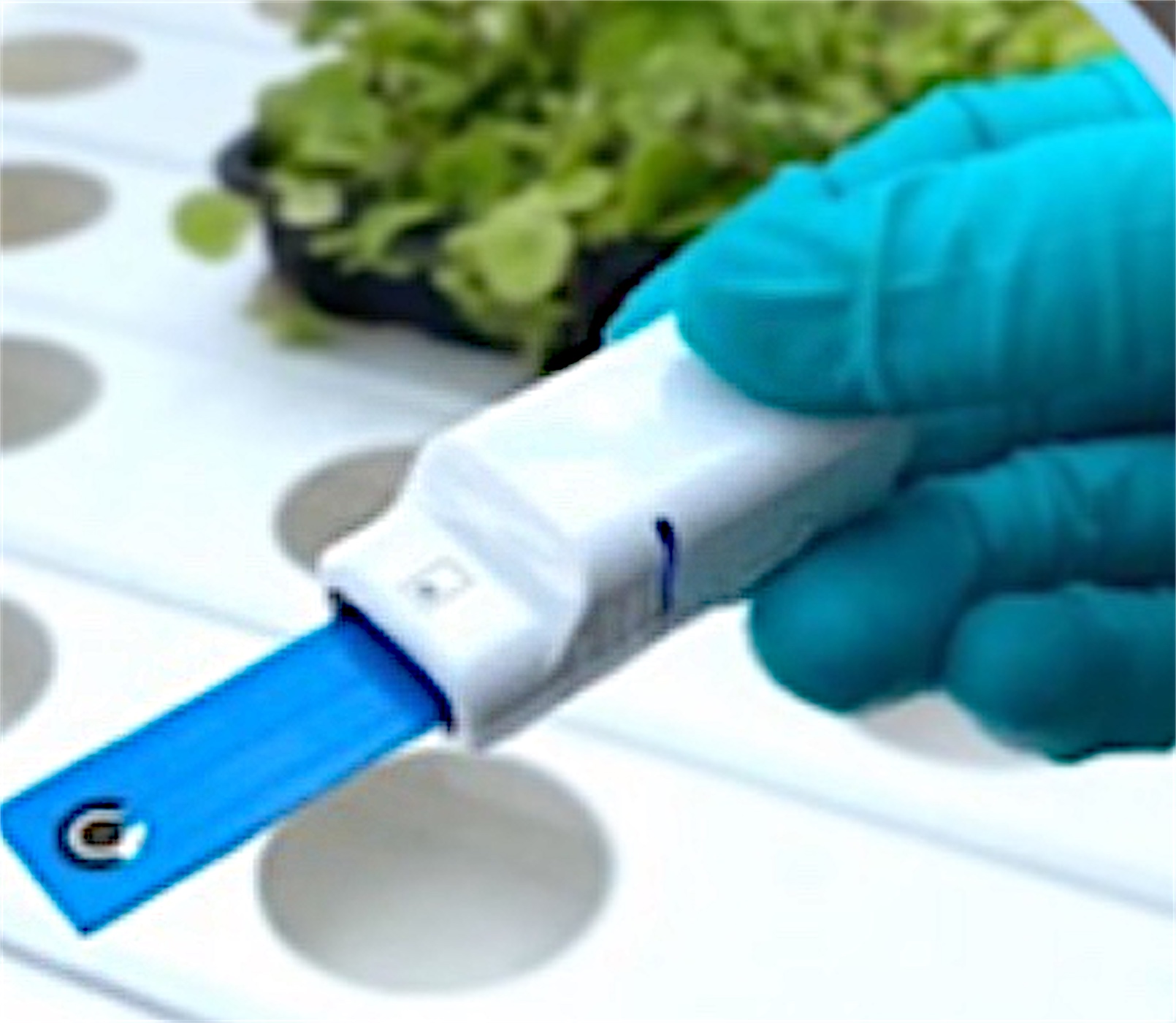
M-Sense is a portable, electrochemical test kit for heavy metal contamination in water. It is part of NANOTEC's A-QUALITY program (clean water innovation for quality of life), which develops technologies for measuring water quality and improves water quality for communities.
Its main strength is that testing can be done at the sampling point. The test kit is used with a portable reader, so officers can test at a water source, a well or a community water supply system and see a numeric result within a short time.
Who developed M-Sense?
M-Sense was developed by the National Nanotechnology Center (NANOTEC), founded on 13 August 2003 under NSTDA and Thailand's Ministry of Higher Education, Science, Research and Innovation (MHESI). NANOTEC's mission is to build and promote capabilities in nanotechnology, share knowledge with society, and transfer technology to industry. Read more about NANOTEC on the About us page.
What does this heavy metal test kit detect?
M-Sense tests four heavy metals. The table below shows the limits for each metal in two types of water, so results can be read in the right context.
| Heavy metal | Thailand's Department of Health criteria for drinkable tap water, 2020 (mg/L, not more than) | Equivalent (ppb) | Thailand's surface water quality standards, Notification No. 8, 1994 (mg/L, not more than) |
|---|---|---|---|
| Arsenic | 0.01 | 10 | 0.01 |
| Lead | 0.01 | 10 | 0.05 |
| Cadmium | 0.003 | 3 | 0.005 (water with hardness not above 100 mg/L) · 0.05 (above 100 mg/L) |
| Mercury | 0.001 | 1 | 0.002 |
The drinkable tap water criteria apply to tap water used for drinking, while the surface water standards apply to water in rivers and canals, which is not yet drinking water. Read about the difference between the two in Thailand's tap water standard (2020), and about each metal in Four heavy metals in water.
M-Sense does not measure basic parameters such as pH, turbidity, total dissolved solids (TDS) or germs, so real water testing uses M-Sense together with other tools. Read about TDS in What is TDS in water? Hard water explained, and see everything it detects with the full limits on What it detects and the limits.
What do the results look like?
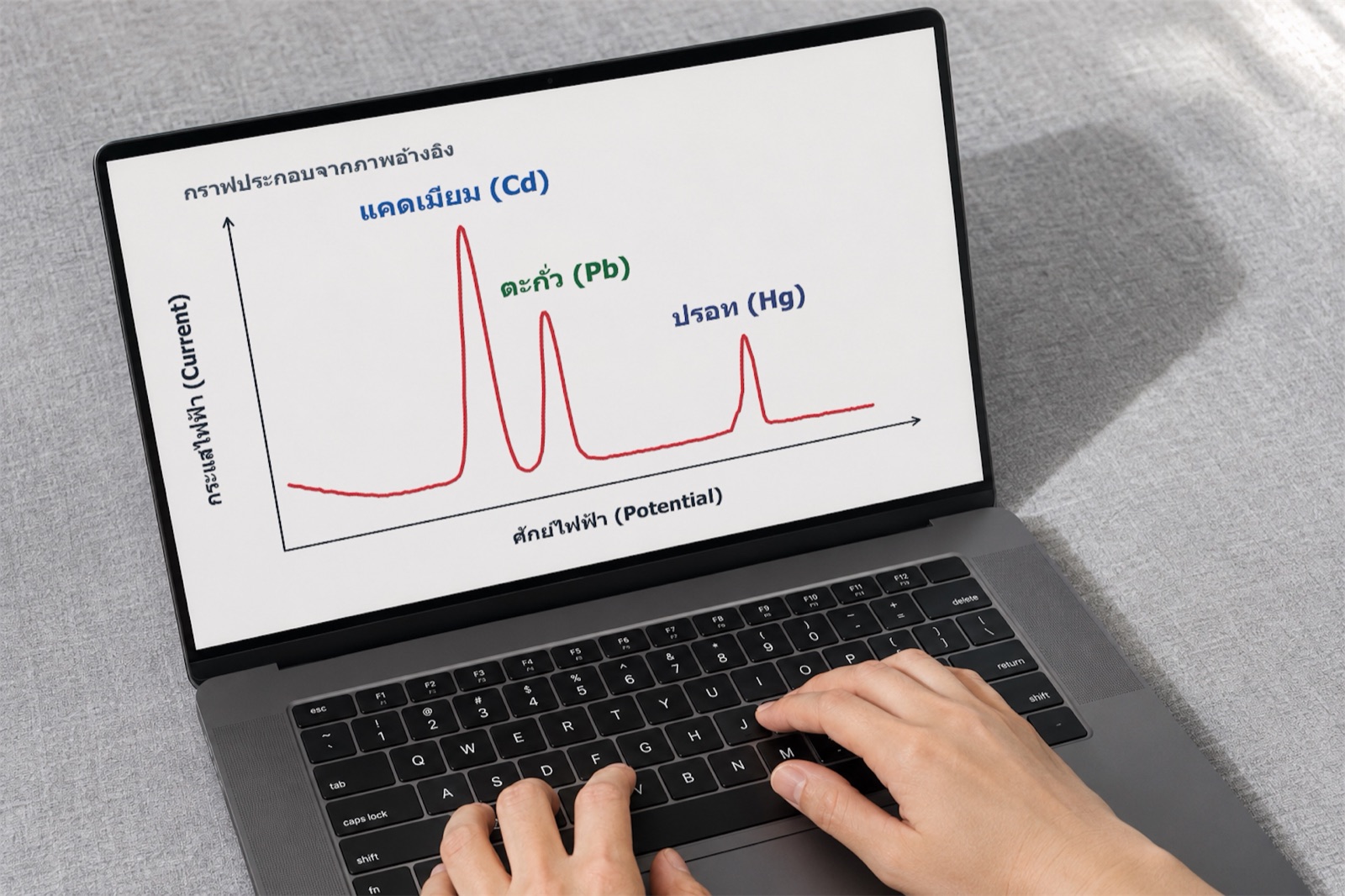
M-Sense reports results as concentration figures from the ppb (parts per billion) to the ppm (parts per million) level. Numeric results can be compared directly with water quality limits and used to track trends at the same point over time. This is different from colorimetric test kits, which give results as color ranges and suit a different kind of screening.
If you are not yet familiar with ppb and ppm, read What ppm and ppb mean. In short, 1 mg/L is roughly equal to 1 ppm, or 1,000 ppb, so the arsenic limit for drinkable tap water, 0.01 mg/L, equals 10 ppb.
How does M-Sense work?
M-Sense uses an electrochemical technique. The general principle of an electrochemical sensor is that electrodes measure an electrical signal produced by substances in the water, and the reader converts that signal into a concentration figure. This principle is explained in detail in What is an electrochemical sensor? and on the How M-Sense works page, which has a simulation you can try.
The overall field workflow, based on demonstrations reported by the media, is:
- Collect a water sample from the point to be tested.
- Test it with the test kit and the portable reader at the sampling point.
- Read the numeric result; the test takes about 5 minutes.
- Compare the result with the limits for that type of water.
- Send questionable results for confirmation with standard laboratory methods.
See examples of use in the field on the Field use page.
What water is it used with, and for what?
M-Sense can be used with surface water, groundwater and household water in communities, including remote areas where sending samples to a laboratory takes a long time.
Suitable tasks include:
- Screening: testing many points in a short time to find those that should be monitored or sent for confirmation.
- Monitoring: testing the same points repeatedly over time to see whether values are rising or falling.
- Responding to incidents: when there is a local concern, helping agencies see preliminary data sooner.
Where has M-Sense been tested and used?
- Field-tested with the Regional Environment and Pollution Control Office 1 (Chiang Mai) in the Kok River basin, against standard laboratory methods. The results agreed, and the kit was handed over to the Office under a collaboration with the Pollution Control Department.
- Trialed with the Chiang Rai Provincial Agriculture Office.
- Handed over to the Chiang Rai Provincial Public Health Office on 15 November 2026 in Mae Sai District, with a testing demonstration at the water level station at Mae Sai Friendship Bridge No. 1.
Can M-Sense replace a laboratory?
No. They work together. M-Sense is used for screening and monitoring in the field, while official confirmation of results still uses standard laboratory methods where needed, such as elemental analysis instruments in accredited laboratories.
The roles can be divided like this:
| M-Sense | Laboratory | |
|---|---|---|
| Where testing happens | At the sampling point | In the laboratory; samples must be transported |
| Testing time | About 5 minutes | Depends on each laboratory's procedures |
| What it tests | Arsenic, lead, cadmium, mercury | Many elements and parameters |
| Role | Screening, monitoring, frequent testing | Official confirmation of results |
Read about laboratory instruments in What are ICP-MS and AAS?
How is M-Sense different from NANOTEC's other test kits?
NANOTEC has more than one water test kit. ChemSense is another NANOTEC test kit for chemicals in water; it tests manganese, copper, iron and fluoride. M-Sense tests four heavy metals: arsenic, lead, cadmium and mercury. The two kits test different groups of substances and have separate testing data. If you need to test for fluoride or iron, M-Sense does not test those parameters.
What is being developed next?
- M-Sense is included in a plan to develop a test kit standard together with Thailand's Department of Science Service.
How can agencies that want to use M-Sense get in touch?
Agencies responsible for water quality, such as environmental and public health agencies, local government organizations and village water supply operators, or agricultural agencies, can contact the NANOTEC team in two ways:
- Press the Ask NANOTEC button at the bottom right of every page, and give your agency, province, the water source you want to test and the metals you are concerned about. The team will get back to you.
- See information for agencies on the For agencies page or the Contact page.
Information that helps the team respond faster: the type of water source, the number of points you want to test, and any previous test results.
Frequently asked questions
Are M-Sense and msense the same thing? Yes. The official name is written M-Sense. Some people search for "msense" or "m sense," which refers to the same portable heavy metal test kit for water from NANOTEC, NSTDA.
Can M-Sense be used as an arsenic test kit? Yes. Arsenic is one of the four metals M-Sense tests, together with lead, cadmium and mercury. Because the result is a number, it can be compared directly with the arsenic limit for drinkable tap water, 0.01 mg/L (10 ppb).
How reliable are M-Sense results? NANOTEC field-tested it with the Regional Environment and Pollution Control Office 1 in the Kok River basin against standard laboratory methods, and the results agreed. Questionable results, or results needed for official use, should be confirmed by a laboratory.
Can members of the public use M-Sense themselves? At present, M-Sense is used through agencies responsible for water quality. Members of the public who are concerned about local water can contact their local government organization or the agency that runs the water system, or press the Ask NANOTEC button to leave a message.
What should be done if a result is above the limit? Send the sample for confirmation with standard laboratory methods and inform the agency responsible for the water source or water system in the area. If there are health concerns, consult the local sub-district health promoting hospital (Thailand's community-level health center) or the district public health office.
Can M-Sense test for fluoride or germs? No. M-Sense tests only arsenic, lead, cadmium and mercury. Other parameters need a test kit or method suited to them.
Is your agency interested in using M-Sense to test for heavy metals in water?
Ask NANOTEC · See how agencies can request it
References
- National Nanotechnology Center. Innovation: portable electrochemical test kit for heavy metal contamination in water (M-Sense).
- National Nanotechnology Center. Annual report.
- Krungthep Turakij (Thai newspaper). Report on the handover of M-Sense to the Chiang Rai Provincial Public Health Office, 15 November 2026.
- Thai PR. NSTDA news on the plan to develop a test kit standard with the Department of Science Service, 18 March 2026.
- Public Health Laboratory Division, Department of Health (Thailand). Criteria for drinkable tap water, Department of Health, 2020 (document SD-RLDC-006).
- National Environment Board Notification No. 8 (1994) on surface water quality standards (Thailand).