

What Is TDS in Water? Safe TDS Levels, Hard Water, and Why TDS Does Not Reveal Heavy Metals
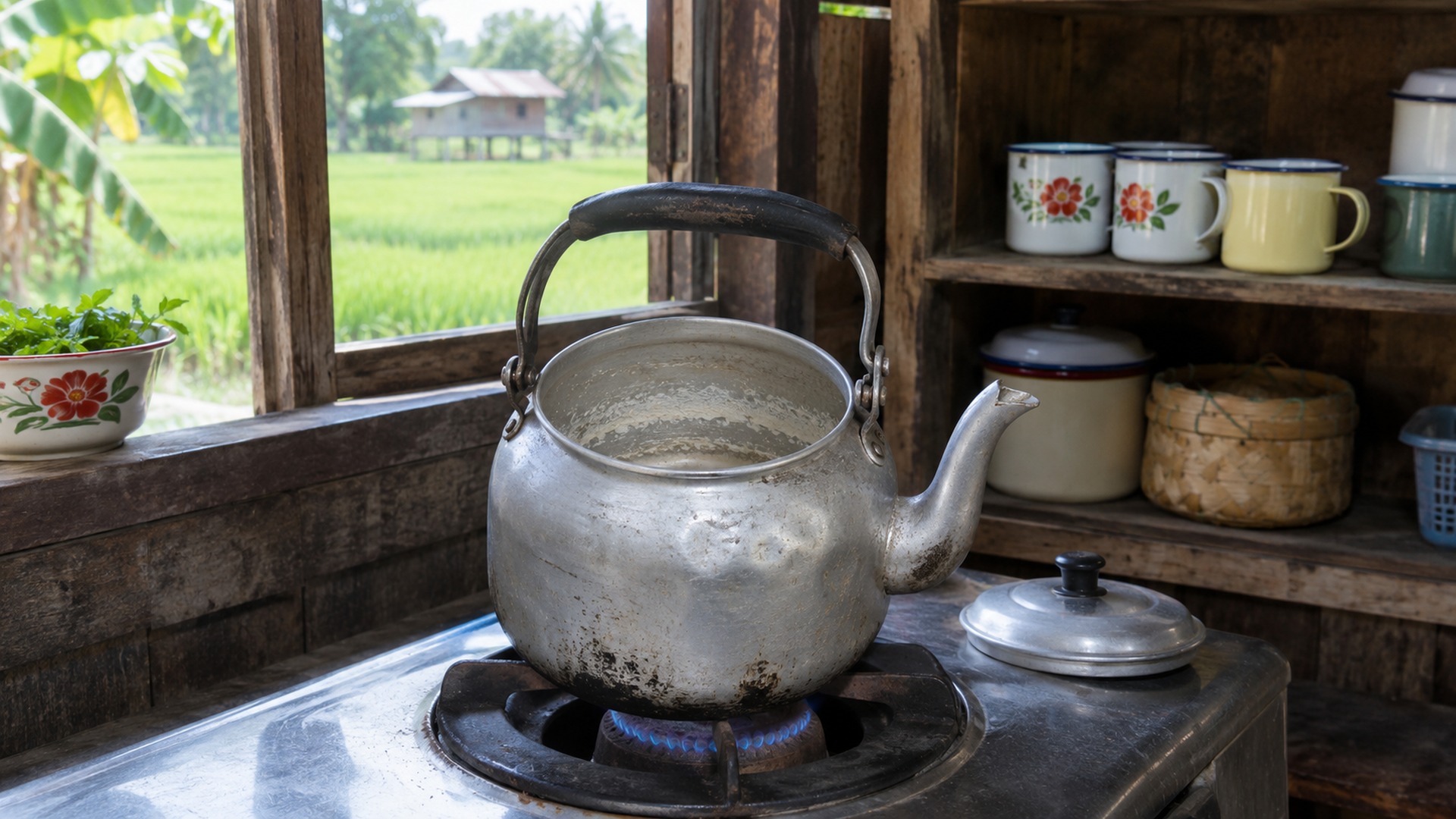
What is TDS in water? TDS stands for total dissolved solids: the total amount of substances dissolved in water, mostly common minerals such as calcium, magnesium, sodium, chloride and bicarbonate. Thailand's Department of Health criteria for drinkable tap water (2020) set TDS at not more than 500 mg/L. A TDS value tells you whether water carries a lot or a little dissolved mineral matter and helps explain its taste and scale deposits, but it does not tell you whether the water contains arsenic, lead or any other heavy metal. This article explains what TDS, hardness and pH each tell you, and what they do not.
What is TDS in water?
The World Health Organization (WHO) describes TDS as the inorganic salts and small amounts of organic matter dissolved in water. The main components are usually positive ions (calcium, magnesium, sodium and potassium) and negative ions (carbonate, bicarbonate, chloride, sulfate and nitrate).
Put simply, if you evaporate 1 liter of water until it is dry, what is left on the container is the total dissolved solids. The unit is milligrams per liter (mg/L), which in ordinary water is close to parts per million (ppm). Read more about units in What ppm and ppb mean.
Where does TDS come from?
Mostly from nature. Water flowing through rock and soil dissolves minerals along the way. WHO states that TDS in natural water sources ranges from below 30 to about 6,000 mg/L, depending on the rock and soil in each area. Besides natural sources, TDS can also rise from community wastewater, runoff from urban and agricultural areas, and industrial wastewater.
How is TDS measured?
The Department of Health criteria specify evaporating the water at 180 °C and weighing the residue in a laboratory. In the field, people usually use a meter that measures electrical conductivity (EC) and converts it to TDS with a factor that changes with the type of water, so the meter reading is an estimate. Details about meters are in Types of water quality meters. This article focuses on how to interpret the number once you have it.
What TDS level is safe to drink?
The answer depends on which standard you use.
Thailand's criterion: the Department of Health criteria for drinkable tap water (2020) set total dissolved solids at not more than 500 mg/L for tap water used for drinking. See the full list in Thailand's tap water standard (2020).
WHO guidelines do not set a health-based value for TDS, because there are no reliable data on health effects at the levels found in drinking water. TDS does, however, affect whether people accept the water, especially its taste. A WHO background document compiles results from taste panels as follows:
| TDS (mg/L) | Taste rating from panel tests |
|---|---|
| Below 300 | Excellent |
| 300–600 | Good |
| 600–900 | Fair |
| 900–1,200 | Poor |
| Above 1,200 | Unacceptable |
Source: WHO background document, Total dissolved solids in drinking-water (2003)
This table is about taste, not a safety line. WHO also states that water with TDS below 1,000 mg/L is generally acceptable to consumers, depending on the circumstances. The Department of Health's 500 mg/L criterion is the value used to judge drinkable tap water in Thailand.
What does high TDS mean?
High TDS means a lot of dissolved substances. Effects you may notice:
- Taste changes: the water may taste brackish, salty or astringent, depending on what is dissolved.
- More scale: WHO states that TDS above 500 mg/L causes heavy scaling in water pipes, water heaters, boilers, kettles and steam irons, which may shorten the life of appliances.
High TDS does not mean the water is toxic. Water that flows through limestone may have high TDS purely from calcium. WHO advises that if a water source has very high TDS, the individual substances should be identified and the local public health authorities consulted.
What does low TDS mean?
Low TDS means few dissolved substances, as in rainwater or water from a reverse osmosis (RO) filter. WHO states that water with very low TDS may taste flat and unappealing and is often corrosive to pipes in water supply systems.
Importantly, low TDS does not mean safe. TDS does not measure germs, and it does not measure individual heavy metals. Water with low TDS may still have problems this number cannot see (see "Why TDS does not reveal heavy metals" below).
What is hard water?
Hard water is water with a lot of certain minerals dissolved in it. WHO explains that hardness is caused by ions of several metals dissolved in water, mostly calcium and magnesium, with small amounts of iron, manganese, zinc and other metals.
The traditional way to notice it is with soap. Hard water reacts with soap, so you need more soap to get a lather, and soap scum often forms in sinks and containers. The main natural source of hardness is sedimentary rock, especially limestone. Groundwater used by small water supply systems therefore often has fairly high hardness, but some surface water sources do too.
How is hardness measured and classified?
Hardness is usually reported as "milligrams per liter as calcium carbonate (as CaCO3)," meaning the measured calcium and magnesium are converted to an equivalent amount of calcium carbonate so values can be compared. Laboratories usually measure it by titration with EDTA (a substance that binds calcium and magnesium).
| Hardness (mg/L as calcium carbonate) | Level |
|---|---|
| Below 60 | Soft |
| 60–120 | Moderately hard |
| 120–180 | Hard |
| Above 180 | Very hard |
Source: WHO background document for the drinking-water quality guidelines, Hardness in drinking-water (2011); the U.S. Geological Survey (USGS) uses the same ranges
Thailand's Department of Health criteria for drinkable tap water (2020) set hardness at not more than 300 mg/L as calcium carbonate. This figure is above the "very hard" line in the table, which means water classed as hard in the table above can still meet Thailand's drinkable tap water criteria. The classification table describes the character of the water, while the Department of Health criterion decides whether tap water is drinkable.
Temporary and permanent hardness
WHO divides hardness into two types according to the negative ions paired with it:
- Temporary hardness (carbonate hardness): calcium and magnesium paired with carbonate and bicarbonate. This part precipitates out when the water is heated.
- Permanent hardness (non-carbonate hardness): calcium and magnesium paired with sulfate or chloride. It does not precipitate with heat in the same way.
Where does kettle scale come from?
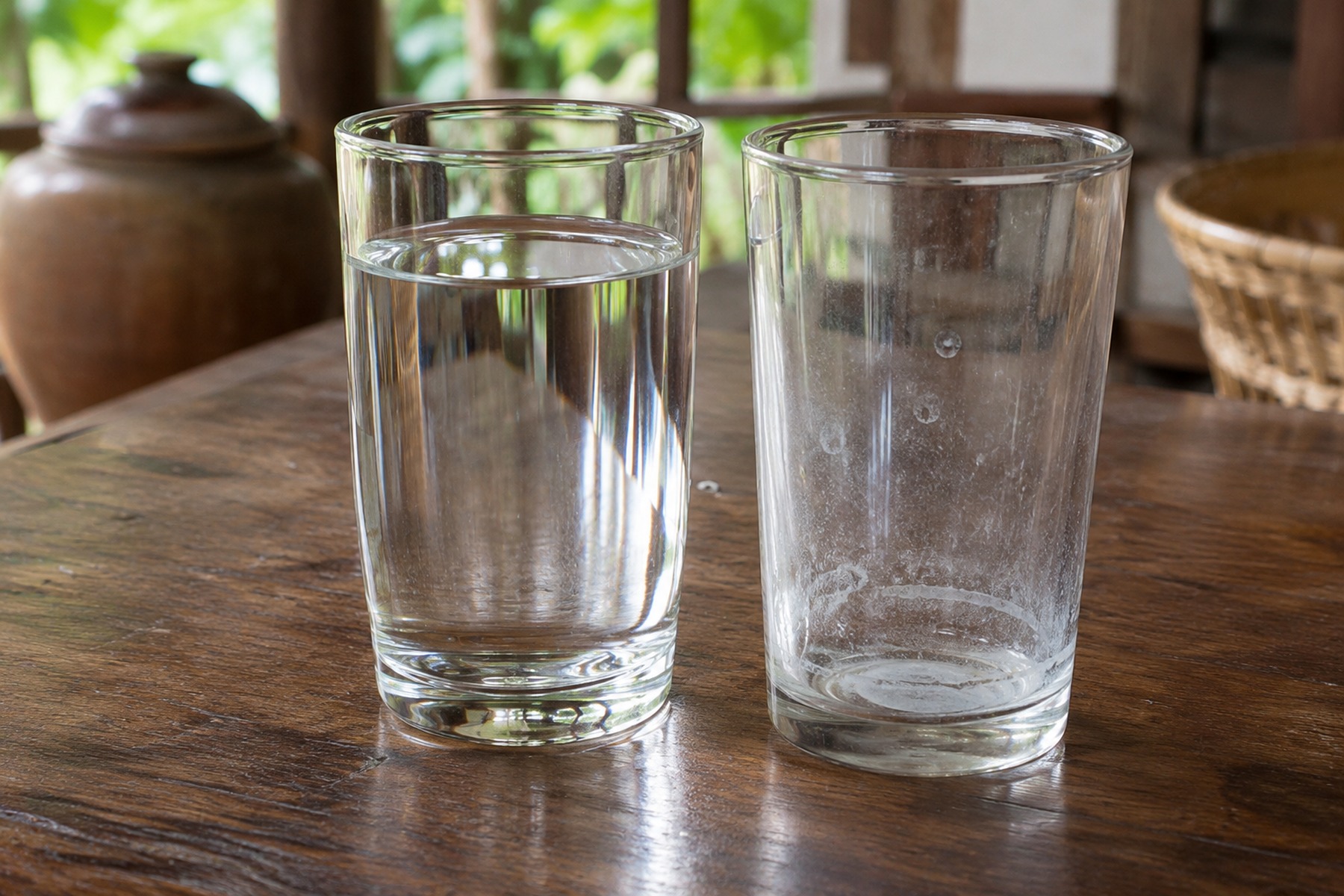
When hard water is boiled or heated, part of the calcium and magnesium turns into insoluble carbonates that stick to the container as a white crust. The USGS explains that calcium carbonate scale in water heaters makes them use more energy and can clog pipes, and WHO states that this scale reduces the efficiency of heat transfer.
Scale is therefore a sign of hard water, not a sign of toxic heavy metals.
Is hard water harmful?
WHO states that hardness at the levels found in drinking water is not a health concern, so it has no health-based value. It does affect consumer acceptance, such as taste (people begin to taste calcium at about 100–300 mg/L, depending on the paired ion), and everyday use, such as wasted soap and scale. The USGS explains it the same way: hardness is not a health problem, but it can be a nuisance.
What water system operators should know is that very soft water also needs care. WHO states that soft water that has not been conditioned tends to corrode metal surfaces and pipes, letting some metals, such as cadmium, copper, lead and zinc, dissolve into drinking water. Water that has had its minerals removed, for example by RO membranes in large water production systems, must therefore be conditioned before it is sent into pipes. Read about each heavy metal in Four heavy metals in water.
How are TDS and hardness different?
Hardness is "part" of TDS. Calcium and magnesium are counted in TDS, but TDS also includes sodium, potassium, chloride, sulfate and other substances.
- Water with high TDS because of a lot of calcium will also be hard.
- Water with high TDS because of a lot of sodium chloride may taste salty, but its hardness may not be high.
So the two values cannot replace each other. For scale and soap, look at hardness. For the overall amount of minerals, look at TDS.
What is the pH of water?
pH tells you whether water is acidic or alkaline. The USGS explains that the scale runs from 0 to 14: 7 is neutral, below 7 is acidic, and above 7 is alkaline. The scale is logarithmic, so a change of 1 unit means a 10-fold change in acidity or alkalinity. Normal rain has a pH of about 5.6, because carbon dioxide from the air dissolves in it.
Thailand's Department of Health criteria for drinkable tap water (2020) set pH at 6.5–8.5. The practical reasons are:
- Low pH (acidic): water becomes more corrosive and dissolves more metal. Metals usually dissolve more easily at low pH, which raises the chance that metal from pipes or fittings gets into the water.
- High pH (alkaline): water may taste bitter, and pipes and water-using appliances often build up deposits.
pH is therefore something water system operators measure routinely, but pH alone does not tell how much heavy metal is in the water.
Why TDS does not reveal heavy metals
The main reasons are explained in Types of water quality meters, in the section "Can a TDS meter measure heavy metals?" In short, TDS tells you the "total amount," not the "type," and toxic heavy metals matter at very low levels. The drinkable tap water limits for arsenic and lead are not more than 0.01 mg/L, while TDS is in the hundreds of milligrams per liter.
Consider a hypothetical example of two wells:
| Well A | Well B | |
|---|---|---|
| TDS (hypothetical example) | 150 mg/L | 700 mg/L |
| Hardness (hypothetical example) | 40 mg/L (soft) | 280 mg/L (very hard, but still not above 300) |
| What these numbers show | Water tastes flat, little scale | Water carries a lot of minerals, taste may change, heavy scale, TDS above the 500 limit |
| Can they tell you whether there is arsenic or lead? | No | No |
To know which well has heavy metals, each metal must be tested directly. Well A, which looks like "good water," could contain dissolved arsenic above the limit, and well B, which looks bad, might contain no heavy metals at all. One more point: well A has soft water, so if it is supplied through old metal pipes, the water may dissolve more metal from the pipes, which is another reason to test at the tap as well.
Reading TDS, hardness and pH together
| Value | What it tells you | What it does not tell you | Thailand's Department of Health criteria for drinkable tap water (2020) |
|---|---|---|---|
| TDS | Total dissolved substances, taste, tendency to form scale, how a filter system is working | Type of substance, germs, individual heavy metals | Not more than 500 mg/L |
| Hardness | Calcium and magnesium, scale, soap use | Sodium, chloride, toxic heavy metals | Not more than 300 mg/L (as calcium carbonate) |
| pH | Acidity or alkalinity, tendency to corrode pipes | The amount of any substance in the water | 6.5–8.5 |
| Arsenic, lead, cadmium, mercury | Amount of each heavy metal | Other basic parameters | Not more than 0.01 · 0.01 · 0.003 · 0.001 mg/L respectively |
A practical approach is to use TDS, hardness and pH routinely to see the overall picture of the water and how the system is working, then test heavy metals separately according to the risk in each area, such as groundwater sources or areas where agencies have issued warnings. For an overview of all testing methods, see Water quality testing methods.
How M-Sense helps
M-Sense does not measure TDS, hardness or pH, but it answers the question those values cannot. M-Sense is a portable test kit for heavy metal contamination in water that uses an electrochemical technique, developed by the National Nanotechnology Center (NANOTEC), NSTDA. It tests four metals, arsenic, lead, cadmium and mercury, reports numeric results from the ppb to the ppm level, and takes about 5 minutes. It can be used with surface water, groundwater and household water in communities.
Agencies can therefore use M-Sense alongside meters for basic parameters: the meters show the overall picture of the water, while M-Sense screens and monitors for heavy metals. Questionable results are still sent for confirmation with standard laboratory methods. See details in What is M-Sense? and on What it detects and the limits.
Frequently asked questions
What is TDS, in short? TDS is the total amount of substances dissolved in water, mostly minerals such as calcium, magnesium, sodium and chloride. It is measured in milligrams per liter.
What TDS level is safe to drink? Thailand's Department of Health criteria for drinkable tap water (2020) set not more than 500 mg/L. WHO does not set a health-based value but rates taste: below 300 is excellent and 300–600 is good.
Is low-TDS water, such as RO water, always better? Not always. Low TDS only tells you there are few minerals; it does not tell you there are no germs or heavy metals. WHO states that water with very low TDS may taste flat and is often corrosive to pipes. Safety has to be judged from test results against the criteria, not from TDS alone.
Is hard water safe to drink? WHO states that the hardness found in drinking water is not a health concern, but it affects taste, scale and soap use. Thailand's Department of Health criteria for drinkable tap water set hardness at not more than 300 mg/L as calcium carbonate. Whether water is drinkable also depends on the results for the other parameters.
Is the white crust in a kettle dangerous? The white crust is mostly calcium carbonate from hard water that has been heated. It is a sign of mineral-rich water, not a sign of toxic heavy metals, but it does not confirm that the water is free of heavy metals either.
Can a TDS meter tell you whether there is arsenic or lead? No. TDS tells you the total amount, not the type, and heavy metals at limit levels are tiny compared with ordinary minerals. You need a method that tests each metal directly, such as a field heavy metal test kit or a laboratory. If you have health concerns, consult the local sub-district health promoting hospital (Thailand's community-level health center) or the district public health office.
Want to know whether the water in your area has heavy metals, beyond its TDS?
Ask NANOTEC · See what M-Sense detects
References
- Public Health Laboratory Division, Department of Health (Thailand). Criteria for drinkable tap water, Department of Health, 2020 (document SD-RLDC-006).
- World Health Organization. Guidelines for drinking-water quality, 4th edition incorporating the first and second addenda, 2022. Chemical fact sheet: Total dissolved solids.
- World Health Organization. Total dissolved solids in drinking-water. Background document for development of WHO Guidelines for Drinking-water Quality (WHO/SDE/WSH/03.04/16), 2003.
- World Health Organization. Hardness in drinking-water. Background document for development of WHO Guidelines for Drinking-water Quality (WHO/HSE/WSH/10.01/10/Rev/1), 2011.
- U.S. Geological Survey. Hardness of Water. Water Science School.
- U.S. Geological Survey. pH and Water. Water Science School.
- National Nanotechnology Center. Innovation: portable electrochemical test kit for heavy metal contamination in water (M-Sense).