

Itai-Itai Disease: What Cadmium Is and How It Gets Into Rice and Water
Itai-itai disease is the most severe stage of chronic cadmium poisoning, first seen in Japan, and it is a key lesson in how cadmium travels from water to paddy soil, into rice and then into people. Cadmium is a metal used in the steel, plastics and battery industries. Most people take in cadmium mainly from food, especially rice and other crops grown in soil that contains cadmium, while drinking water is a secondary route. Cadmium accumulates in the kidneys and can stay in the body for decades. This article explains these points, together with Thailand's limits for cadmium in water and how it is tested.

What is cadmium?
Cadmium is a metallic element with the chemical symbol Cd. The World Health Organization (WHO) notes that cadmium metal is used in the steel and plastics industries, and cadmium compounds are widely used in batteries. Cadmium can enter the environment in several ways, such as wastewater, fertilizers and local air pollution.
Cadmium is one of five toxic heavy metals in Thailand's Department of Health criteria for drinkable tap water (2020), together with lead, total chromium, arsenic and mercury. For an overview of the four heavy metals that agencies monitor most, read Four heavy metals in water. This article goes deeper into cadmium alone.
How does cadmium enter the body?
What many people do not know is that cadmium comes more from food than from water. WHO states that adults take in about 10–35 µg of cadmium a day by mouth. Food is the main source, and smoking is an important additional source.
| Route | Details | Source of the information |
|---|---|---|
| Food | The main source for most people. Foods that may contain cadmium include cereals, leafy vegetables, beans and nuts, shellfish and animal organ meats. For people in Asia, rice is an important source | WHO · US toxic substances agency · rice research |
| Smoking | Smokers take in much more cadmium | WHO |
| Drinking water | Normally below 1 µg/L. It can rise because of impurities in the zinc coating of galvanized iron pipes, lead solder and some metal fittings, or from a contaminated water source | WHO |
Because people already take in a lot of cadmium from food, the drinking water limit for cadmium is set low so that water does not add too much to the body's load (explained in the limits section below).
How does cadmium get into rice?
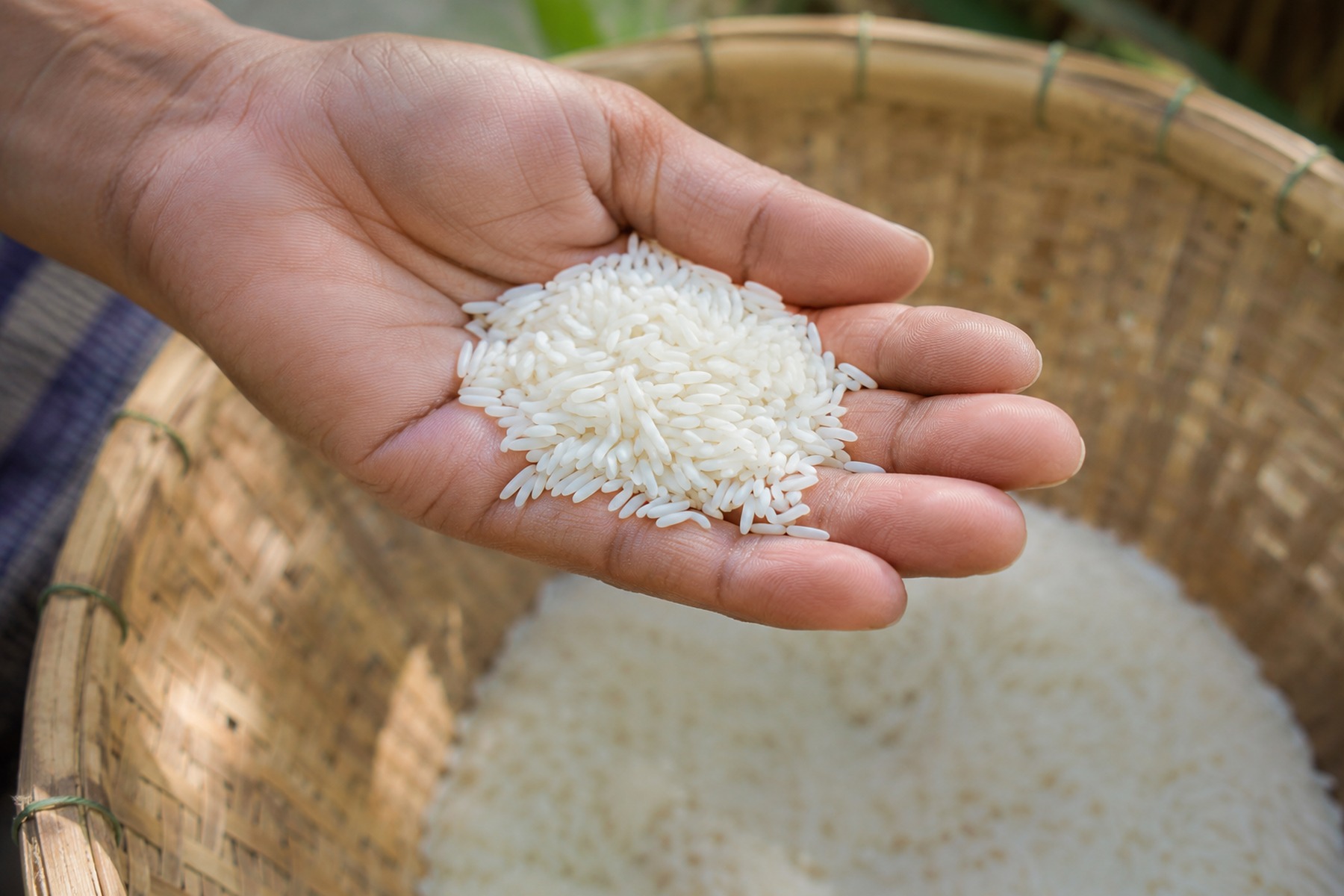
Rice plants take up cadmium from the soil through their roots and send part of it to the grain. Paddy soil can become high in cadmium in several ways, such as natural minerals in the soil, some fertilizers, and irrigation water containing cadmium. When that water is used to flood the fields every season for many years, cadmium slowly builds up in the soil. Because cadmium is an element, it does not break down on its own.
A Japanese study published in the journal Environmental Science & Technology in 2009 stated that eating rice is an important source of cadmium for people in Asia, and found that water management in the paddy had a clear effect.
- When the field is flooded, cadmium in the rice grain falls. Flooding for about 3 weeks before and after heading reduced cadmium in the grain the most in that experiment.
- When the field is allowed to dry, cadmium in the grain rises.
- But there is a trade-off: flooding increases arsenic in the grain, while drying reduces arsenic but increases cadmium.
These results show that there is no single formula for reducing heavy metals in rice that works everywhere. Soil, water and the type of metal in each area all have to be considered. Farmers with doubts about the soil or water in their paddies should consult local agricultural agencies before changing how they grow rice.
Maximum levels of cadmium in rice
| Standard | Polished white rice | Note |
|---|---|---|
| Thailand Ministry of Public Health Notification No. 414 (2020) on food containing contaminants | Not more than 0.4 mg/kg | Most other cereal grains: not more than 0.1 mg/kg |
| International food standards (Codex Alimentarius) | 0.4 mg/kg | Set in 2006 |
Values for rice are in milligrams per kilogram of grain, while values for water are in milligrams per liter, so they cannot be compared directly. A water test also cannot tell how much cadmium rice contains. To know the amount in rice, a rice sample must be tested directly.
What is itai-itai disease?
Itai-itai disease occurred in the Jinzu River basin in Toyama Prefecture, Japan. Academic reviews call it the most severe stage of chronic cadmium poisoning. "Itai-itai" is Japanese for "it hurts, it hurts," from the cries of patients in severe bone pain. The name came into use through newspaper reports in 1955.
How did cadmium reach people?
Studies by researchers in Toyama Prefecture describe the pathway as follows:
- Slag from mining upstream contaminated the river with cadmium and other heavy metals.
- Farmers used the river water to irrigate their fields, so the paddy soil accumulated cadmium through irrigation water from around 1910 until around the 1960s.
- Rice grown in that soil was high in cadmium, and villagers also used river water for drinking and cooking until around 1960.
- People in the area took in cadmium from both rice and water continuously for decades.
Symptoms and who was affected
Information from Toyama Prefecture states that the disease began with pain in the lower back, shoulders and knees, followed by repeated bone fractures, and in the final stage patients were bedridden with pain throughout the body. Most patients were women aged 35 and older up to menopause, especially those who had given birth.
Medically, the disease results from cadmium damaging the proximal tubule of the kidney. The body then loses the minerals it uses to build bone, until the bones become soft and brittle. Reviews therefore describe the disease as cadmium-induced renal tubular osteomalacia.
Key events
| Year | Event |
|---|---|
| Around 1910 | Patients begin to appear in the river basin; villagers call it a "strange disease" |
| 1955 | The name "itai-itai" comes into use through newspaper reports |
| 1961 | Cadmium is proposed as the cause at a Japanese orthopedic surgery meeting |
| May 1968 | Japan's Ministry of Health and Welfare announces its view that itai-itai disease was caused by pollution |
| 1980–2012 | Toyama Prefecture restores about 1,500 hectares of contaminated paddy by replacing the topsoil; cadmium in rice falls clearly |
Lessons from itai-itai disease
- Heavy metals travel far and stay long: from water to soil, from soil to rice, and they remain in soil so long that the soil had to be replaced.
- Health effects take decades: a 2016 review states that kidney abnormalities from cadmium are still found in some residents, even after soil restoration was completed.
- Monitoring at the source pays off more than fixing problems at the end: regular testing of irrigation water and drinking water helps reveal problems before cadmium accumulates in soil and in people.
How does cadmium poisoning affect health?
Information from WHO can be summarized as follows:
- The kidneys are the main organ affected. Cadmium accumulates mostly in the kidneys and has a very long half-life in the body, 10–35 years. Repeated exposure over a long time damages the kidneys and is linked to fragile bones.
- Cancer: the International Agency for Research on Cancer (IARC) classifies cadmium and cadmium compounds in Group 1, carcinogenic to humans (IARC Monograph Volume 100C, 2012). WHO states that this evidence comes from inhalation; there is no evidence of cancer from ingestion.
- A narrow safety margin: the Joint FAO/WHO Expert Committee on Food Additives (JECFA) set a provisional tolerable monthly intake of 25 µg per kilogram of body weight. WHO states that the amount people actually take in each month is not far from this value, and even closer in smokers.
Exposure to cadmium is not the same as having a disease. Health effects depend on the amount, the duration and individual factors. Itai-itai disease was caused by high cadmium exposure over several decades. If you are worried that you or your family have been exposed to cadmium, consult the local sub-district health promoting hospital (Thailand's community-level health center) or the district public health office. Health staff will assess what further tests are needed.
Cadmium in water: Thailand's limits
There are several sets of cadmium limits, each for a different type of water.
| Type of water | Cadmium limit (mg/L) | Equivalent in ppb |
|---|---|---|
| Drinkable tap water (Thailand's Department of Health criteria, 2020) | Not more than 0.003 | 3 |
| Drinking water, WHO guidelines | 0.003 | 3 |
| Surface water sources (National Environment Board Notification No. 8, 1994), water with hardness not above 100 mg/L | Not more than 0.005 | 5 |
| Surface water sources, water with hardness above 100 mg/L | Not more than 0.05 | 50 |
What this table shows:
- The 3 ppb drinking water limit is very low. WHO set this value by allowing drinking water only 10 percent of the tolerable monthly intake, because most of the rest already comes from food.
- Surface water limits apply to raw water, such as rivers and streams. Water that meets these limits is not automatically safe to drink.
- Read the unit correctly. 0.003 mg/L equals 3 µg/L, or 3 ppb. Misreading the unit puts the number off by a factor of 1,000. See how to convert units in What ppm and ppb mean, and the full tap water criteria in Thailand's tap water standard (2020).
How can cadmium in water be tested?
Cadmium in water is invisible, colorless and odorless. It can only be found with instruments. There are two main groups of methods.
1. Laboratories use instruments such as ICP-MS (inductively coupled plasma mass spectrometry) and AAS (atomic absorption spectrometry). WHO documents state that ICP-MS can detect cadmium down to 0.01 µg/L. The laboratory is the reference method for confirming results and issuing official reports. Read more in What are ICP-MS and AAS?
2. Electrochemical field test kits work on the principle of "drawing cadmium ions onto the electrode surface, then releasing them to measure the signal." They give a numeric result at the sampling point and suit screening and monitoring at many sites. Read how the sensor works in What is an electrochemical sensor?, and for the basics of how electrons are gained and lost at an electrode surface, see Electrodes, redox reactions and electrochemical cells.
Good to know when sampling:
- If you suspect cadmium comes from pipes or fittings in a building, collect water at the tap.
- If you want to know the quality of the water source, collect directly from the raw water source.
- A single-point test cannot show where cadmium came from. Finding the source requires an on-site investigation by the relevant agencies.
How to reduce the risk from cadmium
- Do not smoke, and avoid secondhand smoke, because tobacco is an important additional source of cadmium.
- Drink water from a source that has been tested. If a test result is above the limit, stop using that water for drinking and cooking for now, and send a sample to a laboratory for confirmation.
- Boiling does not help. Boiling kills germs but does not remove heavy metals, and if much of the water evaporates, the concentration may rise.
- Water systems should choose treatment that works for cadmium. WHO states that chemical coagulation or precipitation softening can reduce cadmium to 0.002 mg/L. System operators should consult experts before choosing a method and test the water again after upgrading the system.
- Inform whoever runs the water system, such as the local waterworks or the local government organization that runs the village water supply, when results are abnormal.
How M-Sense helps
M-Sense is a portable test kit for heavy metal contamination in water that uses an electrochemical technique, developed by the National Nanotechnology Center (NANOTEC) under the National Science and Technology Development Agency (NSTDA) as part of the A-QUALITY program. It tests four metals, cadmium, arsenic, lead and mercury, reports numeric results from the ppb to the ppm level, and takes about 5 minutes on a portable reader. It can be used with surface water, groundwater and household water in communities.
For cadmium, M-Sense helps officers screen raw water, water used in water supply systems and drinking water at many points on site, then choose the points with questionable results to confirm with standard laboratory methods. M-Sense has been field-tested with the Regional Environment and Pollution Control Office 1 (Chiang Mai) in the Kok River basin against standard laboratory methods, and the results agreed. See the metals it detects and their limits on What it detects and the limits, and the workflow on How M-Sense works.
Frequently asked questions
What is cadmium, and why is it dangerous? Cadmium is a metallic element used in the steel, plastics and battery industries. With high, continuous exposure over a long time, cadmium accumulates in the kidneys, damages them, and is linked to fragile bones.
What causes itai-itai disease, and is it contagious? Itai-itai disease is caused by high cadmium exposure over several decades through contaminated rice and water. It is chemical poisoning, not an infection, so it does not spread from person to person.
Does rice contain cadmium? Rice can naturally contain low levels of cadmium, and levels rise if it is grown in soil with a lot of cadmium. Thailand sets the maximum level of cadmium in polished white rice at not more than 0.4 mg/kg under Ministry of Public Health Notification No. 414 (2020).
How much cadmium in water is above the limit? For drinkable tap water, Thailand's Department of Health criteria (2020) set not more than 0.003 mg/L, or 3 ppb. A result above this is over the limit: stop using the water for drinking and cooking for now, and send it for confirmation.
Does boiling remove cadmium from water? No. Boiling kills germs but does not remove heavy metals. If water is boiled long enough for much of it to evaporate, the concentration may rise.
What should I do if I am worried about cadmium exposure? Consult the local sub-district health promoting hospital or the district public health office. Health staff will assess, based on your exposure history, what further tests are needed.
Want to screen for cadmium and other heavy metals in your area's water?
Ask NANOTEC · What it detects and the limits · For agencies · Four heavy metals in water
References
- World Health Organization. Guidelines for drinking-water quality, 4th edition incorporating the first and second addenda, 2022. Chapter 12 chemical fact sheets: Cadmium.
- International Agency for Research on Cancer. IARC Monographs Volume 100C: Arsenic, Metals, Fibres, and Dusts, 2012.
- Agency for Toxic Substances and Disease Registry (United States). ToxFAQs: Cadmium.
- Aoshima K. Itai-itai disease: Renal tubular osteomalacia induced by environmental exposure to cadmium—historical review and perspectives. Soil Science and Plant Nutrition, 2016.
- Aoshima K. Itai-itai disease: cadmium-induced renal tubular osteomalacia. Japanese Journal of Hygiene (Nippon Eiseigaku Zasshi), 2012.
- Aoshima K. Itai-itai disease: Lessons from the investigations of environmental epidemiology conducted in the 1970's. Japanese Journal of Hygiene (Nippon Eiseigaku Zasshi), 2017.
- Toyama Prefecture. Itai-itai Disease Museum: Outbreak of Itai-itai Disease, and Significant Events Concerning Itai-itai Disease.
- Arao T, et al. Effects of water management on cadmium and arsenic accumulation and dimethylarsinic acid concentrations in Japanese rice. Environmental Science & Technology, 2009.
- Thailand Ministry of Public Health Notification No. 414 (2020) on food containing contaminants.
- Codex Alimentarius. General Standard for Contaminants and Toxins in Food and Feed (CXS 193-1995).
- Public Health Laboratory Division, Department of Health (Thailand). Criteria for drinkable tap water, Department of Health, 2020 (SD-RLDC-006).
- National Environment Board Notification No. 8 (1994) on surface water quality standards (Thailand).
- National Nanotechnology Center. Innovation: portable electrochemical test kit for heavy metal contamination in water (M-Sense).