

What Is Arsenic? Where It Comes From, Why It Matters and How to Test Water for It
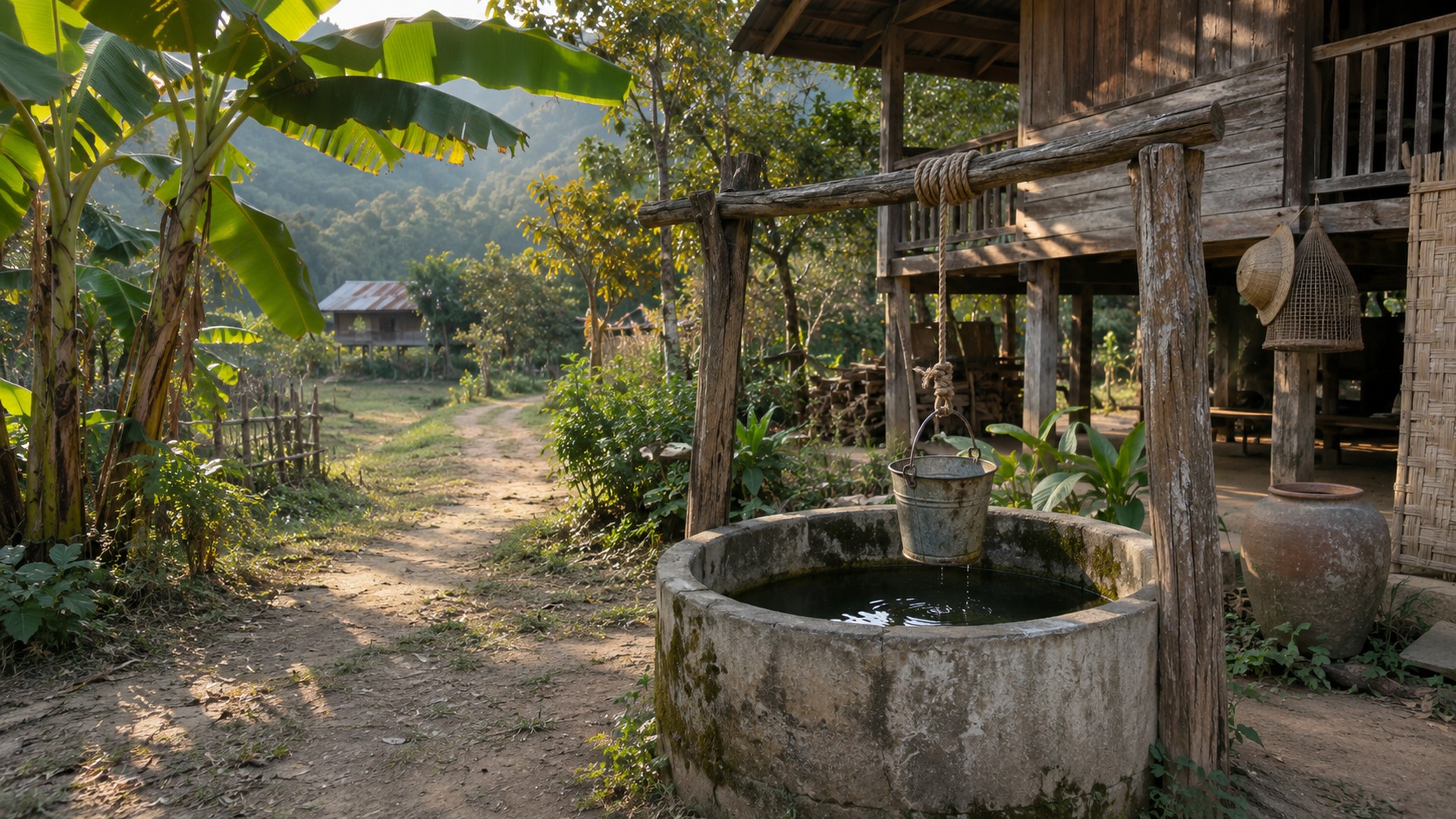
What is arsenic? Arsenic is a natural element in the Earth's crust. It is part of many minerals and, in some areas, dissolves into groundwater. People who drink water with high levels of arsenic over a long period face a higher risk of skin disease and some cancers, but exposure does not always lead to disease: how much and for how long are what matter. Arsenic in water is invisible and has no smell, so the only way to know is to test the water.
What is arsenic?
Arsenic is found throughout the Earth's crust, at an average of about 5 milligrams per kilogram, and it is a component of more than 200 minerals. The most important are arsenopyrite and other sulfide minerals.
Arsenic occurs in several chemical forms, which fall into two broad groups:
- Inorganic arsenic is the form found in contaminated groundwater, and the form that health agencies monitor most closely.
- Organic arsenic is common in seafood and is less toxic.
This difference matters when you read news or test results: "contains arsenic" in food and "contains arsenic" in groundwater may refer to different forms of the element.
Where does arsenic in water come from?
Arsenic in water can come from nature, from human activity, or from both together.
Natural sources
- Rocks and minerals underground. Groundwater may be high in arsenic in areas with sulfide ore deposits or with sediments derived from volcanic rock.
- Groundwater conditions. Arsenic can be released from minerals into water in several ways. For example, sulfide minerals are oxidized when exposed to air, or arsenic is released from the surface of iron oxides (rust) when groundwater lacks oxygen.
- Geothermal springs can raise arsenic levels in some surface waters.
Natural water generally contains about 1–2 micrograms of arsenic per liter, but in areas with natural arsenic sources, levels can reach as high as 12 milligrams per liter.
Sources from human activity
- Mining and smelting. When contamination is caused by people, the origin is often linked to mining. Gold ores and arsenic minerals often occur together.
- Industry. Arsenic is used in alloys, glass, pigments, textiles, paper and wood preservatives.
- Past agricultural use. Arsenic was once used as an insecticide.
- Coal burning is another source of arsenic in the environment.
A water test at a single point cannot tell where the arsenic came from. Finding the source requires an investigation on site, such as testing sediments and testing many points at different times.
Why groundwater arsenic matters most
The World Health Organization (WHO) states that contaminated groundwater is the greatest public health threat from arsenic. People are exposed by drinking that water, through crops irrigated with it and through food cooked with it. Once drinking water contains 10 micrograms per liter or more, it becomes the main source of arsenic exposure, and in places where curries or soups are staple foods, cooking water adds even more.
WHO estimates that at least 140 million people in 70 countries drink water containing more than 10 micrograms of arsenic per liter.
How dangerous is arsenic? Understanding arsenic poisoning
First principle: exposure is not the same as disease
Health effects depend on the dose, the duration, the chemical form and individual factors such as age, nutrition and smoking. WHO itself notes that the risk at low levels is still highly uncertain. The effects below are those seen after long-term exposure to high levels of arsenic. They are not what will happen to everyone who has ever been exposed.
Effects seen after long-term exposure
- Skin: changes in skin color, with dark spots or patches, and hardened, thickened skin on the palms and soles. These usually appear after about 5 years of continuous exposure and may lead to skin cancer.
- Cancer: drinking water with high arsenic over a long period raises the risk of skin, bladder, lung and kidney cancer.
- Other diseases: WHO notes links with cardiovascular disease, diabetes, lung disease and developmental effects.
- Pregnancy and children: linked with adverse pregnancy outcomes, infant deaths, and effects on children's intellectual development and memory.
Groups that need extra care are unborn babies, infants and young children.
What IARC's classification of arsenic means
The International Agency for Research on Cancer (IARC), part of WHO, classifies arsenic and inorganic arsenic compounds in Group 1, meaning there is evidence that they cause cancer in humans. It also places "arsenic in drinking water" in Group 1.
This classification describes the strength of the evidence that a substance can cause cancer. It does not say how potent the substance is, or what amount is harmful. Knowing that arsenic is in Group 1 does not mean that a single small exposure will cause cancer.
Arsenic limits for water: which standard applies to which water
Thailand and WHO use the same arsenic value, 0.01 milligrams per liter, but each standard applies to a different kind of water. When you read a result, compare it with the right one.
| Standard | Applies to | Arsenic |
|---|---|---|
| Thailand's Department of Health criteria for drinkable tap water (2020) | Tap water used for drinking | Not more than 0.01 mg/L |
| Thailand's surface water quality standards (National Environment Board Notification No. 8, 1994) | Water in rivers and canals, which is not yet drinking water | Not more than 0.01 mg/L |
| WHO Guidelines for Drinking-water Quality, 4th edition (published 2022) | Drinking water | 0.01 mg/L (provisional value) |
0.01 milligrams per liter equals 10 micrograms per liter, or about 10 parts per billion (ppb). Read more about converting units in What are ppm and ppb?
What does "provisional" mean?
WHO sets 0.01 milligrams per liter as a provisional guideline value because it is based on how difficult it is to remove arsenic from water and on the limits of measurement. It is not a value proven to be safe. WHO therefore advises keeping arsenic levels as low as reasonably possible.
On the other hand, a small exceedance for a short time does not necessarily mean an immediate increase in risk, because most limits are based on drinking the water over a lifetime. Still, every result above the limit should be confirmed and reported to the relevant authorities.
Does boiling or chlorinating water remove arsenic?
No. Boiling kills germs but does not remove arsenic. If water is boiled for a long time and much of it evaporates, the arsenic concentration may even rise. Adding chlorine does not remove arsenic either. Thailand's Ministry of Public Health gives the same advice as agencies in other countries.
WHO recommends switching to a water source that is low in arsenic and free of germs, such as rainwater or treated surface water. Water with high arsenic can still be used for bathing and washing. However, in areas where a warning has been issued, follow the advice of the local authorities first.
If you treat water yourself, choose a method that really works for arsenic, such as reverse osmosis, ion exchange or distillation, and test the water again after installation to confirm that it works.
Arsenic in the Thai context
Ron Phibun, Nakhon Si Thammarat Province
Ron Phibun District in southern Thailand is the most studied arsenic area in the country. It has a history of about 100 years of tin mining, and the first arsenic-related skin disease was reported there in 1987. A 1996 study found dissolved arsenic up to 500 times higher than the WHO drinking water guideline, with the shallow groundwater more contaminated than the limestone aquifer below it.
The key lesson from Ron Phibun is that switching drinking water sources is the main measure. A survey of 3,849 households found that the share of households using safe water (rainwater, tap water, deep well water) for drinking rose from 72.5 percent in 1994 to 93.6 percent in 1997. But only 3.6 percent of households drank tap water, even though tap water was available. This shows that people's choice of drinking water also depends on their confidence in its quality.
Kok River basin, Chiang Rai Province
Since 2025, Thailand's Pollution Control Department has regularly sampled water from the Kok River in northern Thailand and nearby streams, and reports the results against the surface water quality standard, which is a standard for river water, not for drinking water. Several agencies work together in the area on water testing, water supply systems and health advice. As of 17 November 2026, the Ministry of Public Health stated that there were no reported cases of acute poisoning and that the situation was at the monitoring stage.
How to test for arsenic
Testing water
| Method | What you get | Used for |
|---|---|---|
| Field test kit | A result at the sampling point | Initial screening, to see which water sources need detailed testing |
| Laboratory | A concentration from standard instruments | Official confirmation |
Thailand's Department of Health calls the use of field arsenic test kits "preliminary testing". Results above the limit should therefore be sent to a laboratory for confirmation. The two approaches complement each other.
When reading results, also check the lowest level the method can measure. "Not detected" does not mean zero; it means below the level that the method can measure. WHO gives the examples that the laboratory technique ICP-MS (inductively coupled plasma mass spectrometry) can measure arsenic down to 0.1 micrograms per liter, and atomic absorption spectrometry down to 2 micrograms per liter.
Testing the body
Doctors can test for arsenic in urine, blood, hair and nails. Urine reflects exposure over the past few days, while hair and nails reflect high exposure over 6–12 months. These tests show exposure; they do not predict whether disease will develop. A doctor decides which tests are appropriate.
What to do if a water test is above the limit
The steps below summarize advice from Thailand's Ministry of Public Health and agencies in other countries.
- Stop using the water for drinking and cooking for now. Use water from a tested source, such as tap water that meets the standard, or bottled water carrying the registration mark of Thailand's Food and Drug Administration (Thai FDA).
- Confirm the result with a laboratory, and test again before investing in a treatment system.
- Inform whoever runs the water system, such as the local waterworks or the local government organization that manages the village water supply.
- Consult a health service if you have been drinking the water for a long time or have unusual symptoms. Go to a subdistrict health promoting hospital (Thailand's local primary care unit) or a hospital near you.
- If you treat water yourself, choose a method that really removes arsenic, and test the water again after installation.
How M-Sense helps
M-Sense is a portable heavy metal test kit for water based on electrochemical sensing, developed by the National Nanotechnology Center (NANOTEC), part of Thailand's National Science and Technology Development Agency (NSTDA). It tests for arsenic, lead, cadmium and mercury in about 5 minutes and reports a numerical result in the ppb to ppm range on a portable reader. Officers can therefore see how close the arsenic value is to, or how far above, the 0.01 mg/L limit, right at the sampling point.
M-Sense has been field-tested with the Regional Environment and Pollution Control Office 1 (Chiang Mai) in the Kok River basin, compared with standard laboratory methods, and the results were consistent. It was handed over to the Chiang Rai Provincial Public Health Office on 15 November 2026. M-Sense is used for screening and monitoring; official confirmation still uses a laboratory. Learn more in How M-Sense works and Field use.
Frequently asked questions
What is arsenic? Arsenic is a natural element in the Earth's crust. It is part of more than 200 minerals and can dissolve into groundwater in some areas. The form that health agencies monitor in water is inorganic arsenic.
Will drinking water with arsenic give me cancer? Not necessarily. Drinking water with high arsenic over a long period raises the risk of some cancers, but the effect depends on the dose, the duration and individual factors. If you are worried, consult a subdistrict health promoting hospital or a hospital near you.
Does boiling water remove arsenic? No. Boiling kills germs but does not remove arsenic, and if much of the water evaporates, the concentration may rise. Adding chlorine does not remove arsenic either.
Does water with arsenic look or smell unusual? You cannot tell by looking or smelling. Arsenic and other heavy metals in water are invisible and odorless. Only a water test can tell you.
What is the arsenic limit for drinking water? Thailand's Department of Health criteria for drinkable tap water (2020) set arsenic at not more than 0.01 milligrams per liter, or 10 ppb, which matches the WHO guideline value.
Can a field test kit replace a laboratory? A field test kit gives fast on-site screening and helps show which water sources need detailed testing. Results above the limit should be confirmed by a laboratory.
Want to know how water in your area should be tested for arsenic?
Ask NANOTEC · What it detects, and the limits · For agencies · Heavy metals in water: 4 types
References
- World Health Organization. Arsenic (fact sheet), 7 December 2022.
- World Health Organization. Guidelines for drinking-water quality, 4th edition incorporating the first and second addenda, 2022, and the chemical background document Arsenic in drinking-water, 2022.
- International Agency for Research on Cancer. IARC Monographs Volume 100C: Arsenic, Metals, Fibres, and Dusts, 2012.
- Agency for Toxic Substances and Disease Registry (United States). ToxFAQs: Arsenic.
- Centers for Disease Control and Prevention (United States). Arsenic in private well water (archived), and National Institute of Environmental Health Sciences. Arsenic and your health.
- Minnesota Department of Health. Arsenic in well water.
- National Health and Medical Research Council (Australia). Australian Drinking Water Guidelines, 9.12 Assessing the significance of short-term exceedances.
- Bureau of Laboratory, Department of Health, Thailand. Criteria for drinkable tap water, Department of Health, 2020 (SD-RLDC-006).
- National Environment Board Notification No. 8 (1994) on surface water quality standards, Thailand.
- Thai PBS. Field arsenic test kits recommended for checking water quality, 8 April 2025.
- Hfocus. News on Ministry of Public Health advice about arsenic-contaminated water, 11 and 17 November 2026.
- Garelick H, et al. Arsenic pollution sources. Reviews of Environmental Contamination and Toxicology, 2008.
- Williams et al. Environmental Geology, 1996 (arsenic in groundwater, Ron Phibun District).
- Jones H, et al. Case reports: arsenic pollution in Thailand, Bangladesh, and Hungary. Reviews of Environmental Contamination and Toxicology, 2008.
- Chongsuvivatwong V, et al. Follow up of water use in a tin mining area affected with arsenic poisoning. Southeast Asian Journal of Tropical Medicine and Public Health, 2000.
- National Nanotechnology Center. Portable electrochemical test kit for heavy metal contamination in water (M-Sense).
- Krungthep Turakij (Bangkok Business News). News on the M-Sense handover to the Chiang Rai Provincial Public Health Office, 15 November 2026.